Showing posts with label interest. Show all posts

Sunday, 23 December 2012

Sprouts: A Festive Warning

Regular readers - and anyone who's ever had a roast dinner with me - will be aware of my aversion to Brussels sprouts. I might go so far as to call it a hatred of them.

And finally I have conclusive proof that eating sprouts is bad to for you (albeit only under highly specific conditions): a man was hospitalised last Christmas after eating too many Brussels sprouts. Sprouts contain a very high level of vitamin K, which promotes blood clotting and as a result of the sheer amount of sprouts the poor man had eaten, the high levels of vitamin K served to counteract the effect of the anticoagulants he was taking due to heart failure.

Docftors were baffled as to why the medication wasn't working until, presumably, one of them smelled him.

DANGER! DANGER!

Wednesday, 17 October 2012

Back to La Cura

Regular readers who have not grown tired of my recent lack of posting
may recall that a little while ago I posted a link to a website called
Open Source Cure, created by an Italian man, Salvatore Iaconesi, who has
been diagnosed with brain cancer. BBC News has recently done a piece
about the website, which has provoked a huge response in terms of both
medical advice, messages of support and artwork. Apparently the public
reaction to the website and Mr Iaconesi's interactions with various
doctors have influenced the way in which his brain surgery is going to
be carried out, and the Italian government have even picked up on the
site's popularity, and is now looking at opening up patients' medical
records.


It's quite an incredible response to see. Many people, myself included,
turn to blogging as a way of venting the frustrations of being ill and
dealing with hospitals, as a way of updating friends and family on how
we are, and as a way of connecting with other people in similar
situations. When you have a rare illness like thyrotropinoma, it's
seriously unlikely that you'll know anyone who's been through the same
thing in real life, so it's natural to reach out to others online. But the concept of
seeking not only support and tips but also actual medical advice on
treatments and surgical techniques from complete strangers - from the
whole world - is a pretty unique approach. Given the difficulty that
people with rare medical conditions can have in accessing doctors with
sufficient (or indeed any) experience in the treatment of their illness,
perhaps it's something that will become increasingly common.

Tuesday, 25 September 2012

IMFW: Headache? Painkiller!

If television advertising has taught me one thing over the past few years, it's that headaches are evil red pulsating blobs inside your head, and that if you have one, you can cure it with NUROFEN and that NUROFEN will heal all your achy ills and NUROFEN PLUS is there for when you have an exceptional amount of pain that needs to be killed, because humans are WEAK and liable to developing red pulsating headblobs at any moment.

I think that advert was for Nurofen, anyway...

If actual real life has taught me anything, it's that you should go to the doctor if you have headaches regularly, and also that being allergic to paracetamol is annoying if you're then put on medication which means you can't take aspirin or ibuprofen.

If the BBC has taught me anything this week, it's that painkillers can actually cause headaches, which I had no idea about. We all know you should be careful not to OD on paracetamol (but did you know that paracetamol is actually the commonest drug overdose in the UK, and accounts for a massive 48% of all poisoning admissions to hospital?), yet in fact even at non-toxic doses painkillers can cause what are known as medication overuse headaches. NICE has recently issued new guidance to health professionals in England and Wales on the subject.

If headaches get worse after a couple of months of regular use of painkillers, it's possible that they have developed into medication overuse headaches, and unfortunately the only cure is to go cold turkey and see if they improve - but at first they'll get worse. Also known as rebound headaches, they can be a serious problem, often occurring in people who already suffer from migraine or other chronic headache conditions, and who may have no idea that they're taking painkillers too frequently.

Tuesday, 18 September 2012

IMFW: Scintillating Scotoma

Up until recently, I had never heard of scintillating scotoma, but my boyfriend is an occasional sufferer - and although that is not so fun for him, it's certainly a handy suggestion for an Interesting Medical Fact of the Week!

The word scintillating comes from the Latin scintillare - to sparkle, glitter, gleam or flash. The word scotoma comes from the Greek for darkness. So at first etymological glance, it would appear that a scintillating scotoma is something of an oxymoron.

Medically speaking, a scintillating scotoma is a symptom which often precedes the onset of migraine, although it can also appear as an isolated symptom without headache. Wikipedia describes it as follows:

Scintillating scotoma usually begins as a spot of flickering light near or in the center of the visual fields, which prevents vision within the scotoma. The scotoma area flickers, but is not dark. The scotoma then expands into one or more shimmering arcs of white or colored flashing lights. An arc of light may gradually enlarge, become more obvious, and may take the form of a definite zigzag pattern, sometimes called a fortification spectrum, because of its resemblance to the fortifications of a castle or fort seen from above. 

The visual anomaly results from abnormal functioning of portions of the occipital cortex, at the back of the brain, not in the eyes. Symptoms typically appear gradually over 5 to 20 minutes and generally last fewer than 60 minutes, leading to the headache in classic migraine with aura, or resolving without consequence in acephalgic migraine.

Sounds kind of pretty, right? Unfortunately, even if you don't get a headache or other symptoms, it does massively mess with your vision until it resolves. If you search online, you can see a selection of artist's impressions of what scintillating scotoma can look like to sufferers:


Friday, 14 September 2012

An Open-Source Cure?

Kudos to my lovely boyfriend for this very interesting link to a website created by an Italian man with brain cancer, who requested copies of his medical files from his hospital  in order to send to other hospitals and doctors for their opinions, only to find that they were in proprietary formats which he could not open on his computer. Being computer savvy, he managed to convert them into open formats so that he can share his information with everyone, online. And he's posted them on his website.

It might sound weird, this idea of posting medical records online, when these are documents that we're used to treating with the utmost confidentiality, but already he has had responses from doctors - and the idea is that everyone is encouraged to use the data to create a cure, whether that's a doctor suggesting treatment, an artist creating artworks, videos, poems... you name it. Other people with similar conditions can send in their own data, if they wish, to be added to the site.

The author of the website had some very interesting thoughts about how the way in which his data is treated parallels the way in which his disease has been treated:

"The data formats which I was "forced" to hack is in a peculiar state of harmony with the common definition of "disease/illness".

The definition of "diseases" is "reserved" to doctors. Often using words which we don't understand and, most important of all, touching only a part of the human condition, which is made from body, but also of spirit and sociality.

The DICOM format is open, yes, but in a very "peculiar" condition of openness: it is like the openness of the words which they use to tell you about your health condition, and with which they descrive and actuate their version of the "cure": you can't understand it, you can't reuse it, you can't combine it with other possibilities. It is thought for "experts" and "professionals" (of one single type), leaving little space for other possibilites for expression and socialization."

It's interesting to consider the possibility that the sacred doctrine of doctor-patient confidentiality may, in some cases, end up mitigating against patients having the ability to take charge of their own healthcare, or seek the widest possible range of medical opinions on their condition. Now that so many hospital systems and even procedures are digitised, there's clearly a balance to be struck between protecting patients' private information, and making it so inacessible that patients are unable to view their own data.

Historically, medical education and knowledge has been very much the preserve of the privileged few, and patients weren't necessarily expected to understand their own conditions. With the rise of the internet, it's so much easier for patients to be informed about their own illness - some might say too easy - and thus it seems terribly ironic that the same medium enabling greater patient choice and freedom should simultaneously be creating new and unwelcome restrictions on their ability to use their own data in whatever way they desire.

Posting your medical records on the internet for all to see may not be everyone's cup of tea. But it should still be an option if that's what you want to do.

Check it out: http://artisopensource.net/cure/

Friday, 24 August 2012

Lyrically Sick

Apologies for the lack of blogging of late, I have been on holiday! I cunningly set my Interesting Medical Fact of the Week to automatically post on Monday, having written it last week, but don't be fooled. I spent the weekend at the Edinburgh Festival, which was amazing, and this week I'm at my boyfriend's house many miles away, so although technically I have had access to a computer, my impetus to blog has not really been there and also, nothing that exciting and medical has happened.

But no more! I have decided to get cracking on a post I intended to write some time ago, in which I will look at the lyrics of popular songs and attempt to diagnose the singer on the basis of the symptoms they describe experiencing when viewing their beloved.

Before you judge me, perhaps I should clarify that the song selection should in no way be held as representative of my own musical preferences and was chosen purely on the basis of medically interpretable lyrics. 

First up we have:


So come on, spin me around 
I don’t wanna go home 
Cause when you hold me like this 
You know my heart skips, skips a beat

Olly Murs describes experiencing ectopic beats, or the sensation of a skipped or missed heartbeat - not to be confused with ectopic beets, which is when a beetroot grows in your fallopian tube. This is a very common form of cardiac arryhthmia, and indeed is really nothing to be concerned about in a healthy adult.

However, Mr Murs indicates that his palpitations occur only when the object of his affection spins him around and holds him in a particular way. This could indicate that he is suffering from postural orthostatic tachycardia syndrome, a condition in which the body struggles to deal with the changes in blood pressure occasioned by a change from a lying-down to an upright posture, or even by more minor changes in posture, and the heartrate increases dramatically as a result. Olly Murs may find his symptoms improved by increasing his fluid intake, taking regular exercise and wearing strong support tights.


Can't read my, 
Can't read my,
No he can't read my poker face.

Ms Gaga reports that the apple of her eye is unable to read her poker face. Sad to say, he may well be suffering from a condition called prosopagnosia, also known as 'face blindness', in which the ability to recognise faces is affected. Sufferers may be unable to recognise even their own face, and are forced to rely on other qualities such as voice, gait, and clothing to tell people apart from one another. Ms Gaga would be able to help her friend to recognise her by, for example, picking a distinctive piece of clothing and always wearing it around him. Perhaps a hat made out of a telephone would suffice.


Boy, you're an alien 
Your touch so foreign 
It's supernatural 
Extraterrestrial

In this song, Katy Perry appears to be under the impression that her significant other is from another planet. In this, it would seem likely that she is suffering from Capgras syndrome, in which the sufferer has the delusion that a close friend or relative has been replaced by an identical imposter. It may occur in cases of schizophrenia, dementia and brain injury, and it has been suggested that the Capgras delusion is in a sense the opposite of prosopagnosia, in that the person's ability to consciously recognise someone's face is intact, but they are lacking the unconscious emotional response to seeing the person's face.


Alas, that is all for now as I am totally out of inspiration. I may continue at some later date. Suggestions for songs/medical conditions greatly appreciated!

Monday, 20 August 2012

IMFW: Harvey Cushing

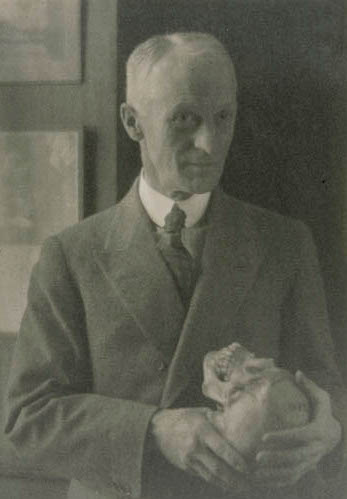
This week's IMFW is really more like an IMPW - an Interesting Medical Person of the Week. Harvey Williams Cushing is often regarded as the "father of modern neurosurgery".

An American descended from a long line of doctors, he was born in Ohio in 1869. After studying medicine, he went on to study surgery at the famous Johns Hopkins Hospital just after it had opened, then spent time in Europe before returning to Johns Hopkins as an associate professor in surgery. As well as writing about medicine, he was a talented medical illustrator and several of his drawings were published in textbooks - and as if that wasn't enough, he received the Pulitzer Prize for Biography for his biography of his mentor, William Osler.

Cushing's first monograph was on the subject of the pituitary, and on this blog, you'll have heard Cushing's name from one of his most famous discoveries, the disease named after him - Cushing's Disease; a tumour of the pituitary gland which secretes ACTH (adrenocorticotrophic hormone) and causes a range of symptoms including weight gain, bruising, sweating, high blood pressure and diabetes. Being a modest chap, he had originally named it "polyglandular syndrome", but his name stuck. However, this was far from his only contribution to medicine:

- He introduced blood pressure measurement to America

- He used x-rays to diagnose brain tumours

- He developed medical instruments which are still in use today, including the Cushing Forcep which is used during cranial surgery, the Cushing clip - a small clip for blood vessels to stop bleeding during surgery, which dramatically decreased mortality rates - and the use of electrocautery which he developed with W.T. Bovie, a physicist

- Along with a colleague, Ernest Codman, Cushing devised the first anaesthetic chart to help surgeons and anaesthetists monitor pulse, temperature and breathing - an innovation which was widely adoped

- Cushing pioneered many new surgical techniques including the use of saline for irrigation during surgery

- He developed a surgical cure for trigeminal neuralgia

- His mortality rate was around 10% - which doesn't sound hugely impressive until you realise that before he came along, mortality rates from neurosurgery were 50 - 90% depending on which source you believe

- He developed the transsphenoidal approach for surgery of the pituitary gland

- He invented the macarena (just checking you're paying attention...)

- He identified and named the phenomena of hypopituitarism and hyperpituitarism

Yes... yes, that is a skull.
 So Mr Harvey Williams Cushing deserves our gratitude and respect. He has thoroughly earned the bewildering array of unpleasant medical things named after him, which include: Cushing's Syndrome, Cushing's Disease, Cushing's symphalangism (a.k.a. proximal symphalangism), Cushing's Reflex resulting in Cushing's Triad (a nervous system response to increase intracranial pressure), Cushing ulcer a.k.a. Rokitansky-Cushing Syndrome, Bailey-Cushing Syndrome (he had to share that one), the Cushing forcep and Cushing clip.

Monday, 13 August 2012

IMFW: Skinny Minnie or Stressy Bessie?

My favourite medical fact of the past week has been that a study has indicated that men in stressful conditions are more likely to find larger women attractive. Presumably this should prove useful to husband-hunters everywhere - the more slender ladies can go on the prowl at yoga centres and juice bars while their heavier sisters can target office blocks and traffic jams... In less jolly news about things that are definitely true, a man with Parkinson's was arrested at the Olympic men's cycling road race. His illness meant that he did not "visibly appear to be enjoying the event", and this coupled with his proximity to a group of protestors apparently was enough for him to be arrested for breach of the peace.

Sunday, 12 August 2012

The Power of Negative Thinking

I like to think of myself as a reasonably positive person. I try not to let all my medical bother get in the way of having fun, and I also try, on the whole, not to continually go on about my bloody pituitary tumour to other people (unless they are foolish enough to ask, of course). That's one of the nice things about having this blog. As well as a place to vent after my third phone call to the hospital in a day, and a lovely way to get into contact with people going through similar medical fun times, it provides the option for those of my friends who give a shit about the details of what's going on inside my head to keep up-to-date, and enables those of my friends who don't to… not.

Not that I judge those guys, but if you're reading this, you're one of my favourites. SHH DON'T TELL ANYONE.

One of the things that gets my goat* a little is being told to "stay positive". This only happens very occassionally, but when it does it kind of grates. A) I am trying and B) the nature of reverse psychology gives me an uncontrollable urge to shout "screw you, I can wallow if I damn well want to!" Everyone needs to be allowed to feel blue without being made to feel guilty, and for the most part a hug is all that is required to cheer me up. I should point out that I know the people who say "stay positive" mean well and I do not hold it against them, because it can be hard to know what to say to a persistant offender of the unhealthy variety. But it gets me pondering.

Indeed, I was pondering about this the other day and realised that actually, I would argue that when you're sick, negativity has a useful part to play (as long as you're sensible about it and don't just end up depressing yourself). Take my current situation, for example. I knew that even back last winter when my thyroid blood tests were coming back within the normal range and my endocrinologists were excited that I might be cured, I still felt a bit symptomatic. I could have stayed positive and said "I'm sure it's probably just a bit of a hangover from spending a year and a half ravaged by thyroid hormone. The blood tests say I'm fine so I probably am. Hurrah, I can forget all about this horrible tumour business!"

However if I had done that, then the news that I am not cured and that the tumour has grown back and that I need more surgery and possibly radiotherapy would have been even more crushing. Instead I always tried to keep in mind that more surgery was a possibility because I knew I didn't feel 100% right. And consequently when I got the news, it was less of a shock because I had already prepared myself for it.

Equally I think always taking into account the worst case scenario can not only make the negatives less unpleasant if they finally do hit, but also makes the positives more uplifting. If you go around staying positive all the time, then when you get good news it's not so much of a hurrah-moment, because you're really just getting confirmation of something that you were trying to convince yourself was true. If you're prepared for the worst, on the other hand, even slighty-bad news can seem like an improvement.

I actually think it's really sad when you read articles in magazines (usually in doctor's waiting rooms…) that extol the powers of positive thinking to heal. It really does just pile on the guilt. Feeling sad or worried is a perfectly normal response to illness and to me it just seems healthier to accept that and deal with it and move on. Being constantly instructed to feel positive all the time is only going to make the person feel guilty when they can't manage it. (And please, show me the healthy person who manages to be positive 100% of the time. If moments of negativity caused illness, we would all be sick). When you then compound that by saying that positivity will heal, it creates even more guilt. If the person doesn't get better, it's their fault for not being positive enough. But they're not better so they find it harder to be positive. And so on.

So acting like Eeyore all the time has its benefits.

As long as you don't turn into such an unrepentant cloud of gloom that no-one can stand to be around you.
______________________________________________
*N.B. if you find my goat, please return him immediately.

Monday, 25 June 2012

IMFW: The (Un)Lucky Yasser Lopez

Incredible news recently of an American teenager who was shot straight through the head by a speargun and survived. After a three hour operation to remove the three foot long harpoon from his brain, he has been up and talking. The 16-year old was shot when his friend was loading a spear gun and accidentally fired it in the process. In an incredible stroke of luck, it missed almost all the major blood vessels in his head and pierced only the right side of his brain, meaning that his speech was unaffected.

Yasser Lopez was conscious and speaking when he arrived at the ER -a good sign, although he later had to be sedated; doctors also had to cut off part of the protruding spear before he could fit into the hospital's CT scanner (the scan images are incredible, by the way - I highly recommend following one of the links to take a look).

The story is reminiscent of the famous tale of Phineas Gage, much beloved of neurologists - and it should be remembered that even when people survive such accidents, they are highly likely to be left with some form of impairment, and follow-ups are critical.