Aloha! It's been another age since I've written in here! My apologies. I thought I'd pop by to give you a quick update.
Way back on the 15th April I had an MRI scan at the hospital (so long ago that I had to look up the dates in my diary at work...). I didn't get the results until the 20th May, when I had an appointment with a very nice nurse in Neurosurgery. My lovely boyfriend came with me to the hospital and saw the scan images, so I guess now he is in the enviable position of having seen exactly what's going on inside his girlfriend's head!
The scans look pretty good - it's always hard to tell just from an MRI, but the surgeons were optimistic that they managed to remove the whole tumour, and there's nothing obviously wrong in the images. The trouble is that the pituitary gland is so tiny - about the size of your little fingernail - so even with the contrast injections, at best an MRI is only an indication of what's going on in there - blood tests are very important as well. But the surgeons are very happy with me, and as far as they're concerned, I don't have to have another MRI for a year. Hurrah!
On the 27th June I went to see the endocrine nurses for a synacthen test. This test evaluates how well the pituitary is producing adrenocorticotropic hormone (ACTH). This hormone is really crucial for your body, and because there's always a risk that surgery can damage the pituitary gland, patients who have transsphenoidal surgery are put on replacement steroid medication as a matter of course. The doctors will only let you come off the medication if a synacthen test shows your pituitary gland is now able to produce ACTH on demand.
I already had one of these tests back in March and my pituitary had a fairly good response, but not quite good enough to come off the medication totally. The endocrinologists halved my dose of hydrocortisone, but I'm still taking 5mg in the morning and 5mg at midday. I'm hoping that the results of my test last week will be good enough for me to come off the steroids totally. It would be in line with what happened after my last operation, when it took about six months before I was able to come off medication. Certainly immediately after the operation I was in need of the steroids - about a month after surgery, I forgot my 4 o'clock 5mg dose, and was a complete emotional wreck all evening until I remembered I hadn't taken it at about 7pm. I took it - and half an hour later I was already feeling immensely better. More recently I have forgotten to take my hydrocortisone on time once or twice and not had any ill effects at all, which hopefully is a good sign.
I don't know yet what date I'm due back at the hospital for my next proper follow-up with endocrinology. I had thought it would be the end of June, but apparently it's actually going to be the end of July, four months after my last clinic appointment. Then I should get the results of the synacthen test, and the other blood tests they did at the same time to check my thyroid levels.
Showing posts with label steroids. Show all posts
Showing posts with label steroids. Show all posts
Monday, 1 July 2013

Tuesday, 29 January 2013
Back on the ward
Once I woke up after my endoscopic transsphenoidal pituitary adenoma resection surgery (that's what they called it on the forms!) I had half an hour or so in the post-surgical recovery area to rehydrate and have regular neurological checks. I had these throughout my time in hospital, with decreasing regularity. They ask you where you are, what year it is etc (it usually takes me until at least February to readjust to a new year so I had to concentrate for that one), then there are physical tests; squeezing hands, pulling and pushing with your hands and feet etc. to check that nothing weird's going on in your head.
The last time I had pituitary surgery, I was pretty perky afterwards, probably because I had a whole bunch of morphine when I woke up. This time however, my head barely hurt when I woke up, so no morphine, so I was rather more subdued... Which I think everyone else was probably thankful for. I was taken onto the ward and my parents arrived not long after. A nurse brought me a yoghurt to eat and then a tuna sandwich - I only managed about a quarter of it, but it was really nice to have some food, and when the tea trolley came around I was practically in heaven.
At first I had to have observations taken every half an hour for the first six hours, then once an hour for six hours, then every two hours, and so on. Observations involved measuring blood pressure, blood oxygen levels, heart rate, breathing rate, pupil response to having bright light shone in them (usual response: argh, get that light out of my face), and the aforementioned neurological tests.
I was really not in much pain at all, I had some paracetemol and that was all I needed with regards to painkillers - I was up and walking to the loo within two hours of waking up, so I did pretty well I think. They start you on hydrocortisone, a steroid medication, immediately after surgery (via IV drip initially) because there's always a risk that your body will stop producing steroid hormone after the operation, which may be temporary or permanent.
The most exciting thing to happen was a ninja nosebleed, which suddenly appeared from out of the blue. A nurse ran up to the neurosurgical theatres to grab a selection of bandages wrapped up in bandages, to tie around my face like an attractive surgical moustache and catch any unexpected oozing.
Wednesday, 11 July 2012
The Very Scary Case of Kane Gorny
Before going into hospital last Tuesday, I stopped off at one of my favourite cafes for a hot chocolate, as a pre-hospital treat. I wasn't allowed caffeine in the three days before going in, so I had been suffering from a woeful lack of hot drinks. I got my hot chocolate (which was delicious) and sat down by the pile of daily papers they keep at the café. Alas, all the more upmarket titles had been taken, so I had to settle for that peculiar bastion of journalistic achievement: the Daily Mail.
You can imagine my feeling of ill-omen when, immediately before going into hospital overnight for further investigations into my pituitary tumour, I saw that the Mail's headline story was about Kane Gorny, a 22-year-old with a pituitary tumour who died of dehydration in hospital after nurses denied him his medication.
You can read the Mail's story online here. According to the Mail, it seems that after his entirely routine hip replacement surgery, nurses did not give Mr Gorny medication necessary for fluid retention; he became so agitated from dehydration that he called 999 in an attempt to get some water, but was sedated and left unattended overnight, despite his mother raising concerns. Even after his death, the attitude of some members of the nursing staff appears to have been appalling.
I thought I would tackle a couple of questions raised by the reporting on this terrible story, before moving on to look at it as a whole:
What was wrong with him?
Kane Gorny suffered from a pituitary tumour; that much is certain. The exact details of Mr Gorny's condition are still somewhat sketchy and vary depending on which paper you read, but I'm going to guess that he possibly had acromegaly or Cushing's Disease, from the statement of his endocrinologist that he had a "rare tumour", and the fact that he had joint problems.
Most papers have reported that he had a "malignant" brain tumour or "brain cancer". The tumour may well have been cancerous, but it should perhaps be noted that this extremely rare for pituitary tumours; they are sometimes misreported as malignant due to journalists misunderstanding the condition and the fact that a tumour labelled "benign" may still be very harmful. In any case, I'll be looking at the definition of malignancy/cancer with regard to pituitary tumours in a future post, hopefully within the next couple of weeks, because it's an interesting question.
Why did he need a hip replacement aged just 22?
After pituitary surgery, sometimes the healthy pituitary gland is damaged, leaving it unable to produce certain hormones, including ACTH (adrenocorticotrophic hormone), which stimulates the adrenal glands to produce the steroid hormone cortisol. Without cortisol in the body, you can die quite quickly - consequently, it is standard to give patients steroid pills after surgery until doctors are certain their pituitary gland is able to produce ACTH. If the pituitary gland has been damaged, patients will need to take these pills for life.
Most reports have stated that Mr Gorny's steroid treatment left him requiring a hip replacement; high levels of steroids in the body can lead to avascular necrosis (although not in "a couple of weeks" as one paper initially reported). Additionally, if he did indeed have Cushing's or acromegaly, both of these conditions can adversely affect joints.
How did he die of dehydration so quickly?
A healthy human can live for a couple of days without water, depending on exertion and environmental conditions. Kane Gorny could not. After his pituitary surgery, Mr Gorny was left with diabetes insipidus. This is a very different condition from what we refer to as "diabetes" (diabetes mellitus) and is caused by a deficiency in anti-diuretic hormone (ADH, or vasopressin). Anti-diuretic hormone is secreted by the pituitary gland and helps to control the body's fluid balance. In diabetes insipidus, the lack of this hormone means that the body cannot conserve much of the water which it takes in, and consequently the sufferer becomes extremely thirsty and needs to urinate frequently. Unfortunately, developing this condition is a fairly common side-effect of pituitary surgery and pituitary radiotherapy.
In order to treat his diabetes insipidus, Kane Gorny would have needed to take a drug called Desmopressin (DDAVP), which is a synthetic substitute for vasopressin. As long as he was taking this drug, his body would be able to retain a normal amount of the water he drank, and he would not become dehydrated. When the drug was witheld, his body could not remain hydrated, and he died.
How could the hospital get this so wrong?
Unfortunately this is the question that can't be answered. Kane Gorny's death appears to have been preceeded by a number of absolutely catastrophic blunders at the hospital. His endocrinologists were not informed that he was in the hospital for surgery; his surgeon was entirely unaware of his condition; nurses did not read his notes; no-one listened to his mother's concerns; the list goes on.
Diabetes insipidus is a common problem among pituitary patients, but far more rare in the general population. Endocrine and neurosurgery nurses would likely be familiar with the condition, the importance of the medication Mr Gorny was taking, and the crucial need to monitor his fluid balance. The nurses actually looking after him knew almost nothing about it.
It's a sad fact that there are a hell of a lot of medical conditions in the world. Patients with diabetes insipidus or the inability to produce steroid hormones are encouraged to wear MedicAlert jewellery to alert paramedics and medical staff to their conditions in case of emergency, yet it seems even when medical staff have access to full notes on a patient they can go unheeded.
Sometimes it gets frustrating when you're in hospital or go to the doctors and are asked for the thousandth time to explain what's wrong with you. In the future I'll try to be more grateful that someone is checking...
_____________________________________________________________________
Kane Gorny's brother is fundraising for CLIC Sargent. You can donate here.

Friday, 2 March 2012
A New Treatment for Cushing's Disease?
I've just been reading about a drug called Pasireotide. It's been around for a while, but on January 23rd this year, the European Medicines Agency's Committee for Medicinal Products for Human Use recommended that pasireotide be approved for use in the treatment of Cushing's Disease. This is exciting, because Cushing's Disease - in which a benign tumour of the pituitary gland causes the body to release excess steroid hormone - has long been very difficult to treat medically, with surgery and radiotherapy being the main treatments. But they're not always appropriate or successful for every patient.
Pasireotide (brand name Signifor, developed by Novartis) is a somatostatin analogue - like the medication lanreotide, which I take at the moment to prevent my own pituitary tumour from releasing thyroid-stimulating hormone. Like lanreotide and octreotide, the two somatostatin medications currently on the market, pasireotide looks likely to be effective in treating acromegaly and neuroendocrine tumours; unlike them, it appears to be much more effective at blocking tumours from producing adrenocorticotrophic hormone.
At the moment, there are no approved medicines in Europe for the treatment of Cushing's. Other drugs are used in practise, off-label, but with less data about their safety and effectiveness against the disease, so for Signifor to be approved would be a very significant step. The European Commission looks set to make its decision in the next few months.
Wednesday, 15 February 2012
Acromegaly: A Monstrous Illness?
Last week I wrote about the first of two websites which got me thinking about acromegaly, and I've been thinking away all weekend. The second thought-provoker was this post, on a blog about horror films, which mentions the little-known 1944 film The Monster Maker. Why is this film of interest? Because the plot centres around acromegaly. Kind of. Let's just say that The Monster Maker is to acromegaly as The Core is to science.
Brief disclaimer: I haven't watched this film, just read about it. But here's a rough synopsis; I can't imagine anyone's too worried about spoilers for a film that came out almost seventy years ago.
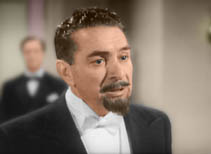
We start with one mad scientist, Dr. Igor Markoff.* Years previously, he injected his wife with the "acromegaly virus" for the rather melodramatic reason that he wants to disfigure her so that no other men would want her. Consequently, she committed suicide. In the present, he comes across Patricia, the daughter of a famous pianist, who just happens to look exactly like his dead wife. Before she developed acromegaly, presumably.
But Patricia isn't interested in Markoff's subtle advances.** So obviously, the logical course of action is for Markoff to infect her father with the "acromegaly virus" as well, and then use the prospect of a possible cure to blackmail him into getting her to marry Markoff. The ending of the film seems somewhat confused, but by all accounts it appears to involve a man in a gorilla suit. Because... well, why the hell not?
Leaving aside the dodgy science, and indeed the gorilla, this film sounds interesting. Patricia's father, Anthony Lawrence, becomes sick and deformed, taking on the appearance of a monster thanks to some serious effort on behalf of the makeup department; Igor Markoff looks entirely normal, except for his trademark I'm-an-evil-genius goatee. Lawrence's appearance inspires fear in the viewer; Markoff is the real monster. The moral of the story is so crushingly obvious that a child could pick up on it, although these days most children would probably be complaining that the film isn't scary enough - and besides, it's in black and white! What's that about? And why didn't they just CGI the gorilla? Seriously, WTF.
But people who suffer from disfiguring diseases like acromegaly and Cushing's Disease in real life don't have the advantage of B-movie actors and low budget sets to ram this point home to every stranger they run across in their daily life.
Acromegaly sufferers often experience discrimination because of their appearance. In advanced cases, as well as facial deformity and increased height, massive growth of soft tissues may give the impression of being overweight. The resultant discrimination can be particularly bad for women; activist Tanya Angus has spoken about how she's treated differently since developing the condition.
Similarly, in Cushing's Disease, a pituitary tumour causes sufferers to put on weight, often to the point of obesity. Not for nothing has it been called "the Ugly Disease". But strangers don't know that; most people are likely to think that a person is overweight due to greed. To quote a Ricky Gervais joke "We all eat too much in the West. But it's people who say it's glandular, isn't it? It's not glandular, it's greed". Well, sometimes... it is glandular. It's pituitary glandular, it's adrenal glandular, it's thyroid glandular. Glands can seriously screw you over, as I have learned. It's difficult enough being diagnosed with a serious, hard-to-treat illness which causes physical pain and makes you fat and destroys your self-esteem. But to also have to put up with abuse from complete strangers who refuse to believe you're even ill must be horrific. And because Cushing's usually takes a long time to diagnose, sufferers often go years believing that it's their fault that they're putting on so much weight, even though they're eating healthily and exercising well.
These are problems that need to be addressed. It's bizarre that while it's now (happily) seen as unacceptable to discriminate against people on the grounds of race, gender or sexuality, discriminating against people who are overweight, and making assumptions about their medical conditions, seems to be ok.
 ________________________________________________________
*N.B. that it's very important for mad scientists to have vaguely foreign-sounding names.
**He sends her flowers every single day, filled with creepy notes and messages. Oh, and he watches her continually. No matter what Twilight's told you, boys, stalking is not a romantic way to woo a lady.
Brief disclaimer: I haven't watched this film, just read about it. But here's a rough synopsis; I can't imagine anyone's too worried about spoilers for a film that came out almost seventy years ago.
We start with one mad scientist, Dr. Igor Markoff.* Years previously, he injected his wife with the "acromegaly virus" for the rather melodramatic reason that he wants to disfigure her so that no other men would want her. Consequently, she committed suicide. In the present, he comes across Patricia, the daughter of a famous pianist, who just happens to look exactly like his dead wife. Before she developed acromegaly, presumably.
But Patricia isn't interested in Markoff's subtle advances.** So obviously, the logical course of action is for Markoff to infect her father with the "acromegaly virus" as well, and then use the prospect of a possible cure to blackmail him into getting her to marry Markoff. The ending of the film seems somewhat confused, but by all accounts it appears to involve a man in a gorilla suit. Because... well, why the hell not?
Leaving aside the dodgy science, and indeed the gorilla, this film sounds interesting. Patricia's father, Anthony Lawrence, becomes sick and deformed, taking on the appearance of a monster thanks to some serious effort on behalf of the makeup department; Igor Markoff looks entirely normal, except for his trademark I'm-an-evil-genius goatee. Lawrence's appearance inspires fear in the viewer; Markoff is the real monster. The moral of the story is so crushingly obvious that a child could pick up on it, although these days most children would probably be complaining that the film isn't scary enough - and besides, it's in black and white! What's that about? And why didn't they just CGI the gorilla? Seriously, WTF.


But people who suffer from disfiguring diseases like acromegaly and Cushing's Disease in real life don't have the advantage of B-movie actors and low budget sets to ram this point home to every stranger they run across in their daily life.
Acromegaly sufferers often experience discrimination because of their appearance. In advanced cases, as well as facial deformity and increased height, massive growth of soft tissues may give the impression of being overweight. The resultant discrimination can be particularly bad for women; activist Tanya Angus has spoken about how she's treated differently since developing the condition.
Similarly, in Cushing's Disease, a pituitary tumour causes sufferers to put on weight, often to the point of obesity. Not for nothing has it been called "the Ugly Disease". But strangers don't know that; most people are likely to think that a person is overweight due to greed. To quote a Ricky Gervais joke "We all eat too much in the West. But it's people who say it's glandular, isn't it? It's not glandular, it's greed". Well, sometimes... it is glandular. It's pituitary glandular, it's adrenal glandular, it's thyroid glandular. Glands can seriously screw you over, as I have learned. It's difficult enough being diagnosed with a serious, hard-to-treat illness which causes physical pain and makes you fat and destroys your self-esteem. But to also have to put up with abuse from complete strangers who refuse to believe you're even ill must be horrific. And because Cushing's usually takes a long time to diagnose, sufferers often go years believing that it's their fault that they're putting on so much weight, even though they're eating healthily and exercising well.
These are problems that need to be addressed. It's bizarre that while it's now (happily) seen as unacceptable to discriminate against people on the grounds of race, gender or sexuality, discriminating against people who are overweight, and making assumptions about their medical conditions, seems to be ok.

*N.B. that it's very important for mad scientists to have vaguely foreign-sounding names.
**He sends her flowers every single day, filled with creepy notes and messages. Oh, and he watches her continually. No matter what Twilight's told you, boys, stalking is not a romantic way to woo a lady.
Thursday, 9 February 2012
I Want Acromegaly
As many of you are no doubt aware, I'm the kind of sad and tragic person who has enough time in her life to trawl the internet for other blogs about pituitary adenomas. Due to a weird and extremely irritating Blogger glitch, I'm unable to follow anyone anymore, but I still seek them out.
And two separate sites I found today, both about acromegaly, got me thinking. They got me thinking so much that I suspect I'll have to split my thoughts out across a couple of posts, or risk literally boring my readers to death.
The first was this: a conversation on a forum begun by a guy who claims to want to have acromegaly.
Quick recap: Acromegaly is a serious illness caused by a rare brain tumour on the pituitary gland which releases growth hormone into the blood. It can cause uncontrolled growth throughout the body, especially the hands, feet, chin, nose, tongue and forehead. It can also cause impotence, congestive heart failure, kidney failure, diabetes, loss of vision, and death. It is a devastating diagnosis for those unlucky enough to have it.
I quote:
"I really want to have this condition. I want it because I have a "babyish" face and my facial bones are not as developed as they should be. I'd rather not get cosmetic surgeries such as chin impants and jaw implants. When my face becomes as masculine as I want it to be I'll just get treatment for it.
Also my hands are small for a mans and I'd like to have bigger hands.
[...] How can I induce acromegaly in my body? Is it even possible?"
This guy may be a genuine idiot, or he may be a troll, but the fact is that there really arepeople fuckwits out there who inject themselves with growth hormone because they think it will make them better at sports/bodybuilding.* These people are effectively giving themselves mild acromegaly, despite the fact that there is really very little evidence that it could improve sporting performance, and it may actually decrease stamina despite increasing muscle mass.
Those of us cursed with epic fail bodies that go haywire at the slightest provocation tend to strongly resent it when fit and healthy people take risks with their health and fitness for the purpose of vanity. When I was having the packing removed from my nose after my brain surgery, and it was incredibly painful and there was blood everywhere,** the first thought that went through my head was: "Why would anyone ever have a nose job by choice?" (Plus, as a person who regularly has health professionals sticking needles in me, I can't get my head around someone actually volunteering for human pincushion duty).
Going around saying that you want to have acromegaly to gain a better jawline is like saying you want to get cancer so you can lose weight. Not only is it incredibly disrespectful to those people who seriously suffer with a horrible illness, it's just incredibly stupid. Injecting yourself with growth hormone so you can stand on a stage with a bunch of other people and flex your muscles impressively... words fail me. Not only are you putting your body and your health at risk, but you're cheating. All the other hard work you did to get those muscles is wiped out. You didn't win because you happen to be the muscly guy who worked the hardest and had the best muscly genetics out of all the hardworking muscly guys with muscly genes; you won because YOU'RE A DUMBASS.
Actually got surprisingly angry writing this! My next post on the topic of acromegaly, Cushing's disease, and physical appearance is coming soon...
________________________________________________________
*I recommend clicking on that link and scrolling down to the photo of the incredibly muscular man cuddling his pillow with his giant melon-packed arms, it's hilarious.
**In fairness, apparently it's not usually as bad as that, I just have a particularly objectionable nose. If you're squeamish, don't continue reading: The first time the nurse tried to pull the packing out, I asked "How badly will it hurt?" and the nurse replied "A bit." I am fairly good at dealing with pain usually, so I braced myself. She gave the packing a firm nug and it felt like my nose had exploded. I shrieked and she gave me a slightly unsympathetic look and told me I had to "get it over with". On the second attempt, she got the packing out, along with really quite a surprising gush of blood that went all over the floor. It hurt so much I was physically shaking and the nurse was forced to admit that it wasn't usually quite so horrendous.
And two separate sites I found today, both about acromegaly, got me thinking. They got me thinking so much that I suspect I'll have to split my thoughts out across a couple of posts, or risk literally boring my readers to death.
The first was this: a conversation on a forum begun by a guy who claims to want to have acromegaly.
Quick recap: Acromegaly is a serious illness caused by a rare brain tumour on the pituitary gland which releases growth hormone into the blood. It can cause uncontrolled growth throughout the body, especially the hands, feet, chin, nose, tongue and forehead. It can also cause impotence, congestive heart failure, kidney failure, diabetes, loss of vision, and death. It is a devastating diagnosis for those unlucky enough to have it.
I quote:
"I really want to have this condition. I want it because I have a "babyish" face and my facial bones are not as developed as they should be. I'd rather not get cosmetic surgeries such as chin impants and jaw implants. When my face becomes as masculine as I want it to be I'll just get treatment for it.
Also my hands are small for a mans and I'd like to have bigger hands.
[...] How can I induce acromegaly in my body? Is it even possible?"
This guy may be a genuine idiot, or he may be a troll, but the fact is that there really are
Those of us cursed with epic fail bodies that go haywire at the slightest provocation tend to strongly resent it when fit and healthy people take risks with their health and fitness for the purpose of vanity. When I was having the packing removed from my nose after my brain surgery, and it was incredibly painful and there was blood everywhere,** the first thought that went through my head was: "Why would anyone ever have a nose job by choice?" (Plus, as a person who regularly has health professionals sticking needles in me, I can't get my head around someone actually volunteering for human pincushion duty).
Going around saying that you want to have acromegaly to gain a better jawline is like saying you want to get cancer so you can lose weight. Not only is it incredibly disrespectful to those people who seriously suffer with a horrible illness, it's just incredibly stupid. Injecting yourself with growth hormone so you can stand on a stage with a bunch of other people and flex your muscles impressively... words fail me. Not only are you putting your body and your health at risk, but you're cheating. All the other hard work you did to get those muscles is wiped out. You didn't win because you happen to be the muscly guy who worked the hardest and had the best muscly genetics out of all the hardworking muscly guys with muscly genes; you won because YOU'RE A DUMBASS.
Actually got surprisingly angry writing this! My next post on the topic of acromegaly, Cushing's disease, and physical appearance is coming soon...
________________________________________________________
*I recommend clicking on that link and scrolling down to the photo of the incredibly muscular man cuddling his pillow with his giant melon-packed arms, it's hilarious.
**In fairness, apparently it's not usually as bad as that, I just have a particularly objectionable nose. If you're squeamish, don't continue reading: The first time the nurse tried to pull the packing out, I asked "How badly will it hurt?" and the nurse replied "A bit." I am fairly good at dealing with pain usually, so I braced myself. She gave the packing a firm nug and it felt like my nose had exploded. I shrieked and she gave me a slightly unsympathetic look and told me I had to "get it over with". On the second attempt, she got the packing out, along with really quite a surprising gush of blood that went all over the floor. It hurt so much I was physically shaking and the nurse was forced to admit that it wasn't usually quite so horrendous.
Friday, 16 December 2011
Addisonian Crisis... or stressful football match?
I found an article on BBC News about how a woman was recently diagnosed with Addison's Disease, and one of the key clues to her underlying condition was her extreme response to the stress of watching particularly close and high profile football matches. They think that treatment for her condition may have cured her extreme reaction to tense games of football... but they can't be sure because her treatment and diagnosis has happened at the same time as a run of easy matches for her favourite team!
Addison's Disease is a medical condition which occurs when the body does not produce enough cortisol, a steroid hormone - basically it's the opposite of Cushing's Disease. Some people who suffer from pituitary problems due to a pituitary tumour, or after surgical removal of a tumour, are unable to produce ACTH, the pituitary hormone which stimulates the body's production of cortisol, and consequently they need to take steroids to make up for the lack of cortisol. The tricky part is that the body needs more steroid hormone when it's under stress, so when people who take steroids are sick or injured, they need to double their dosage.
After pituitary surgery, most people including me, go onto steroid replacement pills just in case there's been any damage to the part of the pituitary that produces ACTH, and take them until doctors are sure that the body is producing steroids naturally.
The aim of this is to make sure they don't suffer an Addisonian crisis, which is an acute medical emergency where there is a severe shortage of cortisol, usually in a high-stress situation. If untreated it can lead to death or coma, so people whose bodies don't produce cortisol on their own usually have some form of medical ID in case they're in an accident, to inform paramedics that they will need steroids immediately.
Thursday, 20 October 2011
Performance-Enhancing Drugs
I'm proud to announce that, as of last Friday, I am no longer on steroids. Not because I don't care about maintaining a terrifyingly muscular physique a la Jodie Marsh*, but because my endocrinologist has, after stealing a lot of my blood, confirmed that six months after my surgery, my pituitary gland is successfully producing adrenocorticotrophic hormone (ACTH) on demand. Or, in layman's terms: The Surgeon Did Not Fuck Up.
This is good news, because ACTH is needed for the body to produce cortisol, which is needed for the body to not collapse, flail around, and then die. Consequently, it's generally thought that the safest thing to do is to give replacement cortisol treatment to everyone who's had pituitary surgery until you can be 100% sure they don't need it any more. As well as coming off the steroids, my monthly prescription bill will be further reduced over the next week or so as I wean myself off the beta blockers I currently take (to slow down my overenthusiastic heart).
Obviously I was delighted to hear that I would once again be eligible to compete in high-level international sporting events and resolved to do so at the earliest opportunity.** However, just days after I resolved to dig out my skipping rope and get cracking with some sort of training montage, I was surprised to find out that as long as I'm still on beta-blockers I'm excluded from taking part in some sporting events.
Having always associated beta-blockers with elderly folk post-heart-attack, I was surprised to find out that their effects, i.e. slowing heartrate and reducing tremor, are highly desired in, and consequently banned from, Olympic sports including gymnastics, shooting, wrestling, ski jumping (?) and curling.***
So I'll have to wait a few more days before starting my career as a wrestler. Damn.
__________________________________________________________________
*Against whose high standards I judge all my life decisions.
**Just as soon as the Global Egg and Spoon Race Championships get going
again.
***The fat kid of international sporting endeavour.


This is good news, because ACTH is needed for the body to produce cortisol, which is needed for the body to not collapse, flail around, and then die. Consequently, it's generally thought that the safest thing to do is to give replacement cortisol treatment to everyone who's had pituitary surgery until you can be 100% sure they don't need it any more. As well as coming off the steroids, my monthly prescription bill will be further reduced over the next week or so as I wean myself off the beta blockers I currently take (to slow down my overenthusiastic heart).
Obviously I was delighted to hear that I would once again be eligible to compete in high-level international sporting events and resolved to do so at the earliest opportunity.** However, just days after I resolved to dig out my skipping rope and get cracking with some sort of training montage, I was surprised to find out that as long as I'm still on beta-blockers I'm excluded from taking part in some sporting events.
Having always associated beta-blockers with elderly folk post-heart-attack, I was surprised to find out that their effects, i.e. slowing heartrate and reducing tremor, are highly desired in, and consequently banned from, Olympic sports including gymnastics, shooting, wrestling, ski jumping (?) and curling.***
So I'll have to wait a few more days before starting my career as a wrestler. Damn.
__________________________________________________________________
*Against whose high standards I judge all my life decisions.

**Just as soon as the Global Egg and Spoon Race Championships get going
again.
***The fat kid of international sporting endeavour.
Subscribe to:
Posts (Atom)