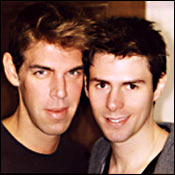
I've been out of the world for a little while thanks to my surgery, so I was saddened to find out only today that Tanya Angus, an acromegaly sufferer, passed away on the 14th January. She was aged just 34, and died from heart failure and transient ischaemic attack (a "mini-stroke").
Tanya Angus had one of the most severe cases of acromegaly (a.k.a. gigantism) ever seen; it was not until her pituitary adenoma (tumour) grew to the size of a grapefruit that she was finally diagnosed. By this time, the tumour wrapped around her pituitary gland proved extremely resistant to surgical and radiotherapy treatment. Her condition caused her to grow from 5'8" at the age of 21 to 7ft tall by the time of her death, and to go from 130 to 400lbs. Just last August it seemed that injections to inhibit her growth hormone production had been successful, but by October sadly her levels of growth hormone were rising once again.
She was a well-known figure in the acromegaly community for her efforts to raise awareness of the condition, and to encourage education about and early detection of gigantism among the medical profession. Anyone reading her website, or the comments sections of the various news websites which reported her death, can't fail to notice how many of her fellow acromegaly sufferers viewed her as an inspiration.
Showing posts with label famous patients. Show all posts
Wednesday, 6 February 2013
Thursday, 24 May 2012
The Ugliest Woman In The World
Today's post was inspired by a suggestion from one of my lovely commenters - I have forgotten who (sorry!), but thank you anyway for the idea.
Mary Ann Bevan was known as the Ugliest Woman in the World. She suffered from acromegaly, a condition in which her pituitary produced too much growth hormone, which led to deformity of her face and abnormal growth, as well as headaches and joint problems. After the death of her husband, she was forced to support herself and her four children by working in the freak show at Coney Island in the 1920s.
In 2006, Hallmark produced and sold a greetings card in the UK which featured a picture of Bevan and the legend: "When the screen went back, he was to always regret the words . . . ‘I’ll go for number three, Cilla.’”
Dr Wouter de Herder, a Dutch endocrinologist who was on holiday in England, recognised the photograph and complained to Hallmark. According to theis article, he said: "“I immediately recognised the photo as I had just written an article about Mary Ann Bevan... She was in several [freak] shows in England and then later in the United States, but she led a miserable, painful life. I simply don’t think its right in 2006 to use her image to create a sick birthday card. I feel that this card is insulting to all patients who suffer from the same condition.”
Ironically, his words in fact echoed those of the famous neurosurgeon Harvey Cushing eighty years earlier, who attempted to treat Mary Ann Bevan towards the end of her life. He wrote to Time magazine in 1927, complaining of the way it had made fun of Bevan: “This unfortunate woman who sits in the sideshow of Ringling Brothers [...] has a story which is far from mirth-provoking,” wrote Dr Cushing.“She, previously a vigorous and good looking young woman, has become the victim of a disease known as acromegaly . . . Being a physician, I do not like to feel that Time can be frivolous over the tragedies of disease.” Bevan died just six years later.
I've written before about the difficulties facing women with acromegaly, but I think this story really hammers the message home. In eighty years, it seems that although our ability to treat this debilitating disease has improved greatly, our attitudes to its sufferers have hardly changed.
Hallmark pulled the card from stores, but not before its communications manager issued this memorable statement: “Once we found that this lady was ill, rather than simply being ugly, then the card was [...]withdrawn immediately, as it would breach anything we would do in terms of taking the mick out of anyone who was poorly.”
Ugly yet healthy people - be warned.
Mary Ann Bevan was known as the Ugliest Woman in the World. She suffered from acromegaly, a condition in which her pituitary produced too much growth hormone, which led to deformity of her face and abnormal growth, as well as headaches and joint problems. After the death of her husband, she was forced to support herself and her four children by working in the freak show at Coney Island in the 1920s.
![]() |
| Mary Ann Bevan |
Dr Wouter de Herder, a Dutch endocrinologist who was on holiday in England, recognised the photograph and complained to Hallmark. According to theis article, he said: "“I immediately recognised the photo as I had just written an article about Mary Ann Bevan... She was in several [freak] shows in England and then later in the United States, but she led a miserable, painful life. I simply don’t think its right in 2006 to use her image to create a sick birthday card. I feel that this card is insulting to all patients who suffer from the same condition.”
Ironically, his words in fact echoed those of the famous neurosurgeon Harvey Cushing eighty years earlier, who attempted to treat Mary Ann Bevan towards the end of her life. He wrote to Time magazine in 1927, complaining of the way it had made fun of Bevan: “This unfortunate woman who sits in the sideshow of Ringling Brothers [...] has a story which is far from mirth-provoking,” wrote Dr Cushing.“She, previously a vigorous and good looking young woman, has become the victim of a disease known as acromegaly . . . Being a physician, I do not like to feel that Time can be frivolous over the tragedies of disease.” Bevan died just six years later.
I've written before about the difficulties facing women with acromegaly, but I think this story really hammers the message home. In eighty years, it seems that although our ability to treat this debilitating disease has improved greatly, our attitudes to its sufferers have hardly changed.
Hallmark pulled the card from stores, but not before its communications manager issued this memorable statement: “Once we found that this lady was ill, rather than simply being ugly, then the card was [...]withdrawn immediately, as it would breach anything we would do in terms of taking the mick out of anyone who was poorly.”
Ugly yet healthy people - be warned.
Saturday, 21 January 2012
Women With Acromegaly
After yesterday's post, I wanted to write about women with acromegaly,* as pretty much all of the pituitary adenoma sufferers I've identified so far have been men. In terms of acromegaly, I suppose that great height for a man may be seen as an advantage for certain roles as an actor or sportsman, and the physical symptoms of acromegaly - such as enlargement of the hands and feet, jaw, forehead and so on - are perhaps less likely to cause adverse comment in a man than a woman.
But I admit, I considered subtitling this post "Where The Hell Are You?" Women with acromegaly are seriously hard to find; the Wikipedia entry of "notable cases" of acromegaly lists thirteen sufferers, who are all male. It's true that male celebrities with gigantism are, in most cases, famous for roles which they play because of their height; like many actors with disabilities or conditions such as gigantism or dwarfism, casting directors or scouts are looking at their physical attributes first, and their acting talent second. Yet there is a fair list of men with acromegaly who are famous for their roles in TV or film, or for their sporting achievements - and there are even a few male acromegaly sufferers who are famous for something completely unrelated to their height, such as Kevin Aucoin, make-up artist and the historic Pio Pico, last governor of Mexican California.
Yet the only famous women with acromegaly that I've been able to track down so far are famous for their height alone; they are record holders, they might be interviewed for the newspapers, but they don't get the acting roles that great height opens up for their male counterparts. They're not on television playing unusually tall people; it seems as though such parts are for men only. They're not playing sport. There's no female Andre the Giant or Richard Kiel; and yet, when it comes to actors with dwarfism, there are well-known female actors out there, even if they are in smaller numbers than their male counterparts.
Gigantism caused by acromegaly is an extremely rare disease, don't get me wrong - even rarer than acromegaly which develops in adulthood. But it is just as likely to occur in women as in men - so why is it that some male sufferers are able to exploit their illness in a way in which female sufferers are not? The symptoms of acromegaly, especially that which develops in youth - great height, large jaw, big hands and feet - are debilitating, but they also closely correlate with traditional physical markers of masculinity; and they're diametrically opposed to feminine physical ideals. Do women with acromegaly suffer greater discrimination than men? I'd be interested to find out.
Tanya Angus
Tanya Angus is an activist who raises awareness about acromegaly in the United States. She does a pretty good job of it too; she's been interviewed on the Today Show, featured on ABC News, and even made it across the pond with a story in the Daily Mail. Tanya's acromegaly has proved impossible to control with pituitary surgery or medication, and consequently she's still growing at age 33 and 6'6". After her GP consistently failed to acknowledge that there could be anything wrong, she was diagnosed only by the time that her pituitary tumor had grown to the size of grapefruit. Whilst there was some success in reducing her hormone levels in 2010 using bumper doses of Somatuline, they appear to have been creeping back up again in 2011; and in a country where there's no National Health Service, her medications and hospital treatment are hugely expensive. She speaks about the difficulties that acromegaly brings for female sufferers; she is frequently referred to as "sir" and still receives abuse even in her home town.
See her website at http://www.tanyaangus.com/
Sandy Allen
Sandy Allen was the world's tallest woman before her death at the age of 53 in 2008. Sandy was 7' 7 1/2" - for comparison, currently the world's tallest man is Sultan Kösen at 8'3" - only 8 inches taller. In her later years, Allen was restricted to using a wheelchair to get about; many sufferers of acromegaly gigantism find that as they age, their legs and back are no longer able to support their height and weight. She made appearances on film and television, and aimed to educate children about the importance of accepting differences.
Svetlana Singh
Svetlana Singh is an Indian woman with gigantism caused by acromegaly; she was featured on a Channel Four documentary called The World's Tallest Woman And Me, although at 6'8" she is significantly smaller than the record holders. Married to a man who is 6'6", their child Karan was already 3'2" aged just ten months old. Svetlana was hoping to play netball for India at the Commonwealth Games in 2010, before a knee injury which failed to heal forced her to abandon a possible sporting career.
UPDATE: I've also written about famous people with pituitary adenomas here and here, and written specifically about famous people with Cushing's Disease.
_________________________________________________
*What is acromegaly? It's a growth condition caused by a pituitary adenoma (tumor) which releases too much growth hormone - this site has a good explanation of the condition.
But I admit, I considered subtitling this post "Where The Hell Are You?" Women with acromegaly are seriously hard to find; the Wikipedia entry of "notable cases" of acromegaly lists thirteen sufferers, who are all male. It's true that male celebrities with gigantism are, in most cases, famous for roles which they play because of their height; like many actors with disabilities or conditions such as gigantism or dwarfism, casting directors or scouts are looking at their physical attributes first, and their acting talent second. Yet there is a fair list of men with acromegaly who are famous for their roles in TV or film, or for their sporting achievements - and there are even a few male acromegaly sufferers who are famous for something completely unrelated to their height, such as Kevin Aucoin, make-up artist and the historic Pio Pico, last governor of Mexican California.
Yet the only famous women with acromegaly that I've been able to track down so far are famous for their height alone; they are record holders, they might be interviewed for the newspapers, but they don't get the acting roles that great height opens up for their male counterparts. They're not on television playing unusually tall people; it seems as though such parts are for men only. They're not playing sport. There's no female Andre the Giant or Richard Kiel; and yet, when it comes to actors with dwarfism, there are well-known female actors out there, even if they are in smaller numbers than their male counterparts.
Gigantism caused by acromegaly is an extremely rare disease, don't get me wrong - even rarer than acromegaly which develops in adulthood. But it is just as likely to occur in women as in men - so why is it that some male sufferers are able to exploit their illness in a way in which female sufferers are not? The symptoms of acromegaly, especially that which develops in youth - great height, large jaw, big hands and feet - are debilitating, but they also closely correlate with traditional physical markers of masculinity; and they're diametrically opposed to feminine physical ideals. Do women with acromegaly suffer greater discrimination than men? I'd be interested to find out.
Women With Acromegaly
Tanya Angus
Tanya Angus is an activist who raises awareness about acromegaly in the United States. She does a pretty good job of it too; she's been interviewed on the Today Show, featured on ABC News, and even made it across the pond with a story in the Daily Mail. Tanya's acromegaly has proved impossible to control with pituitary surgery or medication, and consequently she's still growing at age 33 and 6'6". After her GP consistently failed to acknowledge that there could be anything wrong, she was diagnosed only by the time that her pituitary tumor had grown to the size of grapefruit. Whilst there was some success in reducing her hormone levels in 2010 using bumper doses of Somatuline, they appear to have been creeping back up again in 2011; and in a country where there's no National Health Service, her medications and hospital treatment are hugely expensive. She speaks about the difficulties that acromegaly brings for female sufferers; she is frequently referred to as "sir" and still receives abuse even in her home town.
See her website at http://www.tanyaangus.com/
Sandy Allen
Sandy Allen was the world's tallest woman before her death at the age of 53 in 2008. Sandy was 7' 7 1/2" - for comparison, currently the world's tallest man is Sultan Kösen at 8'3" - only 8 inches taller. In her later years, Allen was restricted to using a wheelchair to get about; many sufferers of acromegaly gigantism find that as they age, their legs and back are no longer able to support their height and weight. She made appearances on film and television, and aimed to educate children about the importance of accepting differences.
![]() |
| Sandy Allen |
Svetlana Singh is an Indian woman with gigantism caused by acromegaly; she was featured on a Channel Four documentary called The World's Tallest Woman And Me, although at 6'8" she is significantly smaller than the record holders. Married to a man who is 6'6", their child Karan was already 3'2" aged just ten months old. Svetlana was hoping to play netball for India at the Commonwealth Games in 2010, before a knee injury which failed to heal forced her to abandon a possible sporting career.
UPDATE: I've also written about famous people with pituitary adenomas here and here, and written specifically about famous people with Cushing's Disease.
_________________________________________________
*What is acromegaly? It's a growth condition caused by a pituitary adenoma (tumor) which releases too much growth hormone - this site has a good explanation of the condition.
Friday, 20 January 2012
More Famous People With Lumps In Their Head.
So it turns out that by far my most popular post on this blog so far is the one entitled "Russell Watson, It's Not All About You". I don't know whether my readers just happen to have enduring personal grievances with Russell Watson, or are simply opera purists who object to his pop-operatic croonings. Or maybe it's something else.
So, I'm faced with a choice. In my relentless pursuit of pageviews, should I begin writing reams of personal abuse about Mr Watson, or simply continue to shine a spotlight on the other pituitary ademoaners of the world?
I choose the latter option, and not just because of Britain's vast and unyielding libel laws.*
And so, I present:
Once again I must apologise for the preponderance of people with acromegaly on this list! Acromegaly is an extremely rare illness, caused by a tumor on the pituitary gland which produces excessive growth hormone. However, acromegaly's symptoms are so visually striking that, especially if the illness occurs in childhood - when it will lead to massive growth in height (gigantism), as well as the growth of soft tissue and bone which occur in adult acromegaly - its sufferers are very visible. So-called "giants" are in demand for certain roles in the film and television industry, as well as certain sports where their height gives them an advantage. Consequently, it's relatively easy to find famous acromegaly sufferers, while celebrities who suffer from other kinds of pituitary adenoma may keep their diagnosis private.
I certainly think that it would be helpful if there were celebrities who were known to have Cushing's, or prolactinoma; it helps sufferers to feel that they're not alone, and emphasizes the fact that, while a pituitary adenoma can be a significant bloody nuisance, it's not the end of the world - and that there are plenty of other people going through the same problems.
Obviously I think it would be awesome if a famous person was known to have a TSH-oma/thyrotropinoma. But if that doesn't happen, well I guess I'll just have to step up to the celebrity line!**
Anyway, back to the point. Presenting:
Carel Struycken
Carel Struycken is an actor and an acromegaly sufferer; he stands seven foot tall. Born in the Netherlands in 1948, he's now 63 years old. You might recognise him from playing Lurch in the Addams Family films (click here for a picture!); he's also appeared in Star Trek: the Next Generation, Men In Black, and even Sargeant Pepper's Lonely Heart's Club Band. According to my trusty Wikipedia, he's interested in photography and the development of virtual reality systems. A pretty cool guy by all standards!
Richard Kiel
Richard Kiel is another well-known actor who suffers from acromegaly; his most famous role was as Jaws in the James Bond films. He's now largely retired, although he voiced a character in the animated film Tangled which came out in 2010, and he's written two books; one a memoir entitled Making It Big In The Movies, the second a historical novel co-authored with Pamela Wallace, about the life of Cassius Marcellus Clay, a 19th-Century abolitionist.
Scott Hamilton
Scott Hamilton, the Olympic gold medallist figure skater, is a craniopharyngioma sufferer. I've not previously mentioned craniopharyngiomas, but like pituitary adenomas they're a rare kind of benign pituitary tumour. They cause similar symptoms to pituitary adenomas; they can interfere with hormone production, although they will cause hormone deficits rather than overproduction of pituitary hormones, and they cause headaches and vision loss. They're most common in children and middle-aged adults; Scott Hamilton was diagnosed with craniopharyngioma aged 51. A remarkable guy, Hamilton won four consecutive World Championships and created Stars On Ice.
UPDATE: For those of you who just can't get enough of hearing about famous people with pituitary tumours, I've also written a post about famous people with Cushing's Disease, a post about famous women with acromegaly, my original post about Russell Watson that sparked this whole thing off, and my first post about famous tumourheads!
__________________________________________________
*Russell Watson, I love you.
**Admittedly, I haven't quite worked out how I'll achieve fame. Through my own line of edible greetings cards? By streaking at the London Olympics? For my charitable work with walruses? Ideas on a postcard please.
So, I'm faced with a choice. In my relentless pursuit of pageviews, should I begin writing reams of personal abuse about Mr Watson, or simply continue to shine a spotlight on the other pituitary ademoaners of the world?
I choose the latter option, and not just because of Britain's vast and unyielding libel laws.*
And so, I present:
A Panoply of Pituitary Problems, or: More Famous People With Lumps In Their Head.
Once again I must apologise for the preponderance of people with acromegaly on this list! Acromegaly is an extremely rare illness, caused by a tumor on the pituitary gland which produces excessive growth hormone. However, acromegaly's symptoms are so visually striking that, especially if the illness occurs in childhood - when it will lead to massive growth in height (gigantism), as well as the growth of soft tissue and bone which occur in adult acromegaly - its sufferers are very visible. So-called "giants" are in demand for certain roles in the film and television industry, as well as certain sports where their height gives them an advantage. Consequently, it's relatively easy to find famous acromegaly sufferers, while celebrities who suffer from other kinds of pituitary adenoma may keep their diagnosis private.
I certainly think that it would be helpful if there were celebrities who were known to have Cushing's, or prolactinoma; it helps sufferers to feel that they're not alone, and emphasizes the fact that, while a pituitary adenoma can be a significant bloody nuisance, it's not the end of the world - and that there are plenty of other people going through the same problems.
Obviously I think it would be awesome if a famous person was known to have a TSH-oma/thyrotropinoma. But if that doesn't happen, well I guess I'll just have to step up to the celebrity line!**
Anyway, back to the point. Presenting:
Carel Struycken
Carel Struycken is an actor and an acromegaly sufferer; he stands seven foot tall. Born in the Netherlands in 1948, he's now 63 years old. You might recognise him from playing Lurch in the Addams Family films (click here for a picture!); he's also appeared in Star Trek: the Next Generation, Men In Black, and even Sargeant Pepper's Lonely Heart's Club Band. According to my trusty Wikipedia, he's interested in photography and the development of virtual reality systems. A pretty cool guy by all standards!
Richard Kiel
Richard Kiel is another well-known actor who suffers from acromegaly; his most famous role was as Jaws in the James Bond films. He's now largely retired, although he voiced a character in the animated film Tangled which came out in 2010, and he's written two books; one a memoir entitled Making It Big In The Movies, the second a historical novel co-authored with Pamela Wallace, about the life of Cassius Marcellus Clay, a 19th-Century abolitionist.
Scott Hamilton
Scott Hamilton, the Olympic gold medallist figure skater, is a craniopharyngioma sufferer. I've not previously mentioned craniopharyngiomas, but like pituitary adenomas they're a rare kind of benign pituitary tumour. They cause similar symptoms to pituitary adenomas; they can interfere with hormone production, although they will cause hormone deficits rather than overproduction of pituitary hormones, and they cause headaches and vision loss. They're most common in children and middle-aged adults; Scott Hamilton was diagnosed with craniopharyngioma aged 51. A remarkable guy, Hamilton won four consecutive World Championships and created Stars On Ice.
![]() |
| Hamilton's last performance on Stars On Ice |
UPDATE: For those of you who just can't get enough of hearing about famous people with pituitary tumours, I've also written a post about famous people with Cushing's Disease, a post about famous women with acromegaly, my original post about Russell Watson that sparked this whole thing off, and my first post about famous tumourheads!
__________________________________________________
*Russell Watson, I love you.
**Admittedly, I haven't quite worked out how I'll achieve fame. Through my own line of edible greetings cards? By streaking at the London Olympics? For my charitable work with walruses? Ideas on a postcard please.
Labels:
acromegaly,
adenoma,
awareness,
benign,
craniopharyngioma,
famous,
famous patients,
giant,
hormones,
kevyn aucoin,
lump,
pio pico,
pituitary adenoma,
russell watson,
symptoms,
TSHoma,
tumour
Thursday, 15 December 2011
Famous People with Cushing's Disease?
Being a blogger with a TSHoma (a.k.a. TSH-oma,* a.k.a. thyrotropinoma, a.k.a. a freak) has its pros and cons. On the plus side, as far as I can tell I have definitely found a niche in the market - no mean feat, given the number of enthusiastic and generally excellent blogs written by people with everything from diabetes to acromegaly. On the down side, there's none of that nice cosy caring and chit-chat over tea and lanreotide injections that you get from support groups with other people. People who understand how rubbish it is that your heart's going too fast/your hands have grown enormously/your nose just fell off. So being me, I have been ambling around the internet, happily barging into other people's support groups and demanding to be paid attention because I have a tumour on my pituitary gland too.
A little while ago I found the lovely Acromegaly Bloggers, and more recently bumbled across a blogging group for people with Cushing's disease, called Cushie Bloggers. People with Cushing's disease can at least console themselves with the fact that referring to themselves as "cushies" makes them sound incredibly cute and fluffy and generally charming.
But anyway, finding the blog and reading the experiences of some of the bloggers got me thinking: in an earlier post, I went on a hunt for famous people with pituitary adenomas. Obviously there were no cases of TSHoma/thyrotropinoma - that would be too much to hope for. But there's Russell Watson with his unspecified adenoma, and numerous celebs with acromegaly - even more than I included in my post, in fact: acromegalovelies are all over the shop, from Andre the Giant to Pio Pico.
But where are all the famous Cushing's sufferers?
I've found it difficult to find information specifically on the incidence** of Cushing's Disease, probably due in part to the fact that it's a subtype, as it were, of Cushing's Syndrome, accounting for about 70% of endogenous Cushing's syndrome cases. I have found the incidence of such new cases quoted as about 13 cases per million, so we're talking 9 new cases per million per year, compared to an incidence of 3 - 4 new cases of acromegaly per million, per year. So it is seemingly rather more common than acomegaly, although the massive tendency towards underdiagnosis of both illnesses (and TSH-omas as well) makes these rather shaky figures.
Given that it's relatively easy to find well-known figures suffering from acromegaly (even outside the field of sports, where young sufferers' large frames could be considered to give them an attractive advantage in sports like basketball or wrestling) and given that Cushing's is more common, you'd think it would be easier to find a celebrity with Cushing's. (You'd also expect to find people with prolactinomas, but I suspect that (particularly male) celebrities might prefer to generalise prolactinomas as "tumours" rather than publicly imply that they're leaking milk from their manboobs.) Celebrities diagnosed with Cushing's, on the other hand, are (I would have thought) surely be more likely to publicise their condition, to explain that any excess weight gain was not due to greed or laziness but a medical condition.
So where are they all? I've looked around the place and all I can find is a vague hint that Elvis may have had Cushing's syndrome (as distinct from the disease, Cushing's syndrome does not necessarily imply a pituitary tumour, but could be caused by steroid overdose or adrenal tumours etc). If true it would certainly be something of a PR coup for cushies, but one article in the Daily Mail is not much to go on. The Daily Mail seems to have a little bit of a penchant for Cushing's Disease (is there a sufferer amongst the editorial staff?) and I've also found an article suggesting that King Henry VIII may have had Cushing's Disease. Who knows? When it comes to historical figures, it's fun to speculate, but speculation is all it can remain.
The only - literally the only - modern-day sufferer I've found who comes close to the designation of "celebrity" is J. Jordan Bruns, an artist featured in this article - but he's not exactly a household name, lovely though his art is.
Come on cushies, come out from the woodwork!
UPDATE: If you're interested in reading about famous people who suffer from pituitary tumours, see my other posts looking at famous pituitary ademoaners here and here; my post about Russell Watson, the opera singer who had a pituitary tumour; or check out my post looking at famous women with acromegaly.
___________________________________________________
*Never doubt the power of punctuation. If you search for the wrong one, Google will offer you Tshoki Tshoma's naked photos. Nice.
** I would prefer to write about prevalance but I've found it harder to find figures for that.
A little while ago I found the lovely Acromegaly Bloggers, and more recently bumbled across a blogging group for people with Cushing's disease, called Cushie Bloggers. People with Cushing's disease can at least console themselves with the fact that referring to themselves as "cushies" makes them sound incredibly cute and fluffy and generally charming.
But anyway, finding the blog and reading the experiences of some of the bloggers got me thinking: in an earlier post, I went on a hunt for famous people with pituitary adenomas. Obviously there were no cases of TSHoma/thyrotropinoma - that would be too much to hope for. But there's Russell Watson with his unspecified adenoma, and numerous celebs with acromegaly - even more than I included in my post, in fact: acromegalovelies are all over the shop, from Andre the Giant to Pio Pico.
But where are all the famous Cushing's sufferers?
I've found it difficult to find information specifically on the incidence** of Cushing's Disease, probably due in part to the fact that it's a subtype, as it were, of Cushing's Syndrome, accounting for about 70% of endogenous Cushing's syndrome cases. I have found the incidence of such new cases quoted as about 13 cases per million, so we're talking 9 new cases per million per year, compared to an incidence of 3 - 4 new cases of acromegaly per million, per year. So it is seemingly rather more common than acomegaly, although the massive tendency towards underdiagnosis of both illnesses (and TSH-omas as well) makes these rather shaky figures.
Given that it's relatively easy to find well-known figures suffering from acromegaly (even outside the field of sports, where young sufferers' large frames could be considered to give them an attractive advantage in sports like basketball or wrestling) and given that Cushing's is more common, you'd think it would be easier to find a celebrity with Cushing's. (You'd also expect to find people with prolactinomas, but I suspect that (particularly male) celebrities might prefer to generalise prolactinomas as "tumours" rather than publicly imply that they're leaking milk from their manboobs.) Celebrities diagnosed with Cushing's, on the other hand, are (I would have thought) surely be more likely to publicise their condition, to explain that any excess weight gain was not due to greed or laziness but a medical condition.
So where are they all? I've looked around the place and all I can find is a vague hint that Elvis may have had Cushing's syndrome (as distinct from the disease, Cushing's syndrome does not necessarily imply a pituitary tumour, but could be caused by steroid overdose or adrenal tumours etc). If true it would certainly be something of a PR coup for cushies, but one article in the Daily Mail is not much to go on. The Daily Mail seems to have a little bit of a penchant for Cushing's Disease (is there a sufferer amongst the editorial staff?) and I've also found an article suggesting that King Henry VIII may have had Cushing's Disease. Who knows? When it comes to historical figures, it's fun to speculate, but speculation is all it can remain.
The only - literally the only - modern-day sufferer I've found who comes close to the designation of "celebrity" is J. Jordan Bruns, an artist featured in this article - but he's not exactly a household name, lovely though his art is.
Come on cushies, come out from the woodwork!
UPDATE: If you're interested in reading about famous people who suffer from pituitary tumours, see my other posts looking at famous pituitary ademoaners here and here; my post about Russell Watson, the opera singer who had a pituitary tumour; or check out my post looking at famous women with acromegaly.
___________________________________________________
*Never doubt the power of punctuation. If you search for the wrong one, Google will offer you Tshoki Tshoma's naked photos. Nice.
** I would prefer to write about prevalance but I've found it harder to find figures for that.
Tuesday, 15 November 2011
Russell Watson, It's Not All About You
Following my last post about Russell Watson, I felt inspired to find out about some other famous people who have had pituitary adenomas, using the trusty-yet-woefully-incomplete-and-indeed-quite-inaccurate Wikipedia List of Brain Tumour Patients. And I have learned about:
Governor Pico is my absolute favourite discovery. Not just because I love a guy with a sexy beard, not just because of his awesome name, but also because he is a very intriguing case of retrodiagnosis. Pío Pico lived from 1801 to 1894; acromegaly was first identified in 1886 and he was never diagnosed in his lifetime. In 2010, this paper was published suggesting that he suffered from acromegaly. Looking at pictures of him from 1847 to 1858, he progressively exhibits more of the characteristics associated with acromegaly; this picture from 1858 clearly shows a large forehead, big nose and enlarged lips, a hairless face and hairloss from the eyebrows, which could indicate secondary hypothyroidism, and misaligned eyes which could be due to the tumour pressing on cranial nerves. If you look at the article I linked above, there are more photographs which show his huge hands.
But that's not where the interesting ends. The Governor lived well into his nineties - no mean achievement for a Victorian - while the article suggests that around 80% of patients with untreated acromegaly would be expected to die in the first ten years after diagnosis. It seems instead that his pituitary adenoma spontaneously infarcted sometime after 1858; pictures of him as an old man show that his facial features and hands have become much smaller, he has a full beard and his eyebrows have grown back.*
Another pituitary adenoma and a really sad case. Kevyn Aucoin was a well-known make-up artist and photographer who had worked for Vogue and Revlon, wrote books and appeared on TV. He was diagnosed with acromegaly aged 39, although it's believed he suffered from the condition for some time before it was diagnosed, and the pain of it resulted in an addiction to prescription painkillers. After surgery for his pituitary tumour, his use of painkillers intensified and he died, only a few months later, from liver and kidney failure. You can read about him on his Wikipedia page and this article.
Sun Mingming
You could probably guess from the subtitle that Sun Mingming also has acromegaly (an overrepresented condition in this sample! I guess because the symptoms are so unusual, lazy journalists don't just write "brain tumour" and move on). Pituitary adenomas which secrete growth hormone and develop before puberty result in sufferers becoming very tall; in adulthood it's all about the growth of soft tissues. Sun underwent gamma knife radiosurgery at the age of 23 and is still playing.
It's been kind of a challenge to discover much about James Murphy and his pituitary macro-adenoma, but in this article he certainly emphasises the fact that it's a benign tumour rather than cancer, and that although it can cause some serious problems and, rarely, death, the prognosis is nowhere near as bad as a cancerous brain tumour. One online forum I bumped across in my researchings was castigating celebrities who fail to make this distinction, so good on him.
From the hints about his ongoing "hormone inhibiting treatment," which on one site is said to be bromocriptine, and the fact that he's not obviously acromegalicious** I'm guessing he has a nasty prolactinoma, but that is just a guess. I'm kind of hoping so, purely because I've found it so hard to get examples of famous pituitary tumourheads who have something other than acromegaly.*** His tumour seems to have been pretty badly located, as they operated basically through his face rather than the nose or mouth, something I hadn't come across before.
So there you have it, a brief run down of some famous folk. There are actually quite a few more cases of acromegaly which I came across - people like Andre the Giant, for instance. But that's enough for now.
UPDATE: True to my word, I have written another post about more famous people with pituitary adenomas. I've also written about famous people with Cushing's Disease and the question of whether there are any famous women with acromegaly.
___________________________________________________________
*Sadly, the article notes that he suffered a lot of abuse and discrimination in his lifetime for his unusual appearance.
**Acromegaly sufferers: you should use this word.
***Acromegalicious folk are obviously awesome, but I'm trying to be balanced here. As for finding anyone famous with a TSHoma like me - it's difficult enough just finding published case studies.
Pío de Jesús Pico
last Governor of California under Mexican rule.
Governor Pico is my absolute favourite discovery. Not just because I love a guy with a sexy beard, not just because of his awesome name, but also because he is a very intriguing case of retrodiagnosis. Pío Pico lived from 1801 to 1894; acromegaly was first identified in 1886 and he was never diagnosed in his lifetime. In 2010, this paper was published suggesting that he suffered from acromegaly. Looking at pictures of him from 1847 to 1858, he progressively exhibits more of the characteristics associated with acromegaly; this picture from 1858 clearly shows a large forehead, big nose and enlarged lips, a hairless face and hairloss from the eyebrows, which could indicate secondary hypothyroidism, and misaligned eyes which could be due to the tumour pressing on cranial nerves. If you look at the article I linked above, there are more photographs which show his huge hands.
But that's not where the interesting ends. The Governor lived well into his nineties - no mean achievement for a Victorian - while the article suggests that around 80% of patients with untreated acromegaly would be expected to die in the first ten years after diagnosis. It seems instead that his pituitary adenoma spontaneously infarcted sometime after 1858; pictures of him as an old man show that his facial features and hands have become much smaller, he has a full beard and his eyebrows have grown back.*
Kevyn Aucoin
American make-up artist and photographer
Another pituitary adenoma and a really sad case. Kevyn Aucoin was a well-known make-up artist and photographer who had worked for Vogue and Revlon, wrote books and appeared on TV. He was diagnosed with acromegaly aged 39, although it's believed he suffered from the condition for some time before it was diagnosed, and the pain of it resulted in an addiction to prescription painkillers. After surgery for his pituitary tumour, his use of painkillers intensified and he died, only a few months later, from liver and kidney failure. You can read about him on his Wikipedia page and this article.
Sun Mingming
7'9" basketball player
James Murphy
Death metal guitarist man
It's been kind of a challenge to discover much about James Murphy and his pituitary macro-adenoma, but in this article he certainly emphasises the fact that it's a benign tumour rather than cancer, and that although it can cause some serious problems and, rarely, death, the prognosis is nowhere near as bad as a cancerous brain tumour. One online forum I bumped across in my researchings was castigating celebrities who fail to make this distinction, so good on him.
From the hints about his ongoing "hormone inhibiting treatment," which on one site is said to be bromocriptine, and the fact that he's not obviously acromegalicious** I'm guessing he has a nasty prolactinoma, but that is just a guess. I'm kind of hoping so, purely because I've found it so hard to get examples of famous pituitary tumourheads who have something other than acromegaly.*** His tumour seems to have been pretty badly located, as they operated basically through his face rather than the nose or mouth, something I hadn't come across before.
***
So there you have it, a brief run down of some famous folk. There are actually quite a few more cases of acromegaly which I came across - people like Andre the Giant, for instance. But that's enough for now.
UPDATE: True to my word, I have written another post about more famous people with pituitary adenomas. I've also written about famous people with Cushing's Disease and the question of whether there are any famous women with acromegaly.
___________________________________________________________
*Sadly, the article notes that he suffered a lot of abuse and discrimination in his lifetime for his unusual appearance.
**Acromegaly sufferers: you should use this word.
***Acromegalicious folk are obviously awesome, but I'm trying to be balanced here. As for finding anyone famous with a TSHoma like me - it's difficult enough just finding published case studies.
Labels:
acromegaly,
brain tumour,
diagnosis,
famous patients,
hormones,
james murphy,
kevyn aucoin,
pio pico,
pituitary adenoma,
pituitary surgery,
prolactinoma,
radiotherapy,
sun mingming,
tumour
Subscribe to:
Posts (Atom)