So, back to the story of my various experiences way back in November! A
mere two months late...
On the 5th November, I had an appointment at the Neurosurgery clinic -
as I discovered less than a week beforehand. I had been very nervous
about it, but I turned up at the hospital on time, and went through the
strange procedure in Neurosurgery where they seat you in one waiting
room for five minutes, then lead you through to a second waiting room
further along the corridor shortly afterwards. The last time I had apre-surgery appointment with Neuro, I was kept waiting for about three
hours, so I had come prepared with su-dokus and a lengthy novel - but
amazingly this time I was only there for around twenty minutes.
My second surprise when I was shown in to see the surgeon was that he
was actually the surgeon named on my paperwork; previously when I went
to meet the surgeon, I just met a member of the surgical team, not the
leading surgeon dude himself. But there he was, complete with a trainee
doctor who was shadowing him for the week. It's a teaching hospital, so
I'm quite used to having an assortment of medical students sitting in on
my appointments; the highlight was probably a charming exchange student
from Japan who was assigned to the endocrinology department. When an
endocrinological emergency meant that we were sat alone together in my
endocrinologist's office for twenty minutes, he admitted that he had no
desire to become an endocrinologist himself, but we did have a very nice
chat about Japanese medical schools.
So, I sat down and the neurosurgeon mentioned the results of my recentMRI pituitary scan, and seemed surprised to hear that no-one had told me
about them. Back when I first became a patient, when I had an MRI
someone was guaranteed to phone me and let me know the results, but alas
in recent times this seems to have completely fallen by the wayside, and
it's so much hassle trying to call up and find out myself that I tend to
just wait until my next appointment to find out.
It was good news; the pituitary tumour hadn't grown since the previous
scan in July, and in fact if anything they thought it might have reduced
in size slightly, although it's difficult to tell with these things
unless it's a substantial change. I had the scan at the end of October,
by which time I'd been on my lanreotide injections for two months
continuously, and before that I had an injection in August which lasted
for a month, followed by a month without medication before the
injections started again. So it looks like they were effective at
controlling the pituitary tumour growth, which is excellent news! Although I've
had the injections before, they've never really looked at whether they
had an effect on the size of the tumour by scanning a "before and after"
shot, which is something I've found a bit strange, to be honest.
Despite that, the neurosurgeon was (perhaps unsurprisingly) keen to
press on with endoscopic transsphenoidal surgery. The risks are largely the same as
last time, although slightly increased as it's a second surgery. There's
about a 15% chance that surgery will leave me with hypopituitarism -
i.e. unable to produce one or more pituitary hormones. The most likely
one to go would be thyroid stimulating hormone, as that's what the
tumour produces, but it could be anything. Any hormone that I can't make
would need replacing with medication (except possibly growth hormone,
which they don't tend to replace unless strictly necessary), which I'd
probably have to take permanently (although it depends; some people
develop hormone deficiencies right after surgery and then recover). I'll
be back on the steroids after the surgery until it's clear that my
pituitary is producing ACTH (adrenocorticotropic hormone) again. Last
time I was given a pill slicer when I left hospital, which I managed to
lose, to my great regret - I'm secretly hoping I'll get another one.
There's also a slight risk of waking up with permanent double vision.
The surgeon told me that he "can't remember" the last time this
happened, but until I see a certificate assuring me that he doesn't have
any kind of early-onset dementia, I refuse to be entirely reassured.
It's because the tumour is now over to one side of the pituitary and
surgery will thus be taking place closer to various important eye nervy
things. I hope I'm not confusing you with all this technobabble.
It's a slightly different type of surgery I'll be having this time,
endoscopic transsphenoidal surgery, which takes a bit longer but should
have better results. I'll be under anaesthetic for longer, so probably
will have more side effects from that and take longer to get over the
anaesthetic. On the plus side though, they might not need to put packing
in my nose afterwards, which would be awesome, because having the
packing taken out last time was So Not Fun. However, I bled oozily from
the nose for like three days last time and had to wear a hilarious
moustache made out of bandages to catch all the blood (sorry for the
TMI) for several days, so I guess I might be one of the unlucky cases
who still needs packing. But oh my goodness, it would be nice not to
have it.
Anyway, the whole consultation didn't take very long at all really, I
couldn't think of any good questions, so I went home. The very next day,
I was off to see the Ear Nose and Throat people... and have a tiny
camera pushed up my nose. But more on that next time...
Showing posts with label doctors. Show all posts
Showing posts with label doctors. Show all posts
Tuesday, 8 January 2013

Friday, 26 October 2012
Schrödinger's MRI Scan (A Hallowe'en Special)
Some time ago, I received an appointment from the hospital for an MRI scan on the 31st October. I immediately - and diligently - phoned them up to ask whether or not this was a mistake. I had been due to have a scan after three continuous months on my current medication, and due to delays in getting funding for my lanreotide injections, I'd not had one for two months at that point. I was told not to cancel the appointment, and that I would be informed of whether or not to go.
I've reminded them about this twice since, and both times been informed that I almost certainly won't need to have the scan on the 31st - because it would be wildly pointless - but that I shouldn't cancel it, and it will be rearranged.
Well, the scan is next Wednesday (on Hallowe'en, no less!) and I've still heard bugger all. I don't know what the cost of an MRI scan is to the NHS, but I do know that the scanners at my local hospital can sometimes be booked up months in advance, and for me to be hanging on to an appointment I don't need, or to have a scan that won't be particularly useful to my doctors, is stupid.
I was going to attempt to call and remind them about this at lunchtime today, but I was hit by a sudden feeling of futility and hopelessness, so I composed a poem about it instead.
***
My MRI on Wednesday is sure to be a blast
I'll have more scans in future; I've had some in the past.
But this one will be special, for there's something I don't know -
Nobody has informed me whether or not I should go!
I can't say if they're expecting me to turn up on the day,
Or whether they'll be angry if instead I stay away.
I'm caught in a Catch-22, for I've no way of knowing
if I should go (or not) until I am already going.
It's Schrödinger's MRI scan, with my head inside the box
I'm quantumly entangled like a cat (or like a fox.
The fox is very prone to being used in paradoxes
For it's fairly cute and docile, and it wears such tiny sockses.)
My scan is not alive, yet its brain function has not ended
In terms of animation, it is currently suspended.
Like Dracula, there's still a chance it may rise from the grave;
EEG scans indicate disrupted delta waves.
Perhaps, for Hallowe'en, the MRI team has decided
that they're sick of being left out, and cruelly derided
(The other hospital staff tend to laugh and call them names
because, you see, they claim all MRI scans look the same).
And consequently they've now all come up with this little caper
(Which I find about as funny as a piece of plain white paper)
They won't click "confirm appointment", neither will they click "delete"
And when I show up for my scan, they'll all shout: "Trick or treat!"
I've reminded them about this twice since, and both times been informed that I almost certainly won't need to have the scan on the 31st - because it would be wildly pointless - but that I shouldn't cancel it, and it will be rearranged.
Well, the scan is next Wednesday (on Hallowe'en, no less!) and I've still heard bugger all. I don't know what the cost of an MRI scan is to the NHS, but I do know that the scanners at my local hospital can sometimes be booked up months in advance, and for me to be hanging on to an appointment I don't need, or to have a scan that won't be particularly useful to my doctors, is stupid.
I was going to attempt to call and remind them about this at lunchtime today, but I was hit by a sudden feeling of futility and hopelessness, so I composed a poem about it instead.
***
My MRI on Wednesday is sure to be a blast
I'll have more scans in future; I've had some in the past.
But this one will be special, for there's something I don't know -
Nobody has informed me whether or not I should go!
I can't say if they're expecting me to turn up on the day,
Or whether they'll be angry if instead I stay away.
I'm caught in a Catch-22, for I've no way of knowing
if I should go (or not) until I am already going.
It's Schrödinger's MRI scan, with my head inside the box
I'm quantumly entangled like a cat (or like a fox.
The fox is very prone to being used in paradoxes
For it's fairly cute and docile, and it wears such tiny sockses.)
My scan is not alive, yet its brain function has not ended
In terms of animation, it is currently suspended.
Like Dracula, there's still a chance it may rise from the grave;
EEG scans indicate disrupted delta waves.
Perhaps, for Hallowe'en, the MRI team has decided
that they're sick of being left out, and cruelly derided
(The other hospital staff tend to laugh and call them names
because, you see, they claim all MRI scans look the same).
And consequently they've now all come up with this little caper
(Which I find about as funny as a piece of plain white paper)
They won't click "confirm appointment", neither will they click "delete"
And when I show up for my scan, they'll all shout: "Trick or treat!"
Tuesday, 16 October 2012
October's Injection
I went to the hospital on the first of October to have my latest lanreotide injection. It feels like ages ago now! They're a long-acting formulation, so they last for about four weeks in your system, meaning that the next one is due on or around the 29th October. Of course, I don't have a date or an appointment to get the next one. That would make life far too easy!
I have slightly begun to wonder whether the hospital has enrolled me in some kind of secret government trial without my knowledge and against my will, where they gradually increase their level of administrative incompetence every month, and see how long it takes before I start frothing at the mouth.
Anyway, I went for the injection and dragged my boyfriend along to the hospital with me, to keep me company during the (usually fairly lengthy) wait. Of course, this was the one time that there was virtually no hanging around, and I was whisked away into the endocrine nurses' lair almost as soon as I arrived. I did request that he get me a coffee while he waited - but as he is not a drinker of hot caffeinated beverages, he became overwhelmed by the variety of -accinos on offer, and consequently I had to buy it myself afterwards. So I decided to publicly shame him on this blog. Friends and family, be warned.
The injection itself wasn't too bad, I'm not going to repeat my usual "sweet jesus guys it's a MASSIVE FREAKING NEEDLE" post (oh wait; yes I am. It's HUGE). The nurse giving me the injection was very apologetic and really somewhat incensed by the delays that I'd had in trying to get it - apparently not only had it taken longer than usual to garner various signatures because everyone had been on holiday, but they also managed to lose the paperwork at some point. Ah, the NHS at its finest.
The long and the short of it is that I'm pretty well determined to write a letter of complaint to the hospital, finally. I don't enjoy writing letters and I've kind of been putting it off, but I really should do it. As anyone who reads this blog regularly must be aware, I spend a frankly alarming amount of time chasing the hospital up about things they've promised to arrange and then entirely failed or forgotten to deliver - and aside from anything else, even ignoring their track history, it really can't be acceptable that patients' treatment is delayed by a month because a doctor goes on holiday. If I go on holiday from my [insert mystery job here] and something needs to get signed off, my colleagues can sign it off for me after checking my notes. I appreciate that medicine is a rather more high-risk calling than [insert lowly job here] but I refuse to believe that in hospitals across the country no-one gets treatment in August because half the doctors are sunning themselves in the south of France.
Post-hospital (and post-coffee) we trudged back to my house, limping slightly (well, I was limping). Unfortunately, having to go all the way to the hospital for these injections means much more walking immediately afterwards, and my leg is quite sore for a few hours. By the evening though, I was fully recovered and even went dancing, which was excellent!
I have slightly begun to wonder whether the hospital has enrolled me in some kind of secret government trial without my knowledge and against my will, where they gradually increase their level of administrative incompetence every month, and see how long it takes before I start frothing at the mouth.
Anyway, I went for the injection and dragged my boyfriend along to the hospital with me, to keep me company during the (usually fairly lengthy) wait. Of course, this was the one time that there was virtually no hanging around, and I was whisked away into the endocrine nurses' lair almost as soon as I arrived. I did request that he get me a coffee while he waited - but as he is not a drinker of hot caffeinated beverages, he became overwhelmed by the variety of -accinos on offer, and consequently I had to buy it myself afterwards. So I decided to publicly shame him on this blog. Friends and family, be warned.
The injection itself wasn't too bad, I'm not going to repeat my usual "sweet jesus guys it's a MASSIVE FREAKING NEEDLE" post (oh wait; yes I am. It's HUGE). The nurse giving me the injection was very apologetic and really somewhat incensed by the delays that I'd had in trying to get it - apparently not only had it taken longer than usual to garner various signatures because everyone had been on holiday, but they also managed to lose the paperwork at some point. Ah, the NHS at its finest.
The long and the short of it is that I'm pretty well determined to write a letter of complaint to the hospital, finally. I don't enjoy writing letters and I've kind of been putting it off, but I really should do it. As anyone who reads this blog regularly must be aware, I spend a frankly alarming amount of time chasing the hospital up about things they've promised to arrange and then entirely failed or forgotten to deliver - and aside from anything else, even ignoring their track history, it really can't be acceptable that patients' treatment is delayed by a month because a doctor goes on holiday. If I go on holiday from my [insert mystery job here] and something needs to get signed off, my colleagues can sign it off for me after checking my notes. I appreciate that medicine is a rather more high-risk calling than [insert lowly job here] but I refuse to believe that in hospitals across the country no-one gets treatment in August because half the doctors are sunning themselves in the south of France.
Post-hospital (and post-coffee) we trudged back to my house, limping slightly (well, I was limping). Unfortunately, having to go all the way to the hospital for these injections means much more walking immediately afterwards, and my leg is quite sore for a few hours. By the evening though, I was fully recovered and even went dancing, which was excellent!
Thursday, 11 October 2012
Return of the Living Head
And I'm back! Apologies for another long delay. I have not forsaken you, dear reader. As you may remember, I started a new job in September and am somewhat busier than in my previous job - consequently, while I used to spend my lunchtimes peacefully penning delightful (and lengthy) blogposts, I now spend them staring blankly at stories about singing mice on BBC News and resting my poor beleaguered brain. I also moved house around the same time, and so instead of spending my evenings huddled at my desk typing furiously, I now spend them watching Heroes (curse you, housemates!).*
At my workplace this morning, however, I spent twenty minutes looking for a room that didn't exist. I didn't find it, but the experience has left me feeling the need to express myself. And that, dear reader, is where you come in.
However, as it's been so long I thought maybe instead of boring you all with a massive post catching up on everything that's happened, I would provide a quick summary on my progress with my various medical issues. So here goes:
Getting lanreotide injection: 100% complete
Getting funding for future injections: Data insufficient
Getting surgery date: 0% complete
Getting appointment with surgeon: 0% complete
Getting appointment with ENT re. sinusitis: 0% complete
Getting pissed off with all the delays: 100% complete
Writing a letter to the hospital to complain about it: 0% complete
Being cured: 0% complete
As you can see, great progress has not been made, although I have at least had a lanreotide injection now. It was a month late because things kept managing to go wrong at the hospital's end, which is frustrating enough, but worse is the fact that no-one ever bothered to update me on what was happening, which meant that I had to keep calling to try to find out what was going on.
Anyway, more on that another time, this is meant to be my super-quick return of the jedi from the deadi post. Adieu!
____________________________________________________
* I should point out that I don't just watch Heroes at home. Since moving in, I have also gone stiltwalking, learned how to spin a plate on a stick, covered my own leg in henna tattoos and made the world's worst lemon drizzle cake. But Heroes has featured quite heavily.
At my workplace this morning, however, I spent twenty minutes looking for a room that didn't exist. I didn't find it, but the experience has left me feeling the need to express myself. And that, dear reader, is where you come in.
However, as it's been so long I thought maybe instead of boring you all with a massive post catching up on everything that's happened, I would provide a quick summary on my progress with my various medical issues. So here goes:
Getting lanreotide injection: 100% complete
Getting funding for future injections: Data insufficient
Getting surgery date: 0% complete
Getting appointment with surgeon: 0% complete
Getting appointment with ENT re. sinusitis: 0% complete
Getting pissed off with all the delays: 100% complete
Writing a letter to the hospital to complain about it: 0% complete
Being cured: 0% complete
As you can see, great progress has not been made, although I have at least had a lanreotide injection now. It was a month late because things kept managing to go wrong at the hospital's end, which is frustrating enough, but worse is the fact that no-one ever bothered to update me on what was happening, which meant that I had to keep calling to try to find out what was going on.
Anyway, more on that another time, this is meant to be my super-quick return of the jedi from the deadi post. Adieu!
____________________________________________________
* I should point out that I don't just watch Heroes at home. Since moving in, I have also gone stiltwalking, learned how to spin a plate on a stick, covered my own leg in henna tattoos and made the world's worst lemon drizzle cake. But Heroes has featured quite heavily.
Thursday, 20 September 2012
The (Im)Patient Patient
I've always had a problem with the phrase "caught like a rat in a trap". I feel it could be improved upon. Rats are smart. Rats, once caught, sometimes make it out of traps.
But they never make it out of cats.
I currently feel much like a rat in a cat. It has now been six weeks since I had an injection of lanreotide. They only last for a month. During that month I did feel much better. At one point I ran upstairs and my heartrate barely increased, even though I hadn't taken my medication that day. For me, that is a medial coup indeed.
Alas, those halcyon days are gone. I'm back to taking two or three propranolol tablets a day to keep my heartrate as normal as possible. My moments of hypoglycaemia (brought on by the lanreotide injections) have been replaced by finding the six flights of stairs to my desk much more challenging in the morning.*
As you can imagine, I am chafing under this new and irritating regime, rendered all the more irritating by the fact that if my stupid former GP's surgery didn't have such nonsensical rules then I would have had my second injection by now and all would be hunky dory. Consequently, I'm calling the hospital every week to find out what's going on. I contact one of the nurses in the endocrine department, who is lovely, and then we have a mutual guilt festival, whereby she feels guilty for not being able to give me good news and I feel guilty for making her feel guilty considering that it's not her fault in the slightest.
I called last Wednesday, at the five-weeks-since-last-injection mark, and the nurse said that she could confirm all the paperwork had finally been submitted, and she seemed optimistic that it would get approved quickly and I'd get the injection soon. I called again today but the atmosphere of optimism had sadly been replaced with uncertainty over exactly how long this would take. Apparently, if your life is not immediately threatened by the lack of medication, then it doesn’t matter that you're symptomatic and the tumour in your head could well be growing happily like an evil, greedy mushroom.** You just have to be patient.
If ever I had wondered how the word "patient" had come to have two such different meanings - meaning in the first instance, a calm endurance of difficulty, and in the second, a person receiving medical treatment - I stopped wondering some time ago, because it seems that extreme feats of patience are required pretty much as soon as you become a patient.
_________________________________________________
*I should point out that my desk is in an office which is accessed by climbing six flights of stairs and then walking along a corridor. I don't just have a desk sitting atop a massive staircase, although that would be quite awesome.
** I don't like mushrooms.
But they never make it out of cats.
I currently feel much like a rat in a cat. It has now been six weeks since I had an injection of lanreotide. They only last for a month. During that month I did feel much better. At one point I ran upstairs and my heartrate barely increased, even though I hadn't taken my medication that day. For me, that is a medial coup indeed.
Alas, those halcyon days are gone. I'm back to taking two or three propranolol tablets a day to keep my heartrate as normal as possible. My moments of hypoglycaemia (brought on by the lanreotide injections) have been replaced by finding the six flights of stairs to my desk much more challenging in the morning.*
As you can imagine, I am chafing under this new and irritating regime, rendered all the more irritating by the fact that if my stupid former GP's surgery didn't have such nonsensical rules then I would have had my second injection by now and all would be hunky dory. Consequently, I'm calling the hospital every week to find out what's going on. I contact one of the nurses in the endocrine department, who is lovely, and then we have a mutual guilt festival, whereby she feels guilty for not being able to give me good news and I feel guilty for making her feel guilty considering that it's not her fault in the slightest.
I called last Wednesday, at the five-weeks-since-last-injection mark, and the nurse said that she could confirm all the paperwork had finally been submitted, and she seemed optimistic that it would get approved quickly and I'd get the injection soon. I called again today but the atmosphere of optimism had sadly been replaced with uncertainty over exactly how long this would take. Apparently, if your life is not immediately threatened by the lack of medication, then it doesn’t matter that you're symptomatic and the tumour in your head could well be growing happily like an evil, greedy mushroom.** You just have to be patient.
If ever I had wondered how the word "patient" had come to have two such different meanings - meaning in the first instance, a calm endurance of difficulty, and in the second, a person receiving medical treatment - I stopped wondering some time ago, because it seems that extreme feats of patience are required pretty much as soon as you become a patient.
_________________________________________________
*I should point out that my desk is in an office which is accessed by climbing six flights of stairs and then walking along a corridor. I don't just have a desk sitting atop a massive staircase, although that would be quite awesome.
** I don't like mushrooms.
Friday, 14 September 2012
An Open-Source Cure?
Kudos to my lovely boyfriend for this very interesting link to a website created by an Italian man with brain cancer, who requested copies of his medical files from his hospital in order to send to other hospitals and doctors for their opinions, only to find that they were in proprietary formats which he could not open on his computer. Being computer savvy, he managed to convert them into open formats so that he can share his information with everyone, online. And he's posted them on his website.
It might sound weird, this idea of posting medical records online, when these are documents that we're used to treating with the utmost confidentiality, but already he has had responses from doctors - and the idea is that everyone is encouraged to use the data to create a cure, whether that's a doctor suggesting treatment, an artist creating artworks, videos, poems... you name it. Other people with similar conditions can send in their own data, if they wish, to be added to the site.
The author of the website had some very interesting thoughts about how the way in which his data is treated parallels the way in which his disease has been treated:
"The data formats which I was "forced" to hack is in a peculiar state of harmony with the common definition of "disease/illness".
The definition of "diseases" is "reserved" to doctors. Often using words which we don't understand and, most important of all, touching only a part of the human condition, which is made from body, but also of spirit and sociality.
The DICOM format is open, yes, but in a very "peculiar" condition of openness: it is like the openness of the words which they use to tell you about your health condition, and with which they descrive and actuate their version of the "cure": you can't understand it, you can't reuse it, you can't combine it with other possibilities. It is thought for "experts" and "professionals" (of one single type), leaving little space for other possibilites for expression and socialization."
It's interesting to consider the possibility that the sacred doctrine of doctor-patient confidentiality may, in some cases, end up mitigating against patients having the ability to take charge of their own healthcare, or seek the widest possible range of medical opinions on their condition. Now that so many hospital systems and even procedures are digitised, there's clearly a balance to be struck between protecting patients' private information, and making it so inacessible that patients are unable to view their own data.
Historically, medical education and knowledge has been very much the preserve of the privileged few, and patients weren't necessarily expected to understand their own conditions. With the rise of the internet, it's so much easier for patients to be informed about their own illness - some might say too easy - and thus it seems terribly ironic that the same medium enabling greater patient choice and freedom should simultaneously be creating new and unwelcome restrictions on their ability to use their own data in whatever way they desire.
Posting your medical records on the internet for all to see may not be everyone's cup of tea. But it should still be an option if that's what you want to do.
Check it out: http://artisopensource.net/cure/
It might sound weird, this idea of posting medical records online, when these are documents that we're used to treating with the utmost confidentiality, but already he has had responses from doctors - and the idea is that everyone is encouraged to use the data to create a cure, whether that's a doctor suggesting treatment, an artist creating artworks, videos, poems... you name it. Other people with similar conditions can send in their own data, if they wish, to be added to the site.
The author of the website had some very interesting thoughts about how the way in which his data is treated parallels the way in which his disease has been treated:
"The data formats which I was "forced" to hack is in a peculiar state of harmony with the common definition of "disease/illness".
The definition of "diseases" is "reserved" to doctors. Often using words which we don't understand and, most important of all, touching only a part of the human condition, which is made from body, but also of spirit and sociality.
The DICOM format is open, yes, but in a very "peculiar" condition of openness: it is like the openness of the words which they use to tell you about your health condition, and with which they descrive and actuate their version of the "cure": you can't understand it, you can't reuse it, you can't combine it with other possibilities. It is thought for "experts" and "professionals" (of one single type), leaving little space for other possibilites for expression and socialization."
It's interesting to consider the possibility that the sacred doctrine of doctor-patient confidentiality may, in some cases, end up mitigating against patients having the ability to take charge of their own healthcare, or seek the widest possible range of medical opinions on their condition. Now that so many hospital systems and even procedures are digitised, there's clearly a balance to be struck between protecting patients' private information, and making it so inacessible that patients are unable to view their own data.
Historically, medical education and knowledge has been very much the preserve of the privileged few, and patients weren't necessarily expected to understand their own conditions. With the rise of the internet, it's so much easier for patients to be informed about their own illness - some might say too easy - and thus it seems terribly ironic that the same medium enabling greater patient choice and freedom should simultaneously be creating new and unwelcome restrictions on their ability to use their own data in whatever way they desire.
Posting your medical records on the internet for all to see may not be everyone's cup of tea. But it should still be an option if that's what you want to do.
Check it out: http://artisopensource.net/cure/
Saturday, 8 September 2012
Denied
My god! Apparently I haven't published a post since the 31st of August and it's now the 8th September! I am well behind schedule. In fairness, in the past week I have been to a wedding, started a new job and moved house so I feel like I have some kind of excuse for my laxness. On the other hand, excuse schmoose! Shame on me.
I do in fact have an update on my health situation, although not a particularly jolly one. Regular readers will remember that the NHS is proving remarkably loath to pay for the treatment that fixes me. I need regular injections, one every month, which normalise my hormone levels and make me feel much more chirpy, and also possibly stop the tumour growing which would be A Good Thing. They also cost about £750 a pop.
I got the first injection just over a month ago. The hospital then had a month to wrangle who was going to pay for the next one. I was booked in to go back on Wednesday morning for the next injection. Surprise, surprise, on Tuesday afternoon I got a phone call from one of the nurses informing me that they had not sorted out the funding issue and it would be "one or two weeks" before I could have the next one. Past experience would suggest that "one or two weeks" could be anything up to several months.
It's very frustrating, because the injections make such a difference to my symptoms. I massively cut down on the amount of medication I was taking for my heart, to the point where some days I didn't need it at all. I was sleeping better, my nails were better, my eyelashes got thicker (weirdly when my thyroid hormone levels are too high they tend to thin out!), everything was improving. And now I just have to wait, slowly feeling worse and worse all the time.
It's hard not to feel annoyed at my new GP for starting this whole mess by refusing to prescribe it despite letters from the hospital asking her to. I know that she was just playing by the book. But if the tumour in my head goes untreated and keeps growing and makes me more ill it's just more hassle for the NHS in the long run. I really don't care who pays for it. But can SOMEONE please get it sorted?
I do in fact have an update on my health situation, although not a particularly jolly one. Regular readers will remember that the NHS is proving remarkably loath to pay for the treatment that fixes me. I need regular injections, one every month, which normalise my hormone levels and make me feel much more chirpy, and also possibly stop the tumour growing which would be A Good Thing. They also cost about £750 a pop.
I got the first injection just over a month ago. The hospital then had a month to wrangle who was going to pay for the next one. I was booked in to go back on Wednesday morning for the next injection. Surprise, surprise, on Tuesday afternoon I got a phone call from one of the nurses informing me that they had not sorted out the funding issue and it would be "one or two weeks" before I could have the next one. Past experience would suggest that "one or two weeks" could be anything up to several months.
It's very frustrating, because the injections make such a difference to my symptoms. I massively cut down on the amount of medication I was taking for my heart, to the point where some days I didn't need it at all. I was sleeping better, my nails were better, my eyelashes got thicker (weirdly when my thyroid hormone levels are too high they tend to thin out!), everything was improving. And now I just have to wait, slowly feeling worse and worse all the time.
It's hard not to feel annoyed at my new GP for starting this whole mess by refusing to prescribe it despite letters from the hospital asking her to. I know that she was just playing by the book. But if the tumour in my head goes untreated and keeps growing and makes me more ill it's just more hassle for the NHS in the long run. I really don't care who pays for it. But can SOMEONE please get it sorted?
Wednesday, 29 August 2012
The Sound of Striped Hooves
Around a year or so ago, an interesting thing happened to me. I was in the car with my mother, we were driving down the motorway, and there was a car pulling a horsebox in front of us. We were going rather faster than the horsebox, and as we passed it, I looked inside and saw… a zebra. It was only a glimpse and it confused the hell out of me for a moment, but I am still sure it was a zebra, not a horse, inside that horsebox.* At first I was slightly worried I might be going mad, but my mother pointed out that there are plenty of zoos and animal parks around the place and presumably they must transport their zebras somehow.
Folk of a medical persuasion will probably see where I am going with this, but I promise it is an entirely true story, the proof of which is that it took months and months for it to occur to me that I could use it on this blog. What can I say? I am slow.
Healthy people are probably wondering why I am blathering about hoofed african mammals instead of my usual cheery chat about tumours, but fret not. All shall be revealed.
A zebra is, as Wikipedia (and, I believe, Scrubs) so nobly tells us, the medical term for a surprising diagnosis, which rather begs the question of what we should call those stripey ponies running around in nature documentaries. It comes from the aphorism that when you hear hoofbeats behind you, you don't expect to see a zebra. This is a wise observation which is totally inapplicable to anyone who lives in the African plains, but as it was coined by an American doctor in the 1940s, this oversight may perhaps be forgiven. The point is that when a doctor is presented with a set of symptoms which may be caused by a common illness or an uncommon one, the logical assumption should be that the patient most likely has the more common illness - even though there may be a temptation to go with the more dramatic diagnosis.
I have noticed this idea of being a medical zebra popping up in a few blogs by other people with rare pituitary tumours, particularly in those with Cushing's disease - possibly this is related to the fact that one of the symptoms of Cushing's is the development of dramatic stretchmarks of a stripey and thus zebra-like nature. A few further examples - here, here and here.
I guess I count as a medical zebra myself; my symptoms of hyperthyroidism such as tachycardia, hair loss and frenzied blogging** would normally be considered as indicating Graves disease or something - and even when the more common thyroid malfunctions were ruled out, it was considered more likely that I had a condition called Resistance to Thyroid Hormone than thyrotropinoma. But no, my body had picked the most unusual way it could think of to break down, and I was neither a horse, nor a pony, deer, mule, donkey, nor any one of a number of hoofed creatures which are more common in the UK than zebras.
Medical zebras are a tricky subject, on the whole, and there's obviously a balance to be struck. While it can be frustrating for those of us with unusual conditions to think that we waited a long time for a diagnosis, it would be far worse if doctors went around ignoring common diagnoses in favour of the weird ones. Equally though, doctors should be aware that just because something's weird and unusual doesn't mean it's not sitting in front of you - as anyone who's come face-to-face with Boris Johnson could tell you.
It's enough to make you wonder how rare your condition would have to be before you were considered a medical okapi...
______________________________________________
*Unless someone had painted a horse to look like a zebra. Which would be a pretty weird thing to do.
**Hint: one of these is not actually a symptom.
Folk of a medical persuasion will probably see where I am going with this, but I promise it is an entirely true story, the proof of which is that it took months and months for it to occur to me that I could use it on this blog. What can I say? I am slow.
Healthy people are probably wondering why I am blathering about hoofed african mammals instead of my usual cheery chat about tumours, but fret not. All shall be revealed.
A zebra is, as Wikipedia (and, I believe, Scrubs) so nobly tells us, the medical term for a surprising diagnosis, which rather begs the question of what we should call those stripey ponies running around in nature documentaries. It comes from the aphorism that when you hear hoofbeats behind you, you don't expect to see a zebra. This is a wise observation which is totally inapplicable to anyone who lives in the African plains, but as it was coined by an American doctor in the 1940s, this oversight may perhaps be forgiven. The point is that when a doctor is presented with a set of symptoms which may be caused by a common illness or an uncommon one, the logical assumption should be that the patient most likely has the more common illness - even though there may be a temptation to go with the more dramatic diagnosis.
I have noticed this idea of being a medical zebra popping up in a few blogs by other people with rare pituitary tumours, particularly in those with Cushing's disease - possibly this is related to the fact that one of the symptoms of Cushing's is the development of dramatic stretchmarks of a stripey and thus zebra-like nature. A few further examples - here, here and here.
 |
| A group of Cushing's sufferers at a recent conference. |
 |
| Neighbours of Lord Rothschild may not only have expected to see zebras when they heard the sound of hoofbeats, but also had to leap out of their way. |
It's enough to make you wonder how rare your condition would have to be before you were considered a medical okapi...

______________________________________________
*Unless someone had painted a horse to look like a zebra. Which would be a pretty weird thing to do.
**Hint: one of these is not actually a symptom.
Monday, 20 August 2012
IMFW: Harvey Cushing
This week's IMFW is really more like an IMPW - an Interesting Medical Person of the Week. Harvey Williams Cushing is often regarded as the "father of modern neurosurgery".
An American descended from a long line of doctors, he was born in Ohio in 1869. After studying medicine, he went on to study surgery at the famous Johns Hopkins Hospital just after it had opened, then spent time in Europe before returning to Johns Hopkins as an associate professor in surgery. As well as writing about medicine, he was a talented medical illustrator and several of his drawings were published in textbooks - and as if that wasn't enough, he received the Pulitzer Prize for Biography for his biography of his mentor, William Osler.
Cushing's first monograph was on the subject of the pituitary, and on this blog, you'll have heard Cushing's name from one of his most famous discoveries, the disease named after him - Cushing's Disease; a tumour of the pituitary gland which secretes ACTH (adrenocorticotrophic hormone) and causes a range of symptoms including weight gain, bruising, sweating, high blood pressure and diabetes. Being a modest chap, he had originally named it "polyglandular syndrome", but his name stuck. However, this was far from his only contribution to medicine:
- He introduced blood pressure measurement to America
- He used x-rays to diagnose brain tumours
- He developed medical instruments which are still in use today, including the Cushing Forcep which is used during cranial surgery, the Cushing clip - a small clip for blood vessels to stop bleeding during surgery, which dramatically decreased mortality rates - and the use of electrocautery which he developed with W.T. Bovie, a physicist
- Along with a colleague, Ernest Codman, Cushing devised the first anaesthetic chart to help surgeons and anaesthetists monitor pulse, temperature and breathing - an innovation which was widely adoped
- Cushing pioneered many new surgical techniques including the use of saline for irrigation during surgery
- He developed a surgical cure for trigeminal neuralgia
- His mortality rate was around 10% - which doesn't sound hugely impressive until you realise that before he came along, mortality rates from neurosurgery were 50 - 90% depending on which source you believe
- He developed the transsphenoidal approach for surgery of the pituitary gland
- He invented the macarena (just checking you're paying attention...)
- He identified and named the phenomena of hypopituitarism and hyperpituitarism
So Mr Harvey Williams Cushing deserves our gratitude and respect. He has thoroughly earned the bewildering array of unpleasant medical things named after him, which include: Cushing's Syndrome, Cushing's Disease, Cushing's symphalangism (a.k.a. proximal symphalangism), Cushing's Reflex resulting in Cushing's Triad (a nervous system response to increase intracranial pressure), Cushing ulcer a.k.a. Rokitansky-Cushing Syndrome, Bailey-Cushing Syndrome (he had to share that one), the Cushing forcep and Cushing clip.
An American descended from a long line of doctors, he was born in Ohio in 1869. After studying medicine, he went on to study surgery at the famous Johns Hopkins Hospital just after it had opened, then spent time in Europe before returning to Johns Hopkins as an associate professor in surgery. As well as writing about medicine, he was a talented medical illustrator and several of his drawings were published in textbooks - and as if that wasn't enough, he received the Pulitzer Prize for Biography for his biography of his mentor, William Osler.
Cushing's first monograph was on the subject of the pituitary, and on this blog, you'll have heard Cushing's name from one of his most famous discoveries, the disease named after him - Cushing's Disease; a tumour of the pituitary gland which secretes ACTH (adrenocorticotrophic hormone) and causes a range of symptoms including weight gain, bruising, sweating, high blood pressure and diabetes. Being a modest chap, he had originally named it "polyglandular syndrome", but his name stuck. However, this was far from his only contribution to medicine:
- He introduced blood pressure measurement to America
- He used x-rays to diagnose brain tumours
- He developed medical instruments which are still in use today, including the Cushing Forcep which is used during cranial surgery, the Cushing clip - a small clip for blood vessels to stop bleeding during surgery, which dramatically decreased mortality rates - and the use of electrocautery which he developed with W.T. Bovie, a physicist
- Along with a colleague, Ernest Codman, Cushing devised the first anaesthetic chart to help surgeons and anaesthetists monitor pulse, temperature and breathing - an innovation which was widely adoped
- Cushing pioneered many new surgical techniques including the use of saline for irrigation during surgery
- He developed a surgical cure for trigeminal neuralgia
- His mortality rate was around 10% - which doesn't sound hugely impressive until you realise that before he came along, mortality rates from neurosurgery were 50 - 90% depending on which source you believe
- He developed the transsphenoidal approach for surgery of the pituitary gland
- He invented the macarena (just checking you're paying attention...)
- He identified and named the phenomena of hypopituitarism and hyperpituitarism
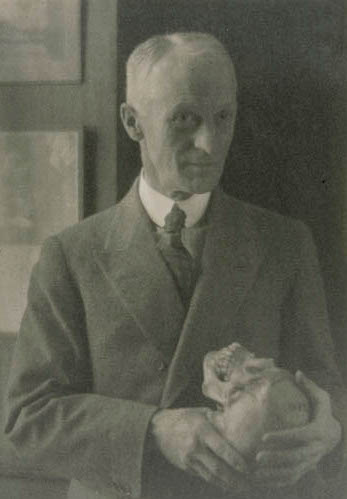 |
| Yes... yes, that is a skull. |
Thursday, 26 July 2012
Failing Treatment: Patients, It's Your Fault
One of the things you notice, once you've been around doctors and hospitals for a while, is the way that medical terminology sometimes seems to place a slightly unreasonable amount of blame on the part of the patient.
For example, the website for Korlym, a drug used to control high blood sugar in patients with Cushing's syndrome, states that Korlym is used "in adults with endogenous Cushing's syndrome who have type 2 diabetes mellitus or glucose intolerance and have failed surgery or cannot have surgery".
1.) I wasn't aware that surgery was a test.
2.) Surely if it were a test, the person charged with passing it would be the surgeon, not the patient zonked out on the operating table.
It seems strange to me that they went for this phrasing (and not as a one-off either, it appears elsewhere on their website). Would it really be difficult to say "patients whose surgery was unsucessful" or "patients whose surgery did not effect a cure"? It's not an isolated case restricted to one copy editor on one website either; it's fairly common to read things like "the patient failed chemotherapy"/"radiotherapy"/"to tie their shoelaces that morning, leading to chaos on Ward Five."*
Doctors of the world, please note: patients don't fail treatments.** Treatments fail patients.
It's an entirely obnoxious phrase, and when I started researching the question it was heartening to see that I am by no means the only person to object to it. As if patients don't feel crappy enough after discovering that their treatment has not succeeded, it then seems to be implied that this is in some way their fault. Yes, it's a medical convention; no, doctors don't mean to imply that the patient is to blame for the treatment not working. But as this patient points out, it's an entirely unnecessary little phrase which can serve to undermine the doctor-patient relationship. Patients who are not au fait with medical terminology - i.e. almost all of us - are unlikely to be impressed if they hear it.
There are plenty of problems out there in the world which are far more serious and important than this little question of syntax. But is it really so hard to change "[Patient Y] failed [Treatment X]" into "[Treatment X] failed [Patient Y]"?
***
UPDATE: So, there's a twist to the tale! I wrote to Corcept Therapeutics, Korlym's creators about this, because I'm pushy that way, and their Director of Commercial Operations got back to me like a bolt of extremely speedy lightning, - despite the fact that I do not have Cushing's Syndrome and thus am hardly their target audience. Here's a couple of extracts from his email:
"Our intent was certainly not to place any blame on the patient for the surgery’s failure, but I can certainly see how the words could convey this. [...] In the world of pharmaceutical marketing and communications in the US, we are highly regulated regarding what we say and how we say it, among other things. For many things, we use language directly from our FDA provided Full Prescribing Information (also known as the label or package insert) and Medication Guide. These two FDA provided documents use the exact language “patients who…… have failed surgery”. In the case of our website copy, we picked up the language directly from these documents.
*Well, maybe not the last one.
**Unless of course they're non-compliant with the treatment regime. In which case, have at them.
For example, the website for Korlym, a drug used to control high blood sugar in patients with Cushing's syndrome, states that Korlym is used "in adults with endogenous Cushing's syndrome who have type 2 diabetes mellitus or glucose intolerance and have failed surgery or cannot have surgery".
1.) I wasn't aware that surgery was a test.
2.) Surely if it were a test, the person charged with passing it would be the surgeon, not the patient zonked out on the operating table.
It seems strange to me that they went for this phrasing (and not as a one-off either, it appears elsewhere on their website). Would it really be difficult to say "patients whose surgery was unsucessful" or "patients whose surgery did not effect a cure"? It's not an isolated case restricted to one copy editor on one website either; it's fairly common to read things like "the patient failed chemotherapy"/"radiotherapy"/"to tie their shoelaces that morning, leading to chaos on Ward Five."*
Doctors of the world, please note: patients don't fail treatments.** Treatments fail patients.
It's an entirely obnoxious phrase, and when I started researching the question it was heartening to see that I am by no means the only person to object to it. As if patients don't feel crappy enough after discovering that their treatment has not succeeded, it then seems to be implied that this is in some way their fault. Yes, it's a medical convention; no, doctors don't mean to imply that the patient is to blame for the treatment not working. But as this patient points out, it's an entirely unnecessary little phrase which can serve to undermine the doctor-patient relationship. Patients who are not au fait with medical terminology - i.e. almost all of us - are unlikely to be impressed if they hear it.
There are plenty of problems out there in the world which are far more serious and important than this little question of syntax. But is it really so hard to change "[Patient Y] failed [Treatment X]" into "[Treatment X] failed [Patient Y]"?
***
UPDATE: So, there's a twist to the tale! I wrote to Corcept Therapeutics, Korlym's creators about this, because I'm pushy that way, and their Director of Commercial Operations got back to me like a bolt of extremely speedy lightning, - despite the fact that I do not have Cushing's Syndrome and thus am hardly their target audience. Here's a couple of extracts from his email:
"Our intent was certainly not to place any blame on the patient for the surgery’s failure, but I can certainly see how the words could convey this. [...] In the world of pharmaceutical marketing and communications in the US, we are highly regulated regarding what we say and how we say it, among other things. For many things, we use language directly from our FDA provided Full Prescribing Information (also known as the label or package insert) and Medication Guide. These two FDA provided documents use the exact language “patients who…… have failed surgery”. In the case of our website copy, we picked up the language directly from these documents.
"I think we have room to improve the language, using language that you suggest, or something similar. We have a compliance team that meets semi-regularly to review our communication material. At a point in the near future, we will review this language change, in hopes to get it approved for a future website update."
So thank you very much, Corcept, and the moral of the story is this: if there's something you don't like, don't keep it to yourself - whinge!
__________________________________________*Well, maybe not the last one.
**Unless of course they're non-compliant with the treatment regime. In which case, have at them.
Wednesday, 11 July 2012
The Very Scary Case of Kane Gorny
Before going into hospital last Tuesday, I stopped off at one of my favourite cafes for a hot chocolate, as a pre-hospital treat. I wasn't allowed caffeine in the three days before going in, so I had been suffering from a woeful lack of hot drinks. I got my hot chocolate (which was delicious) and sat down by the pile of daily papers they keep at the café. Alas, all the more upmarket titles had been taken, so I had to settle for that peculiar bastion of journalistic achievement: the Daily Mail.
You can imagine my feeling of ill-omen when, immediately before going into hospital overnight for further investigations into my pituitary tumour, I saw that the Mail's headline story was about Kane Gorny, a 22-year-old with a pituitary tumour who died of dehydration in hospital after nurses denied him his medication.
You can read the Mail's story online here. According to the Mail, it seems that after his entirely routine hip replacement surgery, nurses did not give Mr Gorny medication necessary for fluid retention; he became so agitated from dehydration that he called 999 in an attempt to get some water, but was sedated and left unattended overnight, despite his mother raising concerns. Even after his death, the attitude of some members of the nursing staff appears to have been appalling.
I thought I would tackle a couple of questions raised by the reporting on this terrible story, before moving on to look at it as a whole:

You can imagine my feeling of ill-omen when, immediately before going into hospital overnight for further investigations into my pituitary tumour, I saw that the Mail's headline story was about Kane Gorny, a 22-year-old with a pituitary tumour who died of dehydration in hospital after nurses denied him his medication.
You can read the Mail's story online here. According to the Mail, it seems that after his entirely routine hip replacement surgery, nurses did not give Mr Gorny medication necessary for fluid retention; he became so agitated from dehydration that he called 999 in an attempt to get some water, but was sedated and left unattended overnight, despite his mother raising concerns. Even after his death, the attitude of some members of the nursing staff appears to have been appalling.
I thought I would tackle a couple of questions raised by the reporting on this terrible story, before moving on to look at it as a whole:
What was wrong with him?
Kane Gorny suffered from a pituitary tumour; that much is certain. The exact details of Mr Gorny's condition are still somewhat sketchy and vary depending on which paper you read, but I'm going to guess that he possibly had acromegaly or Cushing's Disease, from the statement of his endocrinologist that he had a "rare tumour", and the fact that he had joint problems.
Most papers have reported that he had a "malignant" brain tumour or "brain cancer". The tumour may well have been cancerous, but it should perhaps be noted that this extremely rare for pituitary tumours; they are sometimes misreported as malignant due to journalists misunderstanding the condition and the fact that a tumour labelled "benign" may still be very harmful. In any case, I'll be looking at the definition of malignancy/cancer with regard to pituitary tumours in a future post, hopefully within the next couple of weeks, because it's an interesting question.
Why did he need a hip replacement aged just 22?
After pituitary surgery, sometimes the healthy pituitary gland is damaged, leaving it unable to produce certain hormones, including ACTH (adrenocorticotrophic hormone), which stimulates the adrenal glands to produce the steroid hormone cortisol. Without cortisol in the body, you can die quite quickly - consequently, it is standard to give patients steroid pills after surgery until doctors are certain their pituitary gland is able to produce ACTH. If the pituitary gland has been damaged, patients will need to take these pills for life.
Most reports have stated that Mr Gorny's steroid treatment left him requiring a hip replacement; high levels of steroids in the body can lead to avascular necrosis (although not in "a couple of weeks" as one paper initially reported). Additionally, if he did indeed have Cushing's or acromegaly, both of these conditions can adversely affect joints.
How did he die of dehydration so quickly?
A healthy human can live for a couple of days without water, depending on exertion and environmental conditions. Kane Gorny could not. After his pituitary surgery, Mr Gorny was left with diabetes insipidus. This is a very different condition from what we refer to as "diabetes" (diabetes mellitus) and is caused by a deficiency in anti-diuretic hormone (ADH, or vasopressin). Anti-diuretic hormone is secreted by the pituitary gland and helps to control the body's fluid balance. In diabetes insipidus, the lack of this hormone means that the body cannot conserve much of the water which it takes in, and consequently the sufferer becomes extremely thirsty and needs to urinate frequently. Unfortunately, developing this condition is a fairly common side-effect of pituitary surgery and pituitary radiotherapy.
In order to treat his diabetes insipidus, Kane Gorny would have needed to take a drug called Desmopressin (DDAVP), which is a synthetic substitute for vasopressin. As long as he was taking this drug, his body would be able to retain a normal amount of the water he drank, and he would not become dehydrated. When the drug was witheld, his body could not remain hydrated, and he died.
How could the hospital get this so wrong?
Unfortunately this is the question that can't be answered. Kane Gorny's death appears to have been preceeded by a number of absolutely catastrophic blunders at the hospital. His endocrinologists were not informed that he was in the hospital for surgery; his surgeon was entirely unaware of his condition; nurses did not read his notes; no-one listened to his mother's concerns; the list goes on.
Diabetes insipidus is a common problem among pituitary patients, but far more rare in the general population. Endocrine and neurosurgery nurses would likely be familiar with the condition, the importance of the medication Mr Gorny was taking, and the crucial need to monitor his fluid balance. The nurses actually looking after him knew almost nothing about it.
It's a sad fact that there are a hell of a lot of medical conditions in the world. Patients with diabetes insipidus or the inability to produce steroid hormones are encouraged to wear MedicAlert jewellery to alert paramedics and medical staff to their conditions in case of emergency, yet it seems even when medical staff have access to full notes on a patient they can go unheeded.
Sometimes it gets frustrating when you're in hospital or go to the doctors and are asked for the thousandth time to explain what's wrong with you. In the future I'll try to be more grateful that someone is checking...
_____________________________________________________________________
Kane Gorny's brother is fundraising for CLIC Sargent. You can donate here.

Thursday, 5 July 2012
Medical Test Top Trumps
In relation to last night's post: Panic over! Turns out the darn thing is completely waterproof after all and I should have just left it on. Another example of my excellent sievebrain: good at draining pasta, not so good at retaining pertinent information about medical devices.
I am back from l'hôpital and I did indeed have an interesting time of it. While I did not appreciate waking up to an array of 23 blood tests yesterday morning, I can't deny that they hospital have been pretty darn thorough in their endeavours to understand what my pituitary tumour is doing to my metabolism! They also thoughtfully froze some spare blood - in case they later think of other blood tests they wish they'd done at the time. The tests were partly for research purposes into TSHoma and other rare thyroid conditions, and partly to decide how they want to move forward with my own treatment.
Here is a list of the tests and scans they did:
MRI Scan
CT Scan
PET Scan
DEXA Scans:
- body composition
- bone density (spine and hip/femur)
ECG heart trace
Step test
Actiheart 5-day heart rate and activity monitor
12 hour urine collection
Glucose tolerance test
GEM resting metabolic rate testing
TFT bloods
Blood pressure, blood oxygen, etc.
Symptoms/Quality of life questionnaire
Don't know what half of those acronyms stand for? Never fear, neither did I. All will become clear shortly. I had so many tests that there's no way on earth I could describe them all in one post, unless it was the longest and most terrifying blog post in the world, so I figure I'll go through what happened chronologically. In order to introduce an element of competition to the proceedings, I have decided to rate each medical test against a set of four criteria: Hassle (how much hassle the test was to undergo), Fun (how fun the test was. I may have to introduce minus scores), Weirdness (self explanatory) and Results (does the test produce a pretty picture/interesting information once completed).
Each type of test will be scored on a range of 0-5, and by the time I have finished it should be possible to play Emer's Medical Test Top Trumps. Just what you've always wanted!
_____________________________________________
p.s. - forgot to mention, I took my camera with me as promised so I actually finally have a few photos to show you!
ANYWAY.
I am back from l'hôpital and I did indeed have an interesting time of it. While I did not appreciate waking up to an array of 23 blood tests yesterday morning, I can't deny that they hospital have been pretty darn thorough in their endeavours to understand what my pituitary tumour is doing to my metabolism! They also thoughtfully froze some spare blood - in case they later think of other blood tests they wish they'd done at the time. The tests were partly for research purposes into TSHoma and other rare thyroid conditions, and partly to decide how they want to move forward with my own treatment.
Here is a list of the tests and scans they did:
MRI Scan
CT Scan
PET Scan
DEXA Scans:
- body composition
- bone density (spine and hip/femur)
ECG heart trace
Step test
Actiheart 5-day heart rate and activity monitor
12 hour urine collection
Glucose tolerance test
GEM resting metabolic rate testing
TFT bloods
Blood pressure, blood oxygen, etc.
Symptoms/Quality of life questionnaire
Don't know what half of those acronyms stand for? Never fear, neither did I. All will become clear shortly. I had so many tests that there's no way on earth I could describe them all in one post, unless it was the longest and most terrifying blog post in the world, so I figure I'll go through what happened chronologically. In order to introduce an element of competition to the proceedings, I have decided to rate each medical test against a set of four criteria: Hassle (how much hassle the test was to undergo), Fun (how fun the test was. I may have to introduce minus scores), Weirdness (self explanatory) and Results (does the test produce a pretty picture/interesting information once completed).
Each type of test will be scored on a range of 0-5, and by the time I have finished it should be possible to play Emer's Medical Test Top Trumps. Just what you've always wanted!
_____________________________________________
p.s. - forgot to mention, I took my camera with me as promised so I actually finally have a few photos to show you!
Thursday, 28 June 2012
My Transsphenoidal Pituitary Surgery: Part 1
And so, the day of my pituitary surgery dawned!
Or rather, it didn't. It was still dark when I got up that morning; I had to report to the hospital at 7am and I needed to get up early enough to allow time for paranoid checking and re-checking of my bag. Thank god for the internet - I packed in a rush the night before, but all I had to do was Google "what to pack for hospital" and I was supplied with numerous checklists that helped ensure I did not forget my toothbrush.
I reported in, accompanied by my mum and dad, and was duly supplied with my attractive compression stockings and various leaflets. I was assigned a waiting bed in the neuro day ward, and another lady who was having the same surgery was there as well. One of the nurses ran through the pre-operative assessment form again and I was swabbed for MRSA - apparently if you come up positive they don't cancel your operation but you do get moved to the end of the queue for that day, in case you end up contaminating the patients after you.
It was at this point that I started meeting anaesthetists. A woman walked into the room and introduced herself as my anaesthetist, asked me some questions, and let me ask her any questions I had. Shortly after she left, a man walked into the room, introduced himself as my anaesthetist, seemed surprised when I said I had already met someone claiming to be my anaesthetist, asked if I had any questions, and then left. These two certainly looked and dressed like anaesthetists, but I have to say that the third man to introduce himself as my anaesthetist was the most convincing, as he was sticking a needle into my arm at the time.
There was a lot of sitting around informing people that I wasn't pregnant that morning, plus the signing of various consent forms allowing them to keep slices of tumour for research purposes and promising them not to haunt them if I died. As hospitals are really an ideal setting for poltergeist activity, I for one felt this was pretty harsh.
At some point a nurse asked me to get changed into one of their haute couture hospital gowns, so I did. The lady in the next bed was wheeled off to her surgery. Somewhat later, two young men arrived and announced they had come to take me for a CT scan of my pituitary.* No-one had told me that I was going to have a scan, so this was something of a surprise.
The porters went out to confer with the nurses. There was a considerable amount of to-ing and fro-ing, mind-changing, phonecalls and confusion, but eventually it was decided that yes, I was indeed due to have a CT scan before the surgery. I was told it could take up to an hour, so I cheerily waved my parents goodbye and was wheeled away in my bed by the porters, whose social lives I learned quite a lot about on the way to the distant CT scanner.
I was taken into the scanning waiting room, in the bowels of the hospital, and my bed was parked up. It was not a cheery place; everyone else in there was really not well. I felt strangely fraudulent, sitting up in my wheely bed like a perfectly healthy person, waiting.
And waiting.
There was a bit of a backlog at the scanner, as per usual. I have no idea how long I had been waiting, when all of a sudden, Mr Pout (one of my surgeons - I wrote about him in this post) appeared by the side of my bed, all scrubbed up and out of breath.
"Miss Grey, we've been looking for you!" he cried, in what I felt was an unreasonably reproachful manner given that I had quite clearly not wheeled myself down there. "Everyone's waiting for you in theatre right now!"
Of all the WTF moments that the hospital has given me in our association, that was certainly the strangest to date. Mr Pout grabbed the bed and attempted to wheel me to the operating theatre; not an easy task, plus it was quite a long way away. Hospital beds are like larger, more dangerous supermarket trolleys and require two people for optimum maneouverability. Fortunately we (quite literally) bumped into one of Mr Pout's colleagues along the way, and she lent a hand wheeling me into a lift.
Along the way, Mr Pout breathlessly explained that they had originally been intending to do my pituitary surgery with teeny instruments and the aid of an ENT team (Ear, Norse & Throat; Treebeard doesn't do transsphenoidal surgery), due to my "narrow nasal passages".** In order for this to happen, the ENT people neeed a CT scan. However, when my surgery had been cancelled, they had cancelled the ENT team and had been unable to un-cancel them; consequently they would be doing the surgery the normal way, assuming the instruments would fit up my nose. There was a slight risk, Mr Pout informed me, that they would not.
At this point, Mr Hamstercheeks, the head surgeon appeared. I had never met him before. "
I was just explaining that the surgery might not be able to go ahead if her nose is too small," said Mr Pout.
Mr Hamstercheeks looked at my nose. "No, it'll be fine," he said.
HARSH.
"Can someone please make sure that my parents know I've gone into surgery?" I asked. A nurse asked for their details, picked a phone off the wall and dialled the ward where I had been to request that my parents were told. As I found out later however, somehow the receptionist on the ward managed to get epically confused and my parents were never told, despite asking where I was. They weren't bothered though, they went into town for lunch.
At this point I was still wearing my glasses, hairband, and slippers, which I had to take off; I was super nervous, but in a way the complete muddle over my surgery was kind of good - because it meant I was laughing as they wheeled me into the prep room. I met the third anaesthetist and various people starting sticking needles in my arms. It turns out the third anaesthetist used to live in the same road as me, so we got chatting about the local takeaways. At one point I thought I should just lie back and relax, let the various medical professionals do their thing - but then I suddenly became deeply paranoid that they'd think I was asleep when I wasn't (stupid I know) so I decided to keep talking as long as I was awake.
As this is what I usually do anyway, it was not a problem.
_______________________
*Possibly I should note that they were hospital porters, not kidnappers.
**If you haven't worked it out, transsphenoidal pituitary surgery involves sticking surgical instruments up your nose and drilling through the back of it to gain access to the inside of your skull.
Or rather, it didn't. It was still dark when I got up that morning; I had to report to the hospital at 7am and I needed to get up early enough to allow time for paranoid checking and re-checking of my bag. Thank god for the internet - I packed in a rush the night before, but all I had to do was Google "what to pack for hospital" and I was supplied with numerous checklists that helped ensure I did not forget my toothbrush.
I reported in, accompanied by my mum and dad, and was duly supplied with my attractive compression stockings and various leaflets. I was assigned a waiting bed in the neuro day ward, and another lady who was having the same surgery was there as well. One of the nurses ran through the pre-operative assessment form again and I was swabbed for MRSA - apparently if you come up positive they don't cancel your operation but you do get moved to the end of the queue for that day, in case you end up contaminating the patients after you.
It was at this point that I started meeting anaesthetists. A woman walked into the room and introduced herself as my anaesthetist, asked me some questions, and let me ask her any questions I had. Shortly after she left, a man walked into the room, introduced himself as my anaesthetist, seemed surprised when I said I had already met someone claiming to be my anaesthetist, asked if I had any questions, and then left. These two certainly looked and dressed like anaesthetists, but I have to say that the third man to introduce himself as my anaesthetist was the most convincing, as he was sticking a needle into my arm at the time.
There was a lot of sitting around informing people that I wasn't pregnant that morning, plus the signing of various consent forms allowing them to keep slices of tumour for research purposes and promising them not to haunt them if I died. As hospitals are really an ideal setting for poltergeist activity, I for one felt this was pretty harsh.
At some point a nurse asked me to get changed into one of their haute couture hospital gowns, so I did. The lady in the next bed was wheeled off to her surgery. Somewhat later, two young men arrived and announced they had come to take me for a CT scan of my pituitary.* No-one had told me that I was going to have a scan, so this was something of a surprise.
The porters went out to confer with the nurses. There was a considerable amount of to-ing and fro-ing, mind-changing, phonecalls and confusion, but eventually it was decided that yes, I was indeed due to have a CT scan before the surgery. I was told it could take up to an hour, so I cheerily waved my parents goodbye and was wheeled away in my bed by the porters, whose social lives I learned quite a lot about on the way to the distant CT scanner.
I was taken into the scanning waiting room, in the bowels of the hospital, and my bed was parked up. It was not a cheery place; everyone else in there was really not well. I felt strangely fraudulent, sitting up in my wheely bed like a perfectly healthy person, waiting.
And waiting.
There was a bit of a backlog at the scanner, as per usual. I have no idea how long I had been waiting, when all of a sudden, Mr Pout (one of my surgeons - I wrote about him in this post) appeared by the side of my bed, all scrubbed up and out of breath.
"Miss Grey, we've been looking for you!" he cried, in what I felt was an unreasonably reproachful manner given that I had quite clearly not wheeled myself down there. "Everyone's waiting for you in theatre right now!"
Of all the WTF moments that the hospital has given me in our association, that was certainly the strangest to date. Mr Pout grabbed the bed and attempted to wheel me to the operating theatre; not an easy task, plus it was quite a long way away. Hospital beds are like larger, more dangerous supermarket trolleys and require two people for optimum maneouverability. Fortunately we (quite literally) bumped into one of Mr Pout's colleagues along the way, and she lent a hand wheeling me into a lift.
Along the way, Mr Pout breathlessly explained that they had originally been intending to do my pituitary surgery with teeny instruments and the aid of an ENT team (Ear, Norse & Throat; Treebeard doesn't do transsphenoidal surgery), due to my "narrow nasal passages".** In order for this to happen, the ENT people neeed a CT scan. However, when my surgery had been cancelled, they had cancelled the ENT team and had been unable to un-cancel them; consequently they would be doing the surgery the normal way, assuming the instruments would fit up my nose. There was a slight risk, Mr Pout informed me, that they would not.
At this point, Mr Hamstercheeks, the head surgeon appeared. I had never met him before. "
I was just explaining that the surgery might not be able to go ahead if her nose is too small," said Mr Pout.
Mr Hamstercheeks looked at my nose. "No, it'll be fine," he said.
HARSH.
"Can someone please make sure that my parents know I've gone into surgery?" I asked. A nurse asked for their details, picked a phone off the wall and dialled the ward where I had been to request that my parents were told. As I found out later however, somehow the receptionist on the ward managed to get epically confused and my parents were never told, despite asking where I was. They weren't bothered though, they went into town for lunch.
At this point I was still wearing my glasses, hairband, and slippers, which I had to take off; I was super nervous, but in a way the complete muddle over my surgery was kind of good - because it meant I was laughing as they wheeled me into the prep room. I met the third anaesthetist and various people starting sticking needles in my arms. It turns out the third anaesthetist used to live in the same road as me, so we got chatting about the local takeaways. At one point I thought I should just lie back and relax, let the various medical professionals do their thing - but then I suddenly became deeply paranoid that they'd think I was asleep when I wasn't (stupid I know) so I decided to keep talking as long as I was awake.
As this is what I usually do anyway, it was not a problem.
_______________________
*Possibly I should note that they were hospital porters, not kidnappers.
**If you haven't worked it out, transsphenoidal pituitary surgery involves sticking surgical instruments up your nose and drilling through the back of it to gain access to the inside of your skull.
Thursday, 21 June 2012
Progress!
I finally had a phone call from the hospital on Monday. I was offered a timeslot for my overnight stay and all the various tests they want to do on the 2nd-3rd of July. Alas, they can't do the PET scan on that day because the tracer they use comes in batches sufficient for two people, so they have to match you up with someone else who needs the same scan before they do it. So we're looking at doing the PET scan on the 10th July instead.
Good news!
It was a slightly disconcerting phone call; the endocrinologist asked me if I could confirm that the dates would suit me on the spot, and I said that I was pretty sure they would be fine but that I would need to check it out with work before I could be 100% certain. This seemed to genuinely confuse her. Equally strange was when she asked me if I was on any medication; I replied that I'm on propranolol, a beta blocker. She said that it could interfere with the tests and I would have to stop taking it for three days; so I said that although I was willing to give it a go, I would probably find it quite difficult to not take any for three days. This really baffled her - she asked me what I was taking it for. I said tachycardia (fast heartbeat) - but I'm pretty sure if I had said that I was taking it to keep the little green men out of my ears, she couldn't have found that more peculiar. It was strange, because this was something I had already discussed with the endocrinologist who originally asked me to have these tests - and he said that if I found it difficult to get by without it then they'd just not do some of the tests.
Ironically, my heart tends to operate on a bit of a timelag and takes a while to show any effect from my thyroid levels either increasing or decreasing, and it has only started to really go a lot faster in the last two weeks or so - which means that if they'd just organised the damn tests when they said they would, I might have been able to cautiously get by. However, I will be travelling through London on the 1st July with heavy bags and that is stressful enough even when your resting heartrate's not 120bpm.
Anyway, the long and the short of it is that she said that these dates "still need to be confirmed" with the clinical research facility place where I will be going (how exciting) and that she would call me back and let me know when they're definite and also tell me more about what exact tests they will be doing. That was on Monday. Today is Thursday. I am really hoping that doesn't mean there is a problem with the dates.
Good news!
It was a slightly disconcerting phone call; the endocrinologist asked me if I could confirm that the dates would suit me on the spot, and I said that I was pretty sure they would be fine but that I would need to check it out with work before I could be 100% certain. This seemed to genuinely confuse her. Equally strange was when she asked me if I was on any medication; I replied that I'm on propranolol, a beta blocker. She said that it could interfere with the tests and I would have to stop taking it for three days; so I said that although I was willing to give it a go, I would probably find it quite difficult to not take any for three days. This really baffled her - she asked me what I was taking it for. I said tachycardia (fast heartbeat) - but I'm pretty sure if I had said that I was taking it to keep the little green men out of my ears, she couldn't have found that more peculiar. It was strange, because this was something I had already discussed with the endocrinologist who originally asked me to have these tests - and he said that if I found it difficult to get by without it then they'd just not do some of the tests.
Ironically, my heart tends to operate on a bit of a timelag and takes a while to show any effect from my thyroid levels either increasing or decreasing, and it has only started to really go a lot faster in the last two weeks or so - which means that if they'd just organised the damn tests when they said they would, I might have been able to cautiously get by. However, I will be travelling through London on the 1st July with heavy bags and that is stressful enough even when your resting heartrate's not 120bpm.
Anyway, the long and the short of it is that she said that these dates "still need to be confirmed" with the clinical research facility place where I will be going (how exciting) and that she would call me back and let me know when they're definite and also tell me more about what exact tests they will be doing. That was on Monday. Today is Thursday. I am really hoping that doesn't mean there is a problem with the dates.
Thursday, 31 May 2012
Progress Report
Long time no post! In fact, I returned from my holiday a week ago and have just been lazy incredibly busy and productive.
I am in fact on study leave from work at the moment, so technically I should be drawing a big spider diagram using my favourite set of coloured pens right now,* but as I have one heck of a pituitary tumour headache right now I am slacking off to write this message to my adoring public. Whoop whoop!
It has now been four weeks since my last trip to the hospital, when my endocrinologists told me they would call me in "a couple of days" to arrange an overnight stay filled with fun metabolic tests and delicious hospital food. They have still not called me, although I have called them twice and both times spoken to a receptionist who could not help beyond sending a note to the relevant doctors. I would be less annoyed about this if it weren't for the fact that I have to stay off my medication until they get these bloody tests done and consequently all my symptoms (fast heartrate, shaky hands, hair falling out, etc etc) have been worsening slightly.
The worst of the worsenings has been how hungry I have been getting! Oh my god. It is deeply irritating! I can tell my metabolism has gone up because I am just so darn peckish all the time. It sounds stupid but it's really annoying to live with.
Anyway, I realise that this is basically a super dull post, so I will end it here. Hurrah!
_____________________________________________________
*Not a joke. I do this.
I am in fact on study leave from work at the moment, so technically I should be drawing a big spider diagram using my favourite set of coloured pens right now,* but as I have one heck of a pituitary tumour headache right now I am slacking off to write this message to my adoring public. Whoop whoop!
It has now been four weeks since my last trip to the hospital, when my endocrinologists told me they would call me in "a couple of days" to arrange an overnight stay filled with fun metabolic tests and delicious hospital food. They have still not called me, although I have called them twice and both times spoken to a receptionist who could not help beyond sending a note to the relevant doctors. I would be less annoyed about this if it weren't for the fact that I have to stay off my medication until they get these bloody tests done and consequently all my symptoms (fast heartrate, shaky hands, hair falling out, etc etc) have been worsening slightly.
The worst of the worsenings has been how hungry I have been getting! Oh my god. It is deeply irritating! I can tell my metabolism has gone up because I am just so darn peckish all the time. It sounds stupid but it's really annoying to live with.
Anyway, I realise that this is basically a super dull post, so I will end it here. Hurrah!
_____________________________________________________
*Not a joke. I do this.
Wednesday, 16 May 2012
*Censored* (A Rant)
Oh god, I hate hospital administration systems.
Two weeks ago, I went to the hospital. My doctors wanted to keep me off my medication for 6 weeks, despite the fact that this would worsen my symptoms, so that they could run some tests and do some scans while it was out of my system. They said they would arrange for one of their research people to call me and arrange the tests. I pointed out whilst I was standing right there with them that as I have exams and a holiday coming up, there would be some dates I couldn't do, but that I could write these dates down and hand them over immediately so as not to waste time.
No, they said, that's fine. I would get a telephone call in the next couple of days, no worries.
Two weeks later, no bloody telephone call, and I'm going on holiday for a week tomorrow. I don't have a number I can speak to any of them on directly, the best I can do is call one of the doctors' receptionist, who is only in for three mornings a week. So I called her yesterday morning and left a message pointing out that if they wanted to arrange these tests before I left, they would need to get their freaking act together.*
Today at lunchtime I managed to miss the receptionist returning my call. There were no apologies for the massive delay; she left a message saying there was no prospect of getting me booked in today and that I should call back on my return from holiday. There was also no explanation of how this went from being the hospital's responsibility to call me to being my responsibility to call the hospital.
Sadly, I am incapable of shouting swearwords at my phone loudly enough to make myself feel better.
It is so unbelievably frustrating that this seems to happen almost every time anything hospitacular has to be arranged. Oh, your surgery's postponed at the last minute. Oh, your surgery's now back on with less than 24 hours notice. Oh, your letter got lost in the mail. Oh, didn't I mention that you're going to be booked in for an overnight stay? Oh, your MRi appointment never got booked? Well there's no point in you sitting here in this neurosurgical aftercare appointment then! Bye!
This means that three weeks will have gone by before I get booked in for ANY of these arsemongering tests and scans. On my return from holiday, I have exams. Essentially, this "six week period off medication" just got extended to an "indefinite period until we can be bothered to get back to you, lol." They really have no clue how shitty it is to seesaw on and off taking this stuff. Every time I start/stop taking it, there's a bunch of side effects - it messes up my skin and appetite and stuff - on top of the symptoms I get anyway when I'm not on it (heart too fast, hair falling out, etc. etc).
In my now-lengthly experience, it seems that hospital doctors are completely clueless about the barrage of administration that patients have to maneuver through in order to ever actually see them. Once, a letter that was sent to me giving a time and date for an MRi scan was lost in the post. I knew I was expecting an appointment, so when I didn't get a letter, I called the endocrine department, the MRi department, the main hospital switchboard and even I think neurosurgery for good measure, to try to find out if an appointment had been booked. Everyone told me they had no idea, had no means of finding out, and no clue who I should speak to - except the MRI department, who told me that I definitely didn't have an MRi booked. About two months later, the letter eventually turned up, by which time I'd obviously missed it. At my next appointment with my endocrinologist, he actually attempted to give me a telling off for missing an appointment, and then clearly refused to believe me when I explained what happened.
Well, this has been a massive rant. I do feel slightly better. But I am still pissed off.
__________________________________________________
*Except obviously I was politer than that.
Two weeks ago, I went to the hospital. My doctors wanted to keep me off my medication for 6 weeks, despite the fact that this would worsen my symptoms, so that they could run some tests and do some scans while it was out of my system. They said they would arrange for one of their research people to call me and arrange the tests. I pointed out whilst I was standing right there with them that as I have exams and a holiday coming up, there would be some dates I couldn't do, but that I could write these dates down and hand them over immediately so as not to waste time.
No, they said, that's fine. I would get a telephone call in the next couple of days, no worries.
Two weeks later, no bloody telephone call, and I'm going on holiday for a week tomorrow. I don't have a number I can speak to any of them on directly, the best I can do is call one of the doctors' receptionist, who is only in for three mornings a week. So I called her yesterday morning and left a message pointing out that if they wanted to arrange these tests before I left, they would need to get their freaking act together.*
Today at lunchtime I managed to miss the receptionist returning my call. There were no apologies for the massive delay; she left a message saying there was no prospect of getting me booked in today and that I should call back on my return from holiday. There was also no explanation of how this went from being the hospital's responsibility to call me to being my responsibility to call the hospital.
Sadly, I am incapable of shouting swearwords at my phone loudly enough to make myself feel better.
It is so unbelievably frustrating that this seems to happen almost every time anything hospitacular has to be arranged. Oh, your surgery's postponed at the last minute. Oh, your surgery's now back on with less than 24 hours notice. Oh, your letter got lost in the mail. Oh, didn't I mention that you're going to be booked in for an overnight stay? Oh, your MRi appointment never got booked? Well there's no point in you sitting here in this neurosurgical aftercare appointment then! Bye!
This means that three weeks will have gone by before I get booked in for ANY of these arsemongering tests and scans. On my return from holiday, I have exams. Essentially, this "six week period off medication" just got extended to an "indefinite period until we can be bothered to get back to you, lol." They really have no clue how shitty it is to seesaw on and off taking this stuff. Every time I start/stop taking it, there's a bunch of side effects - it messes up my skin and appetite and stuff - on top of the symptoms I get anyway when I'm not on it (heart too fast, hair falling out, etc. etc).
In my now-lengthly experience, it seems that hospital doctors are completely clueless about the barrage of administration that patients have to maneuver through in order to ever actually see them. Once, a letter that was sent to me giving a time and date for an MRi scan was lost in the post. I knew I was expecting an appointment, so when I didn't get a letter, I called the endocrine department, the MRi department, the main hospital switchboard and even I think neurosurgery for good measure, to try to find out if an appointment had been booked. Everyone told me they had no idea, had no means of finding out, and no clue who I should speak to - except the MRI department, who told me that I definitely didn't have an MRi booked. About two months later, the letter eventually turned up, by which time I'd obviously missed it. At my next appointment with my endocrinologist, he actually attempted to give me a telling off for missing an appointment, and then clearly refused to believe me when I explained what happened.
Well, this has been a massive rant. I do feel slightly better. But I am still pissed off.
__________________________________________________
*Except obviously I was politer than that.
Friday, 11 May 2012
Ding Ding: Round Two
I had been holding off posting for a few days, not out of laziness,* but because I was waiting to find out the outcome of my hospital appointment last Thursday. And then it took me absolutely ages to type this up because, let's face it, it's dull and complex. For the last couple of months I have been largely in the dark as to the results of my blood tests and recent MRi scan, so I really had no idea what to expect.
What I did not expect was to find the television in the endocrine waiting room playing Cash In The Attic. This television has, to my knowledge, never previously displayed anything other than The Jeremy Kyle Show. I always assumed that the hospital trust had performed some kind of patient survey and determined that diabetics and people with pituitary tumours prefer their televisual experiences to involve shouting, paternity testing, and the phrase "Madam, you disgust me".
I digress.
First up, as per usual, I was weighed (lost: one kilogram since February, almost certainly due to forswearing chocolate over Lent rather than the TSH-oma) and had my blood pressure taken (standing blood pressure: 118/76 - score! It would appear that switching my heart medication back to propranolol has made a difference). Then I had a quick review with one of the endocrinologists about how my symptoms have changed since being on lanreotide injections (not much).
Then the doctor ran away and eventually returned with two other endocrinologists in tow, who all stood at the other end of the room and surveyed me like something interesting they'd found in a jar at the Hunterian Museum.**
They have been somewhat confused by the fact that my levels of various thyroid hormones have remained roughly the same since being on the lanreotide injections, despite the fact that you would expect them to drop.
Additionally, the MRI scan of my pituitary was a little tricky to interpret. Essentially, the pituitary gland is like a tiny upside-down lollipop just below your brain. The stick of the lollipop is called the infundibular stalk*** and it connects the pituitary gland to the hypothalamus. My original MRI pituitary scan showed a great big gobstopper lollipop with a dark patch of necrosis in the middle, where the tissue inside the tumour had died off a bit. To picture this, first imagine a lollipop with a liquid centre, and then imagine something a lot more disgusting. But my latest scan shows a rather more normal-sized lollipop which hasn't grown since my surgery (hurrah!). However, the stick of the lollipop is slightly bending to one side.
Given that there's limited space inside your head for these things to grow, a wonky pituitary stalk can indicate that the bulk of a tumour is pushing the rest of the pituitary gland to one side. So the area of pituitary gland on the left-hand side is now under suspicion. I have to say, looking at the scans was kind of awesome, because it's not like when people show you the ultrasound of their baby and you have to pretend you totally see what they're talking about. I actually could see what they were talking about.
But the problem with MRIs is that they can show you what's there, but not what it's doing. So although it looks like there's probably a bit of tumour left on one side of my pituitary gland and that may well be what's still causing my symptoms, it's still possible that it's not that bit at all. And it would be rubbish to have surgery, take that bit out and then discover it was actually healthy pituitary tissue.
So my doctors want me to have two combined PET/CT scans. PET (Positron Emission Tomography) scans are super colourful and pretty, but that's not the only reason they want me to have one (I hope).
Basically, PET scans can show those areas of the pituitary that are most metabolically active. Inactive areas are dark. So the idea is that I will have one of these scans while not on any kind of medication, which should show the whole pituitary lit up like a christmas tree, and then have another scan after three months on a higher dose of lanreotide, which should suppress the hormone production in the TSHoma. Any areas that go from being bright blue on the first scan to being dark in the second scan are probably tumour. Then, if the tumour is in an easily-accessible area of my head, I might have surgery again. If it's somewhere tricky to reach, I'll probably just continue to have regular injections of lanreotide indefinitely.
So I'm not having any more lanreotide injections for six weeks, so that it's definitely completely out of my system. And in the meantime they want to have me come in overnight one for some research tests on my metabolism and things. Essentially the hospital are collecting patients with pituitary tumours that produce TSH and studying us, so I am now officially a guinea pig.
_______________________________________________
*How could you ever think such a thing?
**I'm joking, they were very nice.
***Or just the pituitary stalk, but you don't get to use a word like "infundibular" every day.
What I did not expect was to find the television in the endocrine waiting room playing Cash In The Attic. This television has, to my knowledge, never previously displayed anything other than The Jeremy Kyle Show. I always assumed that the hospital trust had performed some kind of patient survey and determined that diabetics and people with pituitary tumours prefer their televisual experiences to involve shouting, paternity testing, and the phrase "Madam, you disgust me".

I digress.
First up, as per usual, I was weighed (lost: one kilogram since February, almost certainly due to forswearing chocolate over Lent rather than the TSH-oma) and had my blood pressure taken (standing blood pressure: 118/76 - score! It would appear that switching my heart medication back to propranolol has made a difference). Then I had a quick review with one of the endocrinologists about how my symptoms have changed since being on lanreotide injections (not much).
Then the doctor ran away and eventually returned with two other endocrinologists in tow, who all stood at the other end of the room and surveyed me like something interesting they'd found in a jar at the Hunterian Museum.**
They have been somewhat confused by the fact that my levels of various thyroid hormones have remained roughly the same since being on the lanreotide injections, despite the fact that you would expect them to drop.
Additionally, the MRI scan of my pituitary was a little tricky to interpret. Essentially, the pituitary gland is like a tiny upside-down lollipop just below your brain. The stick of the lollipop is called the infundibular stalk*** and it connects the pituitary gland to the hypothalamus. My original MRI pituitary scan showed a great big gobstopper lollipop with a dark patch of necrosis in the middle, where the tissue inside the tumour had died off a bit. To picture this, first imagine a lollipop with a liquid centre, and then imagine something a lot more disgusting. But my latest scan shows a rather more normal-sized lollipop which hasn't grown since my surgery (hurrah!). However, the stick of the lollipop is slightly bending to one side.
Given that there's limited space inside your head for these things to grow, a wonky pituitary stalk can indicate that the bulk of a tumour is pushing the rest of the pituitary gland to one side. So the area of pituitary gland on the left-hand side is now under suspicion. I have to say, looking at the scans was kind of awesome, because it's not like when people show you the ultrasound of their baby and you have to pretend you totally see what they're talking about. I actually could see what they were talking about.

But the problem with MRIs is that they can show you what's there, but not what it's doing. So although it looks like there's probably a bit of tumour left on one side of my pituitary gland and that may well be what's still causing my symptoms, it's still possible that it's not that bit at all. And it would be rubbish to have surgery, take that bit out and then discover it was actually healthy pituitary tissue.
So my doctors want me to have two combined PET/CT scans. PET (Positron Emission Tomography) scans are super colourful and pretty, but that's not the only reason they want me to have one (I hope).

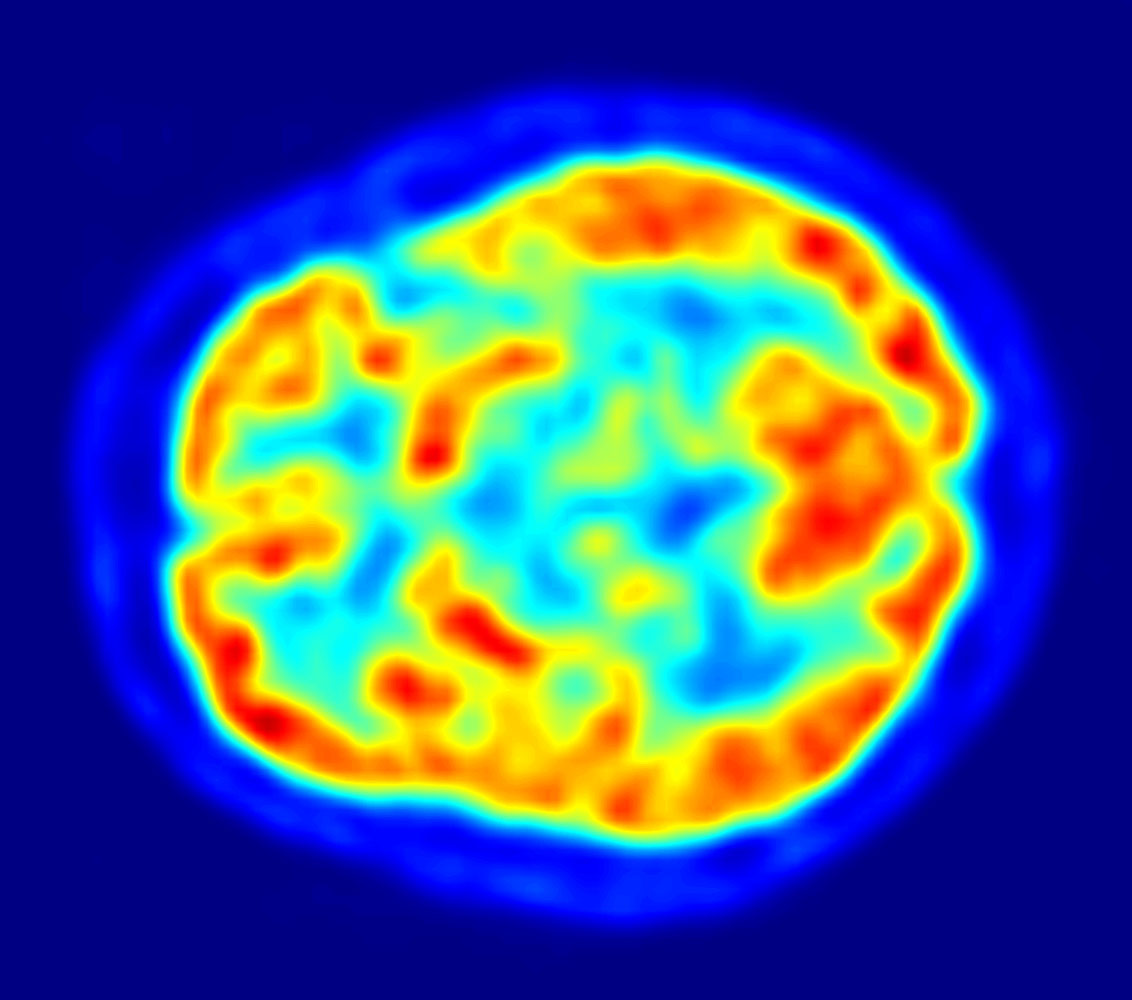 |
| PET scan of the brain |
Basically, PET scans can show those areas of the pituitary that are most metabolically active. Inactive areas are dark. So the idea is that I will have one of these scans while not on any kind of medication, which should show the whole pituitary lit up like a christmas tree, and then have another scan after three months on a higher dose of lanreotide, which should suppress the hormone production in the TSHoma. Any areas that go from being bright blue on the first scan to being dark in the second scan are probably tumour. Then, if the tumour is in an easily-accessible area of my head, I might have surgery again. If it's somewhere tricky to reach, I'll probably just continue to have regular injections of lanreotide indefinitely.
So I'm not having any more lanreotide injections for six weeks, so that it's definitely completely out of my system. And in the meantime they want to have me come in overnight one for some research tests on my metabolism and things. Essentially the hospital are collecting patients with pituitary tumours that produce TSH and studying us, so I am now officially a guinea pig.

_______________________________________________
*How could you ever think such a thing?
**I'm joking, they were very nice.
***Or just the pituitary stalk, but you don't get to use a word like "infundibular" every day.
Monday, 23 April 2012
IMFW: Life Imitates Art
So Blogger has changed its layout and everything, which is deeply confusing to a simple soul like me. If I manage to do anything wildly stupid like posting this next April or forgetting to use a title or something, please forgive me. I am easily baffled.
Anyway: back to IMFW! Today's Interesting Medical Fact of the Week is kind of related to two of my previous interesting medical posts, which focused on face transplants. There's an interesting article on the BBC News website about the fact that the University of Lincoln is offering an art course to plastic surgeons and medical students. They work at life drawing, self portraiture and clay modelling, with a focus on the real-life application for these skills: applying them in their surgical work.
It sounds a little bizarre at first, but at second glance it does make sense. The course aims to enhance students' observational skills and their perceptions of their work, emphasizing that they should look at reconstruction from a patient's point of view as well as their own.
Despite its rather trite acronym, the name of the British Association of Aesthetic Plastic Surgeons (BAAPS...) emphasizes the importance of beauty and aesthetic in the work of plastic surgeons, something which is obviously important in purely cosmetic procedures, but equally key in reconstructive work. I know next to nothing about the training of plastic surgeons, but it would certainly be interesting to know whether surgeons who go into this specialty tend to have more of an interest in art compared to those who gravitate towards other specialisms.
A press release from the university emphasizes the historical link between art and medicine, which was far more pronounced centuries ago; it was considered that artists needed an understanding of anatomy in order to recreate the human form on canvas, while medical texts relied upon anatomical drawings produced by artists, who would often attend dissections. Vesalius's seminal work on anatomy, De humani corporis fabrica, written in 1543, incorporated anatomical illustrations from artists working in the studio of Titian. Perhaps now the link between art and medicine link is being strengthened once more.
Anyway: back to IMFW! Today's Interesting Medical Fact of the Week is kind of related to two of my previous interesting medical posts, which focused on face transplants. There's an interesting article on the BBC News website about the fact that the University of Lincoln is offering an art course to plastic surgeons and medical students. They work at life drawing, self portraiture and clay modelling, with a focus on the real-life application for these skills: applying them in their surgical work.
It sounds a little bizarre at first, but at second glance it does make sense. The course aims to enhance students' observational skills and their perceptions of their work, emphasizing that they should look at reconstruction from a patient's point of view as well as their own.
Despite its rather trite acronym, the name of the British Association of Aesthetic Plastic Surgeons (BAAPS...) emphasizes the importance of beauty and aesthetic in the work of plastic surgeons, something which is obviously important in purely cosmetic procedures, but equally key in reconstructive work. I know next to nothing about the training of plastic surgeons, but it would certainly be interesting to know whether surgeons who go into this specialty tend to have more of an interest in art compared to those who gravitate towards other specialisms.
A press release from the university emphasizes the historical link between art and medicine, which was far more pronounced centuries ago; it was considered that artists needed an understanding of anatomy in order to recreate the human form on canvas, while medical texts relied upon anatomical drawings produced by artists, who would often attend dissections. Vesalius's seminal work on anatomy, De humani corporis fabrica, written in 1543, incorporated anatomical illustrations from artists working in the studio of Titian. Perhaps now the link between art and medicine link is being strengthened once more.
Wednesday, 18 April 2012
Belated Bad Luck
...and, I'm back again. Apologies for my absence, this time I wasn't ill, just busy with work. Last Wednesday I had a whole day of medical bad luck, however, which I propose to tell you about right now. I know, I know. You can hardly contain your excitement.
So, I set off into town, to visit my GP's surgery, to find out whether my new address means that I'm out of their catchment area and consequently would need to find a new doctor. My local GP's would appear to have the world's most illogical catchment area; I used to live a forty-five minute walk away and had no problem staying on their books, but when I moved much closer (a fifteen minute walk away) they warned me that I was "only just" still inside their boundaries. W, I hear you cry, TF.
Anyway, I moved house basically down the road, so I'm still just as close but in a slightly different direction. My new house is nice, by the way. It's painted yellow on the inside, which is cheery, and there is both a gardener and a dishwasher. Decadence, thy name is me. Or moi, probably. I hear Decadence is French.
When I arrived at the doctor's surgery, a bad omen was pinned on the door. No, not a dead raven - a notice that my long term GP, Dr Boris (who I have previously written about here) had left the surgery and was working at another one nearby. Now, Dr Boris isn't so much of a legend that I would weep tears of watery saline solution from my lachrimal glands at his departure, but still, this could be inconvenient.
I went in to the surgery and asked the receptionist if my new address was still in their area. She looked up my postcode on their computer system -
Haha, no.
She looked up the name of my road in a tatty folder which contained an alphabetical list of all the road names in my city. Apparently only people living in a road underlined in yellow highlighter are allowed to register at the surgery and, alas, my new road is not highlighted.
I point out to the receptionist that I live absurdly nearby and need to have a fairly unusual injection once every month and that there are three nurses at this practice who are trained to give them and potentially may be none at another GP's practice. "You have to go register at another GP's," she says.
Ok, fine. I ask the receptionist what other GPs are nearby. She looks at me like I'm insane and responds that she "doesn't know the area".
Fortunately, I asked mainly out of curiosity. I know there is one other GP's in the town centre, which my boyfriend used to be registered at, so I head there to ask about registering.
In the window is a sign "GP's closed 23rd March - 19th April". Ah, the joys of the NHS.
So currently I'm still registered at my old practice (I cunningly told them I "would be moving shortly" because I am a deeply suspicious person by nature) but I have to find a new one. Ho hum!
I have to say, I cannot for the life of me understand having a GP's practice boundary which extends less than a mile to the north and east but several miles to the south. And if you're going to have such a strange and arbitrary boundary, surely keeping a list of other GPs with less mental regulations is only common sense?
So, I set off into town, to visit my GP's surgery, to find out whether my new address means that I'm out of their catchment area and consequently would need to find a new doctor. My local GP's would appear to have the world's most illogical catchment area; I used to live a forty-five minute walk away and had no problem staying on their books, but when I moved much closer (a fifteen minute walk away) they warned me that I was "only just" still inside their boundaries. W, I hear you cry, TF.
Anyway, I moved house basically down the road, so I'm still just as close but in a slightly different direction. My new house is nice, by the way. It's painted yellow on the inside, which is cheery, and there is both a gardener and a dishwasher. Decadence, thy name is me. Or moi, probably. I hear Decadence is French.
When I arrived at the doctor's surgery, a bad omen was pinned on the door. No, not a dead raven - a notice that my long term GP, Dr Boris (who I have previously written about here) had left the surgery and was working at another one nearby. Now, Dr Boris isn't so much of a legend that I would weep tears of watery saline solution from my lachrimal glands at his departure, but still, this could be inconvenient.
I went in to the surgery and asked the receptionist if my new address was still in their area. She looked up my postcode on their computer system -
Haha, no.
She looked up the name of my road in a tatty folder which contained an alphabetical list of all the road names in my city. Apparently only people living in a road underlined in yellow highlighter are allowed to register at the surgery and, alas, my new road is not highlighted.
I point out to the receptionist that I live absurdly nearby and need to have a fairly unusual injection once every month and that there are three nurses at this practice who are trained to give them and potentially may be none at another GP's practice. "You have to go register at another GP's," she says.
Ok, fine. I ask the receptionist what other GPs are nearby. She looks at me like I'm insane and responds that she "doesn't know the area".
Fortunately, I asked mainly out of curiosity. I know there is one other GP's in the town centre, which my boyfriend used to be registered at, so I head there to ask about registering.
In the window is a sign "GP's closed 23rd March - 19th April". Ah, the joys of the NHS.
So currently I'm still registered at my old practice (I cunningly told them I "would be moving shortly" because I am a deeply suspicious person by nature) but I have to find a new one. Ho hum!
I have to say, I cannot for the life of me understand having a GP's practice boundary which extends less than a mile to the north and east but several miles to the south. And if you're going to have such a strange and arbitrary boundary, surely keeping a list of other GPs with less mental regulations is only common sense?
Friday, 9 March 2012
Pituitary Surgery: Question Time with Mr Surgeon
My first piece of advice for patients about to undergo transsphenoidal pituitary surgery: when they invite you to the hospital to "meet your surgeon" before the surgery, don't expect to, you know, actually meet your surgeon. Obviously, that would be mad.
You get to meet a member of the the surgical team. When I was booked in for pituitary surgery, I was told that "my surgeon" would be Mr Hamstercheeks,* a man noted for his skill at rummaging around inside skulls. However, there were at least two other neurosurgeons involved in the operation, presumably for when Hamstercheeks got bored or hungry or felt like helping the anaesthetist with his sudoku.
One of these was Mr. Pout, who I met for my surgical assessment. He was a nice guy, and my main contact with the surgical team; he saw me before the operation, checked up on me every day while I was in hospital, signed me off to go home and then met me again three months later, just to confirm that my head hadn't accidentally fallen off in the intervening period.**
When one of the nurses at the hospital saw that Mr Pout was my surgeon, she almost turned green - with envy, not with sulfhemoglobinaemia. "Ooh," she giggled, "he's very dishy isn't he? He's got beautiful eyes."
Up until that point, it hadn't occurred to me that Mr Pout was good looking.*** As a general rule of thumb, announcing that you intend to drill through their skull is not the best way to generate ardour in a member of the opposite sex. Which may explain why trepanning died out.
In any case, I suddenly realised that, given the number of clean and shiny objects in an operating theatre, an excessively attractive surgeon could be a liability. What if he became distracted by his own reflection? What if the other male surgeons became envious of his hold over the female staff members, deliberately sabotaged my brain and then blamed it on him? What if he discovered his first grey hair, truly realised the transience of beauty in this mortal world, and was left to conduct my surgery through a fog of fatalistic despair?
All in all, I felt much happier about Mr. Hamstercheeks.
Anyway.
My second piece of advice to patients about to undergo pituitary surgery is this: bring a book to your surgical assessment. Better yet, bring two books and a small camping set. Having spent a lot of time at the hospital in recent years, I have become used to lengthy waiting times. I can happily sit for an hour at a stretch examining other patients' facial features and trying to work out who's got acromegaly. I can read trashy magazines and become fully immersed in Jordan's Latest Love Rat Shocker (With Exclusive Pictures Inside!). But I think Neurosurgery holds the record for my longest wait yet. And unlike the Endocrine Unit, the neuro department is miles from a coffee shop.
When I actually got in to see Mr Pout, it was a fairly brief chat. We had a butchers at my MRI and discussed the possible complications of surgery, as follows:
1. death.
2. death
3. DEATH
I'm pretty sure he mentioned some other stuff too, but I have to admit that's what I focused in on. In fairness, the risk of death associated with transsphenoidal pituitary surgery in an otherwise-healthy patient is pretty low, and it's only fair for surgeons to mention in advance that there's a slight risk of death, as with any operation involving general anaesthetic or sharp knives near major blood vessels. If they didn't mention it, I'm sure people would complain when they woke up dead. Plus I guess then if you're merely blinded or lose all pituitary function, you feel like at least it could have been worse. Other possible complications of transspenoidal pituitary surgery include cerebro-spinal fluid leak, meningitis, stroke and coma leading to…you guessed it, death.
My favourite part about meeting with the surgeon was the letter I got afterwards. It was sent from Mr Pout to my endocrinologist, basically confirming that I was a suitable candidate for surgery, and I was copied in on the correspondance.
Here's the bit I liked the best:
"...I note Miss Grey is of petite build and has small nasal passages."
Thanks, Mr. Pout! I never thought of myself as having a "petite build" before. And small nasal passages! You know how to flatter a girl.
In fact, this is neurosurgical shorthand for "book an Ear Nose & Throat team for the surgery, we're not sure her nose is big enough for all the scalpels and cameras and things to fit up there".
I don't know what they write when the ENT people aren't required. Possibly: "I note Miss --- is a bit of a heifer, with a big old conk to match. Tell ENT to take the day off".
__________________________________________________________________
*Personal details may have been subtly altered to protect the individuals concerned.
**A common complication of neurosurgery.
You get to meet a member of the the surgical team. When I was booked in for pituitary surgery, I was told that "my surgeon" would be Mr Hamstercheeks,* a man noted for his skill at rummaging around inside skulls. However, there were at least two other neurosurgeons involved in the operation, presumably for when Hamstercheeks got bored or hungry or felt like helping the anaesthetist with his sudoku.
One of these was Mr. Pout, who I met for my surgical assessment. He was a nice guy, and my main contact with the surgical team; he saw me before the operation, checked up on me every day while I was in hospital, signed me off to go home and then met me again three months later, just to confirm that my head hadn't accidentally fallen off in the intervening period.**
When one of the nurses at the hospital saw that Mr Pout was my surgeon, she almost turned green - with envy, not with sulfhemoglobinaemia. "Ooh," she giggled, "he's very dishy isn't he? He's got beautiful eyes."
Up until that point, it hadn't occurred to me that Mr Pout was good looking.*** As a general rule of thumb, announcing that you intend to drill through their skull is not the best way to generate ardour in a member of the opposite sex. Which may explain why trepanning died out.
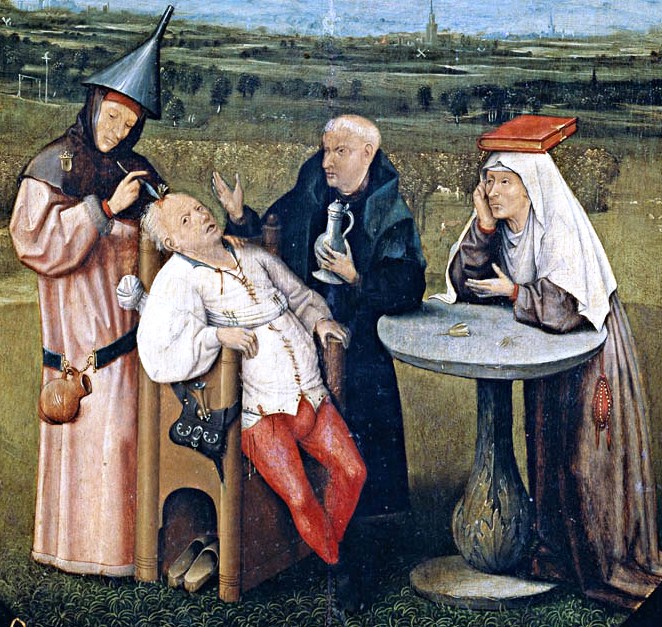 |
| Practically an orgy. |
All in all, I felt much happier about Mr. Hamstercheeks.
Anyway.
My second piece of advice to patients about to undergo pituitary surgery is this: bring a book to your surgical assessment. Better yet, bring two books and a small camping set. Having spent a lot of time at the hospital in recent years, I have become used to lengthy waiting times. I can happily sit for an hour at a stretch examining other patients' facial features and trying to work out who's got acromegaly. I can read trashy magazines and become fully immersed in Jordan's Latest Love Rat Shocker (With Exclusive Pictures Inside!). But I think Neurosurgery holds the record for my longest wait yet. And unlike the Endocrine Unit, the neuro department is miles from a coffee shop.
When I actually got in to see Mr Pout, it was a fairly brief chat. We had a butchers at my MRI and discussed the possible complications of surgery, as follows:
1. death.
2. death
3. DEATH
I'm pretty sure he mentioned some other stuff too, but I have to admit that's what I focused in on. In fairness, the risk of death associated with transsphenoidal pituitary surgery in an otherwise-healthy patient is pretty low, and it's only fair for surgeons to mention in advance that there's a slight risk of death, as with any operation involving general anaesthetic or sharp knives near major blood vessels. If they didn't mention it, I'm sure people would complain when they woke up dead. Plus I guess then if you're merely blinded or lose all pituitary function, you feel like at least it could have been worse. Other possible complications of transspenoidal pituitary surgery include cerebro-spinal fluid leak, meningitis, stroke and coma leading to…you guessed it, death.
My favourite part about meeting with the surgeon was the letter I got afterwards. It was sent from Mr Pout to my endocrinologist, basically confirming that I was a suitable candidate for surgery, and I was copied in on the correspondance.
Here's the bit I liked the best:
"...I note Miss Grey is of petite build and has small nasal passages."
Thanks, Mr. Pout! I never thought of myself as having a "petite build" before. And small nasal passages! You know how to flatter a girl.
In fact, this is neurosurgical shorthand for "book an Ear Nose & Throat team for the surgery, we're not sure her nose is big enough for all the scalpels and cameras and things to fit up there".
I don't know what they write when the ENT people aren't required. Possibly: "I note Miss --- is a bit of a heifer, with a big old conk to match. Tell ENT to take the day off".
__________________________________________________________________
*Personal details may have been subtly altered to protect the individuals concerned.
**A common complication of neurosurgery.
Subscribe to:
Posts (Atom)