Showing posts with label rare disease. Show all posts

Wednesday, 29 August 2012

The Sound of Striped Hooves

Around a year or so ago, an interesting thing happened to me. I was in the car with my mother, we were driving down the motorway, and there was a car pulling a horsebox in front of us. We were going rather faster than the horsebox, and as we passed it, I looked inside and saw… a zebra. It was only a glimpse and it confused the hell out of me for a moment, but I am still sure it was a zebra, not a horse, inside that horsebox.* At first I was slightly worried I might be going mad, but my mother pointed out that there are plenty of zoos and animal parks around the place and presumably they must transport their zebras somehow.

Folk of a medical persuasion will probably see where I am going with this, but I promise it is an entirely true story, the proof of which is that it took months and months for it to occur to me that I could use it on this blog. What can I say? I am slow.

Healthy people are probably wondering why I am blathering about hoofed african mammals instead of my usual cheery chat about tumours, but fret not. All shall be revealed.

A zebra is, as Wikipedia (and, I believe, Scrubs) so nobly tells us, the medical term for a surprising diagnosis, which rather begs the question of what we should call those stripey ponies running around in nature documentaries. It comes from the aphorism that when you hear hoofbeats behind you, you don't expect to see a zebra. This is a wise observation which is totally inapplicable to anyone who lives in the African plains, but as it was coined by an American doctor in the 1940s, this oversight may perhaps be forgiven. The point is that when a doctor is presented with a set of symptoms which may be caused by a common illness or an uncommon one, the logical assumption should be that the patient most likely has the more common illness - even though there may be a temptation to go with the more dramatic diagnosis.

I have noticed this idea of being a medical zebra popping up in a few blogs by other people with rare pituitary tumours, particularly in those with Cushing's disease - possibly this is related to the fact that one of the symptoms of Cushing's is the development of dramatic stretchmarks of a stripey and thus zebra-like nature. A few further examples - here, here and here.
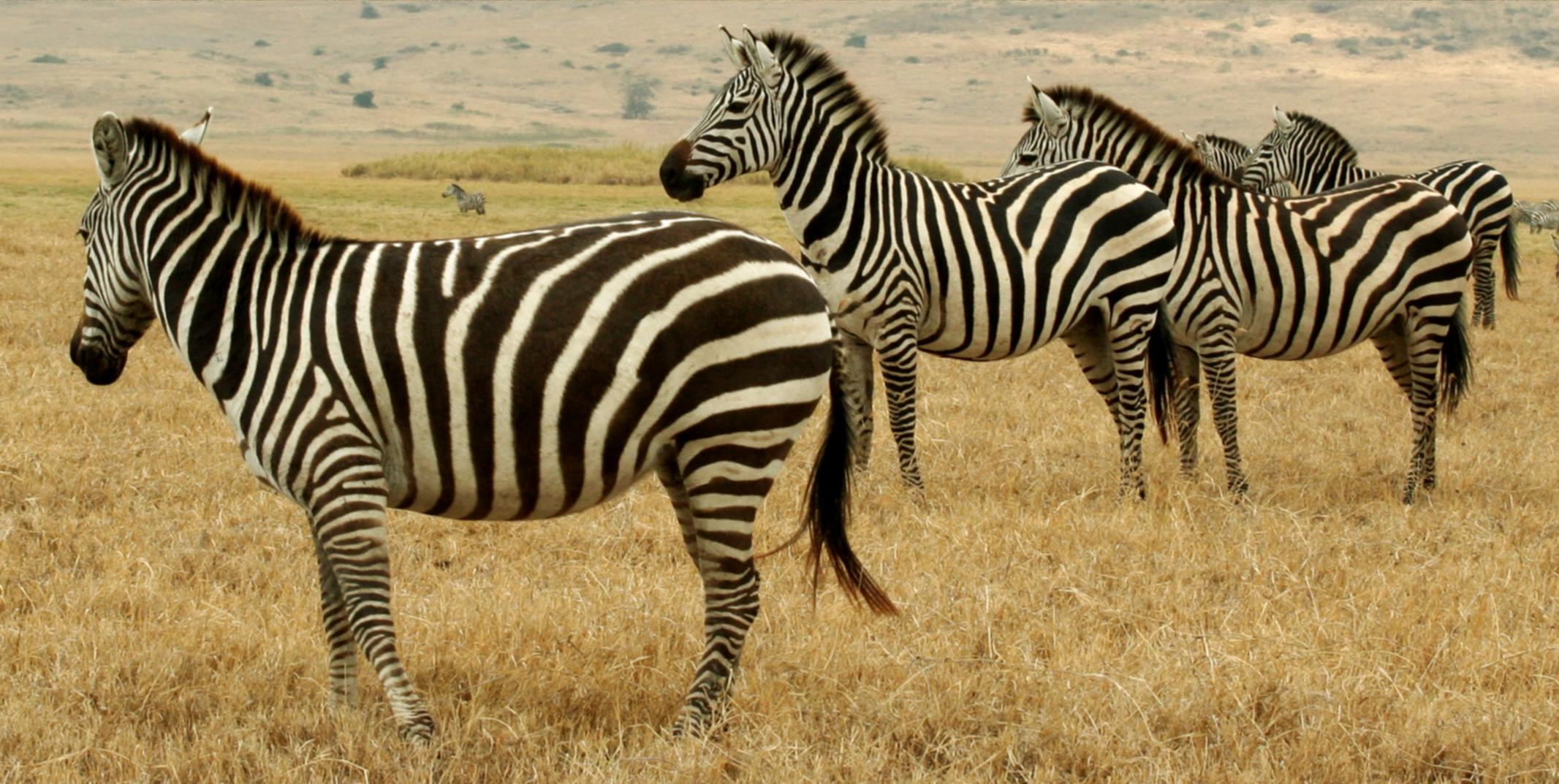
A group of Cushing's sufferers at a recent conference.
I guess I count as a medical zebra myself; my symptoms of hyperthyroidism such as tachycardia, hair loss and frenzied blogging** would normally be considered as indicating Graves disease or something - and even when the more common thyroid malfunctions were ruled out, it was considered more likely that I had a condition called Resistance to Thyroid Hormone than thyrotropinoma. But no, my body had picked the most unusual way it could think of to break down, and I was neither a horse, nor a pony, deer, mule, donkey, nor any one of a number of hoofed creatures which are more common in the UK than zebras.

Neighbours of Lord Rothschild may not only have expected to see zebras when they heard the sound of hoofbeats, but also had to leap out of their way.
Medical zebras are a tricky subject, on the whole, and there's obviously a balance to be struck. While it can be frustrating for those of us with unusual conditions to think that we waited a long time for a diagnosis, it would be far worse if doctors went around ignoring common diagnoses in favour of the weird ones. Equally though, doctors should be aware that just because something's weird and unusual doesn't mean it's not sitting in front of you - as anyone who's come face-to-face with Boris Johnson could tell you.

It's enough to make you wonder how rare your condition would have to be before you were considered a medical okapi...

______________________________________________
*Unless someone had painted a horse to look like a zebra. Which would be a pretty weird thing to do.

**Hint: one of these is not actually a symptom.

Friday, 24 August 2012

Lyrically Sick

Apologies for the lack of blogging of late, I have been on holiday! I cunningly set my Interesting Medical Fact of the Week to automatically post on Monday, having written it last week, but don't be fooled. I spent the weekend at the Edinburgh Festival, which was amazing, and this week I'm at my boyfriend's house many miles away, so although technically I have had access to a computer, my impetus to blog has not really been there and also, nothing that exciting and medical has happened.

But no more! I have decided to get cracking on a post I intended to write some time ago, in which I will look at the lyrics of popular songs and attempt to diagnose the singer on the basis of the symptoms they describe experiencing when viewing their beloved.

Before you judge me, perhaps I should clarify that the song selection should in no way be held as representative of my own musical preferences and was chosen purely on the basis of medically interpretable lyrics. 

First up we have:


So come on, spin me around 
I don’t wanna go home 
Cause when you hold me like this 
You know my heart skips, skips a beat

Olly Murs describes experiencing ectopic beats, or the sensation of a skipped or missed heartbeat - not to be confused with ectopic beets, which is when a beetroot grows in your fallopian tube. This is a very common form of cardiac arryhthmia, and indeed is really nothing to be concerned about in a healthy adult.

However, Mr Murs indicates that his palpitations occur only when the object of his affection spins him around and holds him in a particular way. This could indicate that he is suffering from postural orthostatic tachycardia syndrome, a condition in which the body struggles to deal with the changes in blood pressure occasioned by a change from a lying-down to an upright posture, or even by more minor changes in posture, and the heartrate increases dramatically as a result. Olly Murs may find his symptoms improved by increasing his fluid intake, taking regular exercise and wearing strong support tights.


Can't read my, 
Can't read my,
No he can't read my poker face.

Ms Gaga reports that the apple of her eye is unable to read her poker face. Sad to say, he may well be suffering from a condition called prosopagnosia, also known as 'face blindness', in which the ability to recognise faces is affected. Sufferers may be unable to recognise even their own face, and are forced to rely on other qualities such as voice, gait, and clothing to tell people apart from one another. Ms Gaga would be able to help her friend to recognise her by, for example, picking a distinctive piece of clothing and always wearing it around him. Perhaps a hat made out of a telephone would suffice.


Boy, you're an alien 
Your touch so foreign 
It's supernatural 
Extraterrestrial

In this song, Katy Perry appears to be under the impression that her significant other is from another planet. In this, it would seem likely that she is suffering from Capgras syndrome, in which the sufferer has the delusion that a close friend or relative has been replaced by an identical imposter. It may occur in cases of schizophrenia, dementia and brain injury, and it has been suggested that the Capgras delusion is in a sense the opposite of prosopagnosia, in that the person's ability to consciously recognise someone's face is intact, but they are lacking the unconscious emotional response to seeing the person's face.


Alas, that is all for now as I am totally out of inspiration. I may continue at some later date. Suggestions for songs/medical conditions greatly appreciated!

Monday, 23 July 2012

IMFW: Lipodystrophy

Today's Interesting Medical Fact of the Week is about lipodystrophy, defined by the ever-noble Wikipedia as "a medical condition characterized by abnormal or degenerative conditions of the body's adipose tissue." Adipose tissue = fat. As you would know if you watched the freaky Dr Who episode which featured little fat aliens called the Adipose.

Dr Who: making obesity cute.
But I digress.

I first heard about lipodystrophy when chatting to a very lovely nurse in the research department of the hospital where I went to have a bunch of tests at the beginning of the month. It's a subject they have been doing some research into, and I have to admit it kind of caught the imagination.

The term "lipodystrophy" actually covers a whole range of conditions in which the body's fat does weird things. It may include a loss of fat from certain areas of the body (lipoatrophy), or even an increase in fat in certain areas (lipohyperthrophy), or even both (lipoWTF-ery):

Congenital generalised lipodystrophy:
A rare genetic disorder in which there is extremely low fat in the subcutaneous tissue.
Other symptoms include having a giant liver and being very hairy. And, unfortunately, heart problems.

Benign Symmetric Lipomatosis:
In which the patient develops extensive fat deposits in the neck, head and shoulder area. Often associated with alcohol abuse.

Barraquer-Simons Syndrome:
This rare condition usually appears after a viral infection in childhood, and is characterised by the gradual loss of fat from the top half of the body; the face, neck, shoulders, arms and chest, often accompanied by an increase of fat in the thighs, and sometimes by other symptoms such as deafness and epilepsy.

HIV-associated lipodystrophy:
This condition occurs in people with HIV, usually those who are being treated with anti-retroviral drugs, although there is some debate about whether it is caused by the drugs or by HIV infection alone. Often there may be fat accumulation in the back, creating a 'buffalo hump', the neck and breasts, and patients often develop abdominal obesity. However, at the same time they may have loss of fat in the face, arms, shoulders, thighs and buttocks.

Those are just a few examples - lipodystrophy is quite poorly understood and quite difficult to treat. Liposuction may be used to treat excess fat deposits, or lipomas (benign tumours of fat tissue) may be removed surgically; equally implants or even fat injections may be used to improve the cosmetic appearance of fat loss from the face and body.

Saturday, 23 June 2012

Hyperthyroid Patients, Unite!

Subtitle: You have nothing to lose but your goitres!

So here's the strange thing: I have a TSHoma - a pituitary tumour which secretes TSH (thyroid stimulating hormone). It's super rare. According to my endocrinologist there are maybe thirteen or so other people in the UK with this condition which, in a population of 63 million, is Not Very Many, although it probably does go largely underdiagnosed; I had my first symptoms when I was around 16 or 17 and didn't get a diagnosis until I was 22.

But anyway, the point is that it can sometimes almost feel like two separate conditions; I have the pituitary adenoma, and the hyperthyroidism it causes. My symptoms, apart from the odd nasty headache, are pretty much exclusively those of hyperthyroidism; my treatment is for the adenoma. Consequently, although I am in all seriousness a paid-up member of the Pituitary Foundation and can chat about transsphenoidal surgery and lanreotide injections with the best of them, I'm missing out on the chance to bitch and moan about sinus tachycardia and getting the shakes with other people whose blood has turned to delicious thyroid hormone stew. More fool me!

People with excess thyroid hormone usually get that way from either a) taking too high a dose of thyroxine medication (exogenous thyrotoxicosis), or b) something else. The former can be dealt with simply by reducing the dose. The latter is more complicated. Possible causes include:

Graves Disease - the most common cause of hyperthyroidism, Graves is an autoimmune disease which can be treated with anithyroid drugs, surgery to remove part or all of the thyroid, or a dose of radiactive iodine. After such treatment there's a substantial and ironic risk of hypothyroidism - i.e. not having enough thyroid hormone.

Tumours of the thyroid gland - thyroid adenoma is a benign tumour of the thyroid gland which may secrete large amounts of thyroid hormone, while thyroid nodules may be benign or malignant and again may or may not release thyroid hormone - in some cases they may actually inhibit its production, causing hypothyroidism.

Thyroiditis - inflammation of the thyroid gland. Although this often initially leads to high levels of thyroid hormone being released, it usually progresses to thyroid disfunction with the gland unable to produce sufficient hormones, and ultimately causes hypothyroidism. Around 7% of women experience temporary thyroiditis after giving birth (postpartum thyroiditis) which may lead to hyper- or hypothyroidism, or both; this usually resolves itself.

TSH hypersecretion - super rare, but usually caused by a pituitary adenoma (hurrah!). However, I believe there is also the possibility of a tumour in the hypothalamus causing excess Thyrotropin Releasing Hormone and hyperstimulating the pituitary gland to overproduce TSH, which in turn would hyperstimulate the thyroid gland to overproduce thyroid hormone. Again, it's very rare.

I guess really I should be grateful for this, as effectively I have two health conditions for the price of one. This blog is usually focussed mainly around the dramatic "there's a tumour in my head!" aspects of my pituitary adenoma, and poor little hyperthyroidism barely gets a look in, except for when I complain about my tachycardia/hair falling out/absurd appetite issues. But no longer! From now on I vow to go on about hyperthyroidism more. So you guys will get two lots of whingeing for the price of one!

Friday, 15 June 2012

IMFW: The King's Evil

Recently, the UK celebrated the Queen's Diamond Jubilee, marking sixty years of her right regal reign. At some point over the weekend, I made a joke about scrofula - that most historical of diseases - and no-one got it. Now, people often don't get my jokes, and I'm sorry to report that approximately 70% of the time this is because they are Not That Funny. However, the other 30% of the time they are absolutely hilarious, and this was one of those times. Consequently I was forced to the conclusion that either 1.) my friends are, to a man, ardent royalists who refuse to laugh at an old lady purely because she has an unusually heavy and unfashionably metallic hat, or 2.) they didn't know what scrofula was.

And so, in the interests of education, this week's extremely overdue Interesting Medical Fact of the Week will focus on scrofula, a.k.a. the King's Evil, a.k.a. tuberculous cervical lymphadenitis - and how's that for a rapper name?

Scrofula is effectively tuberculosis of the neck, resulting in swollen lymph nodes. In children it is often caused by infections other than mycobacterium tuberculosis, but when tuberculosis is the underlying cause, there are also associated symptoms of fever, weight loss, and malaise. It's a very unsightly illness; the swelling of the neck can become so large that the skin around it ruptures, leaving open wounds.

With the huge decline in tuberculosis rates over the past sixty years, scrofula has become a rare disease, except among the immunocompromised, but historically it was much more common. For hundreds of years in England and France it was commonly believed that scrofula could be cured by the touch of a king,* and indeed monarchs would hold huge events in which they touched hundreds of scrofula patients. From 1633, the Anglican Book of Common Prayer even included a special service for the ceremony, and it was traditional for the monarch to give the affected person a coin. Kings and queens varied in how far they were prepared to go with this tradition, however; although Queen Anne (r. 1702 - 1714) was fond of helping the scrofulous and even touched a young Samuel Johnson, who suffered from the illness, her successor King George I (r. 1714 - 1727) abandoned the practise as being "too Catholic" and also, presumably, too gross.
________________________________________________
*Queens were an acceptable alternative for the scrofula sufferer on a budget.

Saturday, 19 May 2012

5 Things Healthy People Miss Out On

Over at Cushie Bloggers for the month of April, some bloggers took part in the Cushing's Awareness Challenge during April; the aim was to blog about something to do with Cushing's Disease every day of April. Well, I don't have Cushing's Disease, and it's now May. But the Challenge includes a list of prompts and suggestions of topics for bloggers with Cushing's disease to write about, and it looks like a good list to me for anyone with a pituitary adenoma to co-opt.

So, my first post from the list is in honour of both Cushing's Awareness and TSHoma Cognisance. And in fairness, I strongly suspect that awareness of thyroid-stimulating-hormone-producing pituitary adenomas is even lower than awareness of Cushing's Disease...

I like to think I am a fairly optimistic and sunny person, so instead of going down the depressing route, I have decided to start with a post focusing on the awesome aspects of being sick. Presenting:

5 THINGS HEALTHY PEOPLE MISS OUT ON
Or: Why It Is Great To Be Me and Be Ill 

1. You always have an excuse.

"Excuse me, madam, but you would appear to have inadvertently stabbed this man".
"Oh, I'm so sorry officer, it must be my brain tumour playing up again. Forgive me."
"Not at all, my good woman. Please continue about your business. And get well soon!"

In fact, I never have stabbed a man, but I fondly imagine that were I to do so, this is roughly how the conversation with the policeperson would go afterwards. Having a tumour in your head is rubbish, but it's one hell of an opportunity to get away with doing what you want.

Want a seat on the bus? Mention the tumour.
Late for a deadline? Mention the tumour.
Want to freak out a stranger? Mention the tumour.
In detail.

2. Improved and terrifying knowledge of medical terminology.

You know, if I didn't have a pituitary adenoma, I would never have heard of adrenocorticotrophic hormone, let alone be able to pronounce it. And now, not only do I have an expanded vocabulary for actual words, but I know the abbreviations too. I know that my form for TFT bloods will check my TSH, FT3 and FT4 - plus usually my endocrinologist requests SHBG and alpha subunit. Because that is just how he rolls.

3. A warm and fuzzy glow about UK taxation.

You know what I don't mind? When, at the end of the month, my paycheck is shrunk by several hundred pounds thanks to paying tax and National Insurance contributions. You know why I don't mind it? Because one monthly dose of lanreotide costs more than twice what I pay in tax. And that's not including the costs of my regular visits to the doctor, the nurse, the hospital, my other prescriptions, my MRI scans, my surgery, my blood tests.

I can't imagine how horrendous it would be to have to pay for this stuff in a country without a decent national healthcare system.

4. Joie De Vivre

It sounds pretty cheesy to say that being ill gives you a newfound appreciation for life. That's because it is a cheesy thing to say. However, it is also true. The feeling of achievement when, after pituitary surgery, you manage to very slowly walk the ten minutes to the nearest pub is as satisfying as learning to play the tuba. Probably more satisfying, in fact. After all, I've never met a happy tuba player.*

5. Writing this blog

I would never in a hundred years have managed to keep up writing a blog this long (since last August… that's ten months!) if I had not been ill. No matter what topic I picked, it would surely have lapsed, just like every other diary I've ever attempted to write has lapsed, usually within about a week. But writing so often has been really good for me; it's improved my style, it's made me more comfortable with just sitting down and typing - and searching for Interesting Medical Facts of the Week has taught me a hell of a lot. And being ill is what has made me keep this up. I can't ever lapse for long, because there's always going to be something I want to complain about.

_____________________________________________
*Disclaimer: I have never met a tuba player.

Monday, 14 May 2012

IMFW: Brain Injuries in Sport

An interesting story that has been popping up now and again for the last few months concerns brain injuries in the US NFL (National [American] Football League), so that's what we're focusing on in this week's Interesting Medical Fact of the Week.

American Football is obviously a high-contact sport, hence the crazy amounts of protective gear the players wear - including helmets. However, evidence has been mounting for some time that all this protective gear may not be enough.

Several high-profile former players have killed themselves in the last few years. Dave Duerson committed suicide in February 2011, after texting his family to request that his brain be donated to the NFL's "brain bank" - namely, the Centre for the Study of Traumatic Encephalopathy, which was set up by former athletes to investigate the long-term effects of the concussions suffered by sportspeople and military personnel.

The Centre focuses on studying chronic traumatic encephalopathy (CTE), which is a progressive, degenerative disease of the brain. As early as the 1920s, there was recognition that this condition particularly affected boxers, but it now appears that it is also associated with repeated brain trauma (i.e. concussions or other head injury). Professional American football players, ice hockey players and those involved in sports such as wrestling, are particularly likely to sustain these kinds of injuries.

Chronic traumatic encephalopathy is a nasty illness. Much like Alzheimer's Disease, it involves the build-up of tau proteins in the brain, and the initial symptoms of memory loss, confusion, depression, and self-control problems eventually lead to full-blown progressive dementia with some symptoms of Parkinson's Disease.

When Duerson's brain was studied, researchers found that the repeated trauma to his head during his professional career appeared to have caused severe damage. One of the difficulties with chronic traumatic encephalopathy is that there can be a significant latency period between the original injuries and the appearance of recognisable symptoms; however, along with Duerson, many other former NFL players - and those involved in other high-contact sports - have been diagnosed with chronic traumatic encephalopathy after their deaths. Chris Henry, another American football player who died after falling from a moving vehicle, was the first player to be posthumously diagnosed with CTE while still active as a professional sportsman; but the earliest signs of the disease have even been found in the brain of an 18-year-old student athlete.

As well as Duerson, former professional footballers Junior Seau and Ray Easterling also recently committed suicide. Along with several other American football players, Easterling was involved in a class action lawsuit against the NFL over its handling of concussion-related injuries, which alleges that the NFL continuously denied any knowledge of a connection between NFL players sustaining repeated head injuries and the later development of dementia or CTE. In addition to this, another lawsuit was recently launched on behalf of over 100 former professional players, claiming that the NFL repeatedly denied the existence of any connection.

Chronic traumatic encephalopathy is a very rare disease, and one of the difficulties in researching it is that it can only be definitively diagnosed post mortem. But the work of the Centre for the Study of Traumatic Encephalopathy is already causing waves in the world of American football, and there have already been calls for changes to the game's regulations, effectively banning head contact from the game. The Centre's research is still ongoing, so whether that will actually happen remains to be seen.

But are those helmets enough?

If you're interested in this topic and would like to find out more, I recommend the Centre's very informative website, which also has a selection of case studies you can read about.

Monday, 19 March 2012

IMFW: Nodding Disease

For today's Interesting Medical Fact of the Week, we're going to get a little bit Agatha Christie. I love Agatha Christie, because a) I love mysteries and b) I'm an old granny at heart. But in terms of mysterious illnesses, this one takes the biscuit.

So-called nodding disease (or nodding syndrome) was first described in the mountains of Tanzania in the 1960s. Since then, it's spread to areas in south Sudan and northern Uganda. It's an extremely serious progressive disease which only affects children, and it's almost always fatal. There is no cure. And no-one is even sure what causes the illness.

The symptoms of nodding disease include complete and permanent stunting of growth, including development in the brain, which leads to mental retardation. The name of the illness comes from the characteristic seizures suffered by affected individuals, which cause their heads to nod rapidly; the only treatment currently available for nodding syndrome is epilepsy drugs which can help to control these seizures. Extra weird is the fact that these seizures seem to happen most commonly when the child begins eating or feels cold. Children become severely malnourished because they are frequently rendered unable to eat. Many children with nodding disease actually die from falls or accidents like drowning or burning, which they're at higher risk of because of their mental impairment.

At the moment, the hypothesis that seems most likely to explain this disease suggests that it may be linked to river blindness (onchocerciasis), an illness caused by a kind of parasitic worm which is transmitted to humans through the bite of the black fly. Cases of nodding disease are concentrated in areas where there are high levels of infection with the river blindness parasite and it seems there may be a link, although no-one's yet worked out what it is. There may also be a link with low serum concentration of the blood.

There is a little bit of good news. The mysterious illness has attracted some international attention, and this week Uganda opened its first treatment centres specifically for children with nodding disease. At the moment, though, the best they can aim for is to control the illness's symptoms.

Tuesday, 28 February 2012

Get Ready for Rare Disease Day 2012

Rare Disease Day 2012 is tomorrow, the 29th February, and I hope you're all as excited as I am. Yay, diseases!

The definition of a rare disease in Europe is a disease with an incidence of fewer than one in two thousand people. There are thousands of rare diseases, and although each disease is individually rare, taken collectively rare diseases affect 6% of people in Europe and account for 20% of healthcare costs. Rare Disease Day aims to raise awareness of the problem of rare diseases, and the fact that research into treatment of these kinds of diseases tends to be significantly underfunded.

For more information, check out the Rare Disease Day 2012 website, or infect yourself with an unusual pathogen!