I am a little overexcited that the piece I wrote recently about Kate Woodward, the girl with acromegaly who sued the NHS, has been posted on the Acromegaly Community blog. It's an excellent website that I have frequently read in the past so I was delighted to hear from them when they asked to post the article! (Thanks, guys). It's definitely highly recommended if you have acromegaly. If you live in the US, it also has some very useful information on financial support for your prescriptions, information on discrimination in the workplace, and medical studies which are currently recruiting.
Plus, if you're passing by you can click 'like' on my post >.>
Friday, 31 August 2012

Wednesday, 29 August 2012
The Sound of Striped Hooves
Around a year or so ago, an interesting thing happened to me. I was in the car with my mother, we were driving down the motorway, and there was a car pulling a horsebox in front of us. We were going rather faster than the horsebox, and as we passed it, I looked inside and saw… a zebra. It was only a glimpse and it confused the hell out of me for a moment, but I am still sure it was a zebra, not a horse, inside that horsebox.* At first I was slightly worried I might be going mad, but my mother pointed out that there are plenty of zoos and animal parks around the place and presumably they must transport their zebras somehow.
Folk of a medical persuasion will probably see where I am going with this, but I promise it is an entirely true story, the proof of which is that it took months and months for it to occur to me that I could use it on this blog. What can I say? I am slow.
Healthy people are probably wondering why I am blathering about hoofed african mammals instead of my usual cheery chat about tumours, but fret not. All shall be revealed.
A zebra is, as Wikipedia (and, I believe, Scrubs) so nobly tells us, the medical term for a surprising diagnosis, which rather begs the question of what we should call those stripey ponies running around in nature documentaries. It comes from the aphorism that when you hear hoofbeats behind you, you don't expect to see a zebra. This is a wise observation which is totally inapplicable to anyone who lives in the African plains, but as it was coined by an American doctor in the 1940s, this oversight may perhaps be forgiven. The point is that when a doctor is presented with a set of symptoms which may be caused by a common illness or an uncommon one, the logical assumption should be that the patient most likely has the more common illness - even though there may be a temptation to go with the more dramatic diagnosis.
I have noticed this idea of being a medical zebra popping up in a few blogs by other people with rare pituitary tumours, particularly in those with Cushing's disease - possibly this is related to the fact that one of the symptoms of Cushing's is the development of dramatic stretchmarks of a stripey and thus zebra-like nature. A few further examples - here, here and here.
I guess I count as a medical zebra myself; my symptoms of hyperthyroidism such as tachycardia, hair loss and frenzied blogging** would normally be considered as indicating Graves disease or something - and even when the more common thyroid malfunctions were ruled out, it was considered more likely that I had a condition called Resistance to Thyroid Hormone than thyrotropinoma. But no, my body had picked the most unusual way it could think of to break down, and I was neither a horse, nor a pony, deer, mule, donkey, nor any one of a number of hoofed creatures which are more common in the UK than zebras.
Medical zebras are a tricky subject, on the whole, and there's obviously a balance to be struck. While it can be frustrating for those of us with unusual conditions to think that we waited a long time for a diagnosis, it would be far worse if doctors went around ignoring common diagnoses in favour of the weird ones. Equally though, doctors should be aware that just because something's weird and unusual doesn't mean it's not sitting in front of you - as anyone who's come face-to-face with Boris Johnson could tell you.
It's enough to make you wonder how rare your condition would have to be before you were considered a medical okapi...
______________________________________________
*Unless someone had painted a horse to look like a zebra. Which would be a pretty weird thing to do.
**Hint: one of these is not actually a symptom.
Folk of a medical persuasion will probably see where I am going with this, but I promise it is an entirely true story, the proof of which is that it took months and months for it to occur to me that I could use it on this blog. What can I say? I am slow.
Healthy people are probably wondering why I am blathering about hoofed african mammals instead of my usual cheery chat about tumours, but fret not. All shall be revealed.
A zebra is, as Wikipedia (and, I believe, Scrubs) so nobly tells us, the medical term for a surprising diagnosis, which rather begs the question of what we should call those stripey ponies running around in nature documentaries. It comes from the aphorism that when you hear hoofbeats behind you, you don't expect to see a zebra. This is a wise observation which is totally inapplicable to anyone who lives in the African plains, but as it was coined by an American doctor in the 1940s, this oversight may perhaps be forgiven. The point is that when a doctor is presented with a set of symptoms which may be caused by a common illness or an uncommon one, the logical assumption should be that the patient most likely has the more common illness - even though there may be a temptation to go with the more dramatic diagnosis.
I have noticed this idea of being a medical zebra popping up in a few blogs by other people with rare pituitary tumours, particularly in those with Cushing's disease - possibly this is related to the fact that one of the symptoms of Cushing's is the development of dramatic stretchmarks of a stripey and thus zebra-like nature. A few further examples - here, here and here.
 |
| A group of Cushing's sufferers at a recent conference. |
 |
| Neighbours of Lord Rothschild may not only have expected to see zebras when they heard the sound of hoofbeats, but also had to leap out of their way. |
It's enough to make you wonder how rare your condition would have to be before you were considered a medical okapi...

______________________________________________
*Unless someone had painted a horse to look like a zebra. Which would be a pretty weird thing to do.
**Hint: one of these is not actually a symptom.
Monday, 27 August 2012
IMFW: Thyrotoxic Period Paralysis
Today's Interesting Medical Fact of the Week is about thyrotoxic periodic paralysis, a curious malady occurring mainly in men of Japanese, Vietnamese, Chinese, Korean Thai and Filipino descent - and Native Americans are also at greater risk, as they share a genetic background with East Asian people. The condition causes attacks of muscle weakness and paralysis and usually occurs in the presence of high thyroid hormone levels (hyperthyroidism) and low potassium levels (hypokalemia).
The attacks of paralysis can be brought on by exercise, drinking alcohol and eating food high in carbohydrates or salt, and they can be dangerous if they lead to respiratory failure or irregular heartbeat. This condition can be treated by first correcting the hypokalemia, then the hyperthyroidism; once treatment has achieved normal thyroid levels, this usually leads to a complete resolution of the problem.
Thyrotoxic period paralysis is commonly associated with Graves Disease, although other illnesses which lead to high thyroid levels (including TSH-producing pituitary adenoma... yay!) can also cause the condition. It's not fully understood and there is still confusion over why males are predominantly affected despite the fact that overactive thyroid problems are more common in women.
The attacks of paralysis can be brought on by exercise, drinking alcohol and eating food high in carbohydrates or salt, and they can be dangerous if they lead to respiratory failure or irregular heartbeat. This condition can be treated by first correcting the hypokalemia, then the hyperthyroidism; once treatment has achieved normal thyroid levels, this usually leads to a complete resolution of the problem.
Thyrotoxic period paralysis is commonly associated with Graves Disease, although other illnesses which lead to high thyroid levels (including TSH-producing pituitary adenoma... yay!) can also cause the condition. It's not fully understood and there is still confusion over why males are predominantly affected despite the fact that overactive thyroid problems are more common in women.
Friday, 24 August 2012
Lyrically Sick
Apologies for the lack of blogging of late, I have been on holiday! I cunningly set my Interesting Medical Fact of the Week to automatically post on Monday, having written it last week, but don't be fooled. I spent the weekend at the Edinburgh Festival, which was amazing, and this week I'm at my boyfriend's house many miles away, so although technically I have had access to a computer, my impetus to blog has not really been there and also, nothing that exciting and medical has happened.
But no more! I have decided to get cracking on a post I intended to write some time ago, in which I will look at the lyrics of popular songs and attempt to diagnose the singer on the basis of the symptoms they describe experiencing when viewing their beloved.
Before you judge me, perhaps I should clarify that the song selection should in no way be held as representative of my own musical preferences and was chosen purely on the basis of medically interpretable lyrics.
First up we have:
So come on, spin me around
I don’t wanna go home
Cause when you hold me like this
You know my heart skips, skips a beat
Olly Murs describes experiencing ectopic beats, or the sensation of a skipped or missed heartbeat - not to be confused with ectopic beets, which is when a beetroot grows in your fallopian tube. This is a very common form of cardiac arryhthmia, and indeed is really nothing to be concerned about in a healthy adult.
However, Mr Murs indicates that his palpitations occur only when the object of his affection spins him around and holds him in a particular way. This could indicate that he is suffering from postural orthostatic tachycardia syndrome, a condition in which the body struggles to deal with the changes in blood pressure occasioned by a change from a lying-down to an upright posture, or even by more minor changes in posture, and the heartrate increases dramatically as a result. Olly Murs may find his symptoms improved by increasing his fluid intake, taking regular exercise and wearing strong support tights.
Can't read my,
Can't read my,
No he can't read my poker face.
Ms Gaga reports that the apple of her eye is unable to read her poker face. Sad to say, he may well be suffering from a condition called prosopagnosia, also known as 'face blindness', in which the ability to recognise faces is affected. Sufferers may be unable to recognise even their own face, and are forced to rely on other qualities such as voice, gait, and clothing to tell people apart from one another. Ms Gaga would be able to help her friend to recognise her by, for example, picking a distinctive piece of clothing and always wearing it around him. Perhaps a hat made out of a telephone would suffice.
Boy, you're an alien
Your touch so foreign
It's supernatural
Extraterrestrial
In this song, Katy Perry appears to be under the impression that her significant other is from another planet. In this, it would seem likely that she is suffering from Capgras syndrome, in which the sufferer has the delusion that a close friend or relative has been replaced by an identical imposter. It may occur in cases of schizophrenia, dementia and brain injury, and it has been suggested that the Capgras delusion is in a sense the opposite of prosopagnosia, in that the person's ability to consciously recognise someone's face is intact, but they are lacking the unconscious emotional response to seeing the person's face.
Alas, that is all for now as I am totally out of inspiration. I may continue at some later date. Suggestions for songs/medical conditions greatly appreciated!
But no more! I have decided to get cracking on a post I intended to write some time ago, in which I will look at the lyrics of popular songs and attempt to diagnose the singer on the basis of the symptoms they describe experiencing when viewing their beloved.
Before you judge me, perhaps I should clarify that the song selection should in no way be held as representative of my own musical preferences and was chosen purely on the basis of medically interpretable lyrics.
First up we have:
So come on, spin me around
I don’t wanna go home
Cause when you hold me like this
You know my heart skips, skips a beat
Olly Murs describes experiencing ectopic beats, or the sensation of a skipped or missed heartbeat - not to be confused with ectopic beets, which is when a beetroot grows in your fallopian tube. This is a very common form of cardiac arryhthmia, and indeed is really nothing to be concerned about in a healthy adult.
However, Mr Murs indicates that his palpitations occur only when the object of his affection spins him around and holds him in a particular way. This could indicate that he is suffering from postural orthostatic tachycardia syndrome, a condition in which the body struggles to deal with the changes in blood pressure occasioned by a change from a lying-down to an upright posture, or even by more minor changes in posture, and the heartrate increases dramatically as a result. Olly Murs may find his symptoms improved by increasing his fluid intake, taking regular exercise and wearing strong support tights.
Can't read my,
Can't read my,
No he can't read my poker face.
Ms Gaga reports that the apple of her eye is unable to read her poker face. Sad to say, he may well be suffering from a condition called prosopagnosia, also known as 'face blindness', in which the ability to recognise faces is affected. Sufferers may be unable to recognise even their own face, and are forced to rely on other qualities such as voice, gait, and clothing to tell people apart from one another. Ms Gaga would be able to help her friend to recognise her by, for example, picking a distinctive piece of clothing and always wearing it around him. Perhaps a hat made out of a telephone would suffice.

Boy, you're an alien
Your touch so foreign
It's supernatural
Extraterrestrial
In this song, Katy Perry appears to be under the impression that her significant other is from another planet. In this, it would seem likely that she is suffering from Capgras syndrome, in which the sufferer has the delusion that a close friend or relative has been replaced by an identical imposter. It may occur in cases of schizophrenia, dementia and brain injury, and it has been suggested that the Capgras delusion is in a sense the opposite of prosopagnosia, in that the person's ability to consciously recognise someone's face is intact, but they are lacking the unconscious emotional response to seeing the person's face.
Alas, that is all for now as I am totally out of inspiration. I may continue at some later date. Suggestions for songs/medical conditions greatly appreciated!
Monday, 20 August 2012
IMFW: Harvey Cushing
This week's IMFW is really more like an IMPW - an Interesting Medical Person of the Week. Harvey Williams Cushing is often regarded as the "father of modern neurosurgery".
An American descended from a long line of doctors, he was born in Ohio in 1869. After studying medicine, he went on to study surgery at the famous Johns Hopkins Hospital just after it had opened, then spent time in Europe before returning to Johns Hopkins as an associate professor in surgery. As well as writing about medicine, he was a talented medical illustrator and several of his drawings were published in textbooks - and as if that wasn't enough, he received the Pulitzer Prize for Biography for his biography of his mentor, William Osler.
Cushing's first monograph was on the subject of the pituitary, and on this blog, you'll have heard Cushing's name from one of his most famous discoveries, the disease named after him - Cushing's Disease; a tumour of the pituitary gland which secretes ACTH (adrenocorticotrophic hormone) and causes a range of symptoms including weight gain, bruising, sweating, high blood pressure and diabetes. Being a modest chap, he had originally named it "polyglandular syndrome", but his name stuck. However, this was far from his only contribution to medicine:
- He introduced blood pressure measurement to America
- He used x-rays to diagnose brain tumours
- He developed medical instruments which are still in use today, including the Cushing Forcep which is used during cranial surgery, the Cushing clip - a small clip for blood vessels to stop bleeding during surgery, which dramatically decreased mortality rates - and the use of electrocautery which he developed with W.T. Bovie, a physicist
- Along with a colleague, Ernest Codman, Cushing devised the first anaesthetic chart to help surgeons and anaesthetists monitor pulse, temperature and breathing - an innovation which was widely adoped
- Cushing pioneered many new surgical techniques including the use of saline for irrigation during surgery
- He developed a surgical cure for trigeminal neuralgia
- His mortality rate was around 10% - which doesn't sound hugely impressive until you realise that before he came along, mortality rates from neurosurgery were 50 - 90% depending on which source you believe
- He developed the transsphenoidal approach for surgery of the pituitary gland
- He invented the macarena (just checking you're paying attention...)
- He identified and named the phenomena of hypopituitarism and hyperpituitarism
So Mr Harvey Williams Cushing deserves our gratitude and respect. He has thoroughly earned the bewildering array of unpleasant medical things named after him, which include: Cushing's Syndrome, Cushing's Disease, Cushing's symphalangism (a.k.a. proximal symphalangism), Cushing's Reflex resulting in Cushing's Triad (a nervous system response to increase intracranial pressure), Cushing ulcer a.k.a. Rokitansky-Cushing Syndrome, Bailey-Cushing Syndrome (he had to share that one), the Cushing forcep and Cushing clip.
An American descended from a long line of doctors, he was born in Ohio in 1869. After studying medicine, he went on to study surgery at the famous Johns Hopkins Hospital just after it had opened, then spent time in Europe before returning to Johns Hopkins as an associate professor in surgery. As well as writing about medicine, he was a talented medical illustrator and several of his drawings were published in textbooks - and as if that wasn't enough, he received the Pulitzer Prize for Biography for his biography of his mentor, William Osler.
Cushing's first monograph was on the subject of the pituitary, and on this blog, you'll have heard Cushing's name from one of his most famous discoveries, the disease named after him - Cushing's Disease; a tumour of the pituitary gland which secretes ACTH (adrenocorticotrophic hormone) and causes a range of symptoms including weight gain, bruising, sweating, high blood pressure and diabetes. Being a modest chap, he had originally named it "polyglandular syndrome", but his name stuck. However, this was far from his only contribution to medicine:
- He introduced blood pressure measurement to America
- He used x-rays to diagnose brain tumours
- He developed medical instruments which are still in use today, including the Cushing Forcep which is used during cranial surgery, the Cushing clip - a small clip for blood vessels to stop bleeding during surgery, which dramatically decreased mortality rates - and the use of electrocautery which he developed with W.T. Bovie, a physicist
- Along with a colleague, Ernest Codman, Cushing devised the first anaesthetic chart to help surgeons and anaesthetists monitor pulse, temperature and breathing - an innovation which was widely adoped
- Cushing pioneered many new surgical techniques including the use of saline for irrigation during surgery
- He developed a surgical cure for trigeminal neuralgia
- His mortality rate was around 10% - which doesn't sound hugely impressive until you realise that before he came along, mortality rates from neurosurgery were 50 - 90% depending on which source you believe
- He developed the transsphenoidal approach for surgery of the pituitary gland
- He invented the macarena (just checking you're paying attention...)
- He identified and named the phenomena of hypopituitarism and hyperpituitarism
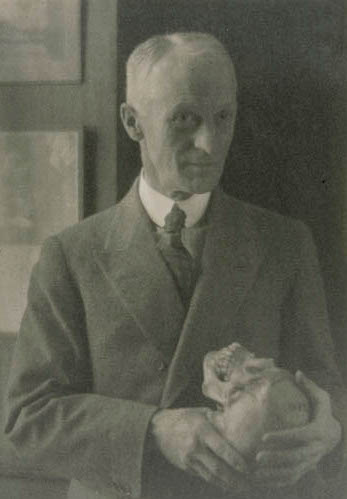 |
| Yes... yes, that is a skull. |
Wednesday, 15 August 2012
Girl with Acromegaly Sues NHS
A story broke some time ago about a young lady with acromegaly who sued the NHS, and won. I've been meaning to write about her for a while but I wanted to take the time to create an interesting and informative post contrasting her case with that of Kane Gorny. Alas, I have not had the time, so you'll just have to deal with a dull and uninformative post instead. Hurrah!
The story is this: Kate Woodward, an aspiring actress, developed acromegaly (i.e. a pituitary tumour secreting growth hormone, which lead to uncontrolled growth of her body) as a child, which went untreated between 2001 and 2005 as medics failed to spot the condition. She attained a final height of 6'5" aged 20, and sued the NHS for £2 million. She was awarded compensation of £1.3m.
Incidentally, the award for "least sensitive headline about this story" goes to Healthcare Today UK, which went with "Freak Growth Woman Sues NHS".*
Nice.
Her case for being awarded this level of compensation was that, as a result of her condition being untreated for so long:
- Her height and "ugliness" meant that she could no longer go into a career as an actress.
- She has psychological difficulties and feels like a "freak" because of her condition.
- She has significant problems with her bones, knees and teeth, and cannot buy normal-sized clothes.
- The condition affected her childhood, schooling and friendships.
And, most significantly:
- She wishes to receive all future treatment in the private sector.
Now, not long after this story was first brought to my attention (by a colleague, thank you!) I noticed that it had also popped up as a topic of discussion on the Pituitary Foundation's forum. For those of you who don't subscribe, one member created a poll entited something like "Should Kate Woodward be ashamed of herself?" The results of the poll were overwhelmingly that she should (although in fairness by "overwhelmingly", I mean "there were four votes in total").
Why the anger? Surely she has a fairly good case, right? Undoubtedly, when a doctor is presented with a girl who measured 5'9" at just eleven years old and keeps growing, you'd hope that it wouldn't take four years to just Google it and think "hmm, maybe we should rule out acromegaly". Although we can't know that faster treatment would have effected a cure, it might have controlled or reduced the symptoms. She will have to live with injections and monitoring and joint problems and feeling self-conscious for her whole life.
BUT.
The problem is that this is not, actually, an unusual case - at least, not within the magical world of pituitary tumours. If every person with acromegaly decided to sue the NHS for delayed diagnosis, it would be one hell of a bonus day for lawyers. If you threw in people with other often-missed pituitary conditions like Cushing's Disease and TSHoma, it would probably result in a sudden UK lawyer shortage as they all retired to small Caribbean islands. If you based the level of compensation awarded on the number of years the condition went undiagnosed, the small Caribbean islands would probably reinvent themselves as world financial hubs.
I exagerate. But the mean length of time from onset of symptoms to diagnosis of acromegaly is, according to this MedScape article, around 12 years. Even if that estimate is too high, the point is that pituitary tumour conditions can be hard to diagnose, and they are often missed because they're rare enough that doctors don't see them often, and often don't expect to see them either. Four years to diagnose a patient with acromegaly is, sadly, not uncommon. I first showed symptoms of my TSH-secreting pituitary tumour aged 17, and I didn't get a diagnosis until I was 22. (In case you're bad at maths, that's five years). Even after my superfast heartrate made it clear that Something Was Wrong, it took a year to work out what that something was.
So if there's a slight lack of sympathy from other acromegalomaniacs,** it could be because they're thinking "Damn, £2m! Wish I'd thought of that."
But I doubt it. And I'm not just saying that because they're bigger than me.***
Now I want to note right off the bat that where there is evidence of medical negligence or it takes a long time to get a diagnosis, you should complain. Vociferously. You should complain in the hope that procedures can be improved. Otherwise there's nothing to stop future patients from suffering through the same tortuous process to find out what's wrong with them. But there's a difference between seeing a problem, taking a complaint as far as necessary to fix that problem for future patients, and just suing to get as much as you can out of them. Through the normal complaints process, the hospital in question offered Miss Woodward compensation of £700k, no court appearance required. If she lives to the age of 90, that would be £10,000 medical expenses covered every year. Additionally, according to the Daily Mail, which I personally take with a pinch of salt and under the supervision of a doctor, the hospital trust had already spent £288,000 on Miss Woodward for "treatment, dental care, holidays and special footwear".
Even the £500k difference between what she was offered and what the court awarded is a big chunk of money. £500k that could have gone towards treating other patients. I need somatostatin analogue injections (probably much like those Miss Woodward takes), and if you've been reading this blog lately, you'll know that it is proving slightly tricky to persuade someone to fund them. £500k could pay for 666-and-a-bit doses of those injections. Which doesn't sound like that much, until you realise that each dose lasts for a month, so £500k worth of injections would last me for fifty-five years. And six months. Assuming I needed them continuously. And of course by that point I would be 79-and-a-half, so chances are I could be dead by then anyway.
And here's the thing. If the NHS messes up and, as a result, you end up incurring further costs in your daily life (eg. you're a professional tap dancer going into hospital for an appendectomy, and you wake up with a leg missing) then yep, you should get compensation and if they won't agree to pay it, sue them with my blessing and encouragement. If the clinical negligence of your child at birth leads to brain damage which will affect that child for their entire life, then sue for the money needed to support them. And if/when the NHS messes up so badly that it becomes a danger to other patients, and you follow through that complaints process and nothing changes, sue them until they sit up and pay attention and mend their ways.
But I am somewhat uncomfortable with suing the NHS for the loss of a career that did not yet exist, and for the costs of having exactly the same treatment as the NHS provides, but done privately. (I'm also intrigued by the concept, since she presumably did not have private health insurance before diagnosis and consequently insurers would be unlikely to cover her pre-existing condition?). I've had an MRI scan done by a private provider and done by the NHS and the experience was almost exactly the same - except the private hospital was a lot harder to get to on public transport.
I guess in some way I think that when the NHS messes up, part of the compensation is the NHS. The very fact that you live in a country where you don't have to worry about the cost of healthcare means that when the NHS makes a mistake, it - not you - ends up bearing any increased costs of your care as a result of its mistake. Perhaps in some countries when a patient gets a hospital-acquired infection, their bill from the hospital is increased - but in the UK, if a hospital gives you an infection, it has to foot the bill to try and fix it.
But it also means that when you sue an NHS hospital in the UK, you're not taking lobster off the table of a fat cat investor (well... not yet... comments about Mr Lansley on a postcard, please). You are taking money away from that hospital. Any sensible hospital trust will have a big old stash of contingency fund to cover the cost of lawsuits, but I still confess I'm uncomfortable with the idea of suing the NHS for anything less than an ironclad reason, because that money could be put to better use. It could be used to help treat someone just like you.
I don't think Kate Woodward is a bad person, and I don't think she should be ashamed of herself. I simply don't have sufficient details to form an opinion on this case, and she may well be entirely justified. But she sparks off an interesting debate. That's my opinion. What's yours?
______________________________________
*I noticed Jon Danzig, a journalist with acromegaly, took them to task for this in the comments section of the article, good on him!
** I don't know what the collective noun for "a group of people with acromegaly" is, but it should really be this.
***Common misconception: people with acromegaly only become very tall if the condition develops during childhood/adolescence. If it develops in adulthood, it will lead to bone and soft tissue growth but usually won't increase height much, if at all.
The story is this: Kate Woodward, an aspiring actress, developed acromegaly (i.e. a pituitary tumour secreting growth hormone, which lead to uncontrolled growth of her body) as a child, which went untreated between 2001 and 2005 as medics failed to spot the condition. She attained a final height of 6'5" aged 20, and sued the NHS for £2 million. She was awarded compensation of £1.3m.
Incidentally, the award for "least sensitive headline about this story" goes to Healthcare Today UK, which went with "Freak Growth Woman Sues NHS".*
Nice.
Her case for being awarded this level of compensation was that, as a result of her condition being untreated for so long:
- Her height and "ugliness" meant that she could no longer go into a career as an actress.
- She has psychological difficulties and feels like a "freak" because of her condition.
- She has significant problems with her bones, knees and teeth, and cannot buy normal-sized clothes.
- The condition affected her childhood, schooling and friendships.
And, most significantly:
- She wishes to receive all future treatment in the private sector.
Now, not long after this story was first brought to my attention (by a colleague, thank you!) I noticed that it had also popped up as a topic of discussion on the Pituitary Foundation's forum. For those of you who don't subscribe, one member created a poll entited something like "Should Kate Woodward be ashamed of herself?" The results of the poll were overwhelmingly that she should (although in fairness by "overwhelmingly", I mean "there were four votes in total").
Why the anger? Surely she has a fairly good case, right? Undoubtedly, when a doctor is presented with a girl who measured 5'9" at just eleven years old and keeps growing, you'd hope that it wouldn't take four years to just Google it and think "hmm, maybe we should rule out acromegaly". Although we can't know that faster treatment would have effected a cure, it might have controlled or reduced the symptoms. She will have to live with injections and monitoring and joint problems and feeling self-conscious for her whole life.
BUT.
The problem is that this is not, actually, an unusual case - at least, not within the magical world of pituitary tumours. If every person with acromegaly decided to sue the NHS for delayed diagnosis, it would be one hell of a bonus day for lawyers. If you threw in people with other often-missed pituitary conditions like Cushing's Disease and TSHoma, it would probably result in a sudden UK lawyer shortage as they all retired to small Caribbean islands. If you based the level of compensation awarded on the number of years the condition went undiagnosed, the small Caribbean islands would probably reinvent themselves as world financial hubs.
I exagerate. But the mean length of time from onset of symptoms to diagnosis of acromegaly is, according to this MedScape article, around 12 years. Even if that estimate is too high, the point is that pituitary tumour conditions can be hard to diagnose, and they are often missed because they're rare enough that doctors don't see them often, and often don't expect to see them either. Four years to diagnose a patient with acromegaly is, sadly, not uncommon. I first showed symptoms of my TSH-secreting pituitary tumour aged 17, and I didn't get a diagnosis until I was 22. (In case you're bad at maths, that's five years). Even after my superfast heartrate made it clear that Something Was Wrong, it took a year to work out what that something was.
So if there's a slight lack of sympathy from other acromegalomaniacs,** it could be because they're thinking "Damn, £2m! Wish I'd thought of that."
But I doubt it. And I'm not just saying that because they're bigger than me.***
Now I want to note right off the bat that where there is evidence of medical negligence or it takes a long time to get a diagnosis, you should complain. Vociferously. You should complain in the hope that procedures can be improved. Otherwise there's nothing to stop future patients from suffering through the same tortuous process to find out what's wrong with them. But there's a difference between seeing a problem, taking a complaint as far as necessary to fix that problem for future patients, and just suing to get as much as you can out of them. Through the normal complaints process, the hospital in question offered Miss Woodward compensation of £700k, no court appearance required. If she lives to the age of 90, that would be £10,000 medical expenses covered every year. Additionally, according to the Daily Mail, which I personally take with a pinch of salt and under the supervision of a doctor, the hospital trust had already spent £288,000 on Miss Woodward for "treatment, dental care, holidays and special footwear".
Even the £500k difference between what she was offered and what the court awarded is a big chunk of money. £500k that could have gone towards treating other patients. I need somatostatin analogue injections (probably much like those Miss Woodward takes), and if you've been reading this blog lately, you'll know that it is proving slightly tricky to persuade someone to fund them. £500k could pay for 666-and-a-bit doses of those injections. Which doesn't sound like that much, until you realise that each dose lasts for a month, so £500k worth of injections would last me for fifty-five years. And six months. Assuming I needed them continuously. And of course by that point I would be 79-and-a-half, so chances are I could be dead by then anyway.
And here's the thing. If the NHS messes up and, as a result, you end up incurring further costs in your daily life (eg. you're a professional tap dancer going into hospital for an appendectomy, and you wake up with a leg missing) then yep, you should get compensation and if they won't agree to pay it, sue them with my blessing and encouragement. If the clinical negligence of your child at birth leads to brain damage which will affect that child for their entire life, then sue for the money needed to support them. And if/when the NHS messes up so badly that it becomes a danger to other patients, and you follow through that complaints process and nothing changes, sue them until they sit up and pay attention and mend their ways.
But I am somewhat uncomfortable with suing the NHS for the loss of a career that did not yet exist, and for the costs of having exactly the same treatment as the NHS provides, but done privately. (I'm also intrigued by the concept, since she presumably did not have private health insurance before diagnosis and consequently insurers would be unlikely to cover her pre-existing condition?). I've had an MRI scan done by a private provider and done by the NHS and the experience was almost exactly the same - except the private hospital was a lot harder to get to on public transport.
I guess in some way I think that when the NHS messes up, part of the compensation is the NHS. The very fact that you live in a country where you don't have to worry about the cost of healthcare means that when the NHS makes a mistake, it - not you - ends up bearing any increased costs of your care as a result of its mistake. Perhaps in some countries when a patient gets a hospital-acquired infection, their bill from the hospital is increased - but in the UK, if a hospital gives you an infection, it has to foot the bill to try and fix it.
But it also means that when you sue an NHS hospital in the UK, you're not taking lobster off the table of a fat cat investor (well... not yet... comments about Mr Lansley on a postcard, please). You are taking money away from that hospital. Any sensible hospital trust will have a big old stash of contingency fund to cover the cost of lawsuits, but I still confess I'm uncomfortable with the idea of suing the NHS for anything less than an ironclad reason, because that money could be put to better use. It could be used to help treat someone just like you.
I don't think Kate Woodward is a bad person, and I don't think she should be ashamed of herself. I simply don't have sufficient details to form an opinion on this case, and she may well be entirely justified. But she sparks off an interesting debate. That's my opinion. What's yours?
______________________________________
*I noticed Jon Danzig, a journalist with acromegaly, took them to task for this in the comments section of the article, good on him!
** I don't know what the collective noun for "a group of people with acromegaly" is, but it should really be this.
***Common misconception: people with acromegaly only become very tall if the condition develops during childhood/adolescence. If it develops in adulthood, it will lead to bone and soft tissue growth but usually won't increase height much, if at all.
Tuesday, 14 August 2012
Hypoglycaemia time!
Had my first bout of post-lanreotide hypoglycaemia today. It's silly, you'd really think I would be used to handling it by now but it still catches me unawares now and again. Fortunately I had a delicious and nutritious dried fruit bar with me to help out, although it's not quite as good as Starburst. Mmm, Starburst.*
 In other news, since having my Somatuline Autogel injection last wednesday I have been feeling rather better; I've been able to take fewer beta blockers because my heartrate has been a little slower, which has been reeeally nice - and also slightly surprising, because my heart is usually extremely slow to react to hormone changes, as far as I can tell. Plus it has been noticeably easier to go to sleep and to get up in the mornings which oh my goodness is seriously appreciated.
Also I was reading a newspaper article about the Olympics and I got a little teary-eyed, so I guess the "overemotional" aspect of these injections has also jumped in to play. People who know me in real life, you have been warned! Don't show me pictures of sad animals or I might drown you in my tears.
____________________________________________
* No, I'm not sponsored by Starburst. I'm just hoping if I mention them enough they'll take pity on me and send me some free Starburst.
Mmm, Starburst.
Also I was reading a newspaper article about the Olympics and I got a little teary-eyed, so I guess the "overemotional" aspect of these injections has also jumped in to play. People who know me in real life, you have been warned! Don't show me pictures of sad animals or I might drown you in my tears.
____________________________________________
* No, I'm not sponsored by Starburst. I'm just hoping if I mention them enough they'll take pity on me and send me some free Starburst.
Mmm, Starburst.
Subscribe to:
Posts (Atom)