Showing posts with label history. Show all posts

Sunday, 21 October 2012

Growth Hormone and Creutzfeldt-Jakob Disease

It's National Pituitary Awareness Month, and I thought I should look for an interesting pituitary-related story to tell you all. As it turned out, I didn't have to look too far.

 Most people living in Britain today will remember the 1996 scare about "mad cow disease" or BSE (in cows the disease is called Bovine Spongiform Encephalopathy; when it's passed to humans it's variant Creutzfeldt-Jakob Disease or vCJD). It’s an extremely nasty degenerative brain disease, invariably fatal, and there was huge concern that beef contaminated with the disease had been in the food chain for some time. The illness can have a latency period of up to ten years before symptoms appear (or much, much longer according to some researchers), making it very difficult to trace the cause of the illness - and meaning that no-one has any definite idea how many people could have been infected. As of October 2009, there had been 166 identified cases of the illness in the UK.

Beware! This could be a mad cow.
It was a huge scandal in the UK, and I remember as a child being disappointed that I wasn't allowed to eat roast beef for what felt like a very long time - although admittedly this was less because I loved roast beef and more because I loved the accompanying Yorkshire pudding my mum served with it. But until recently I was not aware of a similar, albeit smaller-scale scandal that had occurred several years earlier.

Between 1963 and 1985, the US Government funded a programme which provided human growth hormone to children across the US who had failed to grow as expected. Failure to grow in children is sometimes due to a deficiency in growth hormone (surprise!) and this is still a treatment for children today; the difference is that these days it's made in a lab, while at that time it was extracted directly from the pituitary glands of human cadavers.

In 1985, it came to light that three of the people treated with human growth hormone (hGH) had gone on to die of Creutzfeldt-Jakob Disease. This is not the same illness as vCJD but it is similar - and it's very, very rare. The programme was stopped immediately and an investigation launched.

To date, 29 of the people treated with hGH in the US before 1977 have been diagnosed with CJD. That's about one in 95. The rates were much higher in some other countries; in the UK, which produced its own hGH, 64 of the 1849 people treated developed CJD; and in France, which also produced its own hGH, 119 out of 1700 patients went on to develop the disease. There have been cases reported in numerous other countries; the variation in incidence is likely due to the variation in the way the hormone was extracted and processed.

 The longest latency period recorded between someone receiving human Growth Hormone and going on to develop CJD is 38 years. The shortest period before developing symptoms with these kind of diseases is usually around 2 - 3 years. The symptoms progress very quickly, within just a few months, from dizziness, difficulty balancing and clumsiness to memory loss, seizures and death.

Most disturbingly of all, however, it later came to light that far more of the patients who had been treated with hGH went on to die of adrenal crisis - an entirely treatable problem - than of CJD. This problem isn't caused by the hGH treatment, it's simply the case that people with a growth hormone deficiency are more likely to also be deficient in other pituitary hormones, such as ACTH. Without sufficient ACTH, you will die - but safe and effective hormone replacement is available for people whose bodies don't produce enough ACTH. It's simply that their doctors failed to pick up on the fact that these people were ACTH-deficient until it was too late.

Friday, 14 September 2012

An Open-Source Cure?

Kudos to my lovely boyfriend for this very interesting link to a website created by an Italian man with brain cancer, who requested copies of his medical files from his hospital  in order to send to other hospitals and doctors for their opinions, only to find that they were in proprietary formats which he could not open on his computer. Being computer savvy, he managed to convert them into open formats so that he can share his information with everyone, online. And he's posted them on his website.

It might sound weird, this idea of posting medical records online, when these are documents that we're used to treating with the utmost confidentiality, but already he has had responses from doctors - and the idea is that everyone is encouraged to use the data to create a cure, whether that's a doctor suggesting treatment, an artist creating artworks, videos, poems... you name it. Other people with similar conditions can send in their own data, if they wish, to be added to the site.

The author of the website had some very interesting thoughts about how the way in which his data is treated parallels the way in which his disease has been treated:

"The data formats which I was "forced" to hack is in a peculiar state of harmony with the common definition of "disease/illness".

The definition of "diseases" is "reserved" to doctors. Often using words which we don't understand and, most important of all, touching only a part of the human condition, which is made from body, but also of spirit and sociality.

The DICOM format is open, yes, but in a very "peculiar" condition of openness: it is like the openness of the words which they use to tell you about your health condition, and with which they descrive and actuate their version of the "cure": you can't understand it, you can't reuse it, you can't combine it with other possibilities. It is thought for "experts" and "professionals" (of one single type), leaving little space for other possibilites for expression and socialization."

It's interesting to consider the possibility that the sacred doctrine of doctor-patient confidentiality may, in some cases, end up mitigating against patients having the ability to take charge of their own healthcare, or seek the widest possible range of medical opinions on their condition. Now that so many hospital systems and even procedures are digitised, there's clearly a balance to be struck between protecting patients' private information, and making it so inacessible that patients are unable to view their own data.

Historically, medical education and knowledge has been very much the preserve of the privileged few, and patients weren't necessarily expected to understand their own conditions. With the rise of the internet, it's so much easier for patients to be informed about their own illness - some might say too easy - and thus it seems terribly ironic that the same medium enabling greater patient choice and freedom should simultaneously be creating new and unwelcome restrictions on their ability to use their own data in whatever way they desire.

Posting your medical records on the internet for all to see may not be everyone's cup of tea. But it should still be an option if that's what you want to do.

Check it out: http://artisopensource.net/cure/

Monday, 20 August 2012

IMFW: Harvey Cushing

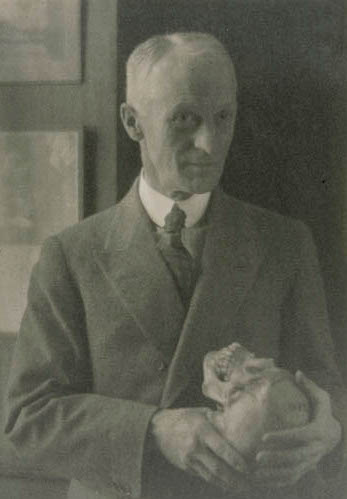
This week's IMFW is really more like an IMPW - an Interesting Medical Person of the Week. Harvey Williams Cushing is often regarded as the "father of modern neurosurgery".

An American descended from a long line of doctors, he was born in Ohio in 1869. After studying medicine, he went on to study surgery at the famous Johns Hopkins Hospital just after it had opened, then spent time in Europe before returning to Johns Hopkins as an associate professor in surgery. As well as writing about medicine, he was a talented medical illustrator and several of his drawings were published in textbooks - and as if that wasn't enough, he received the Pulitzer Prize for Biography for his biography of his mentor, William Osler.

Cushing's first monograph was on the subject of the pituitary, and on this blog, you'll have heard Cushing's name from one of his most famous discoveries, the disease named after him - Cushing's Disease; a tumour of the pituitary gland which secretes ACTH (adrenocorticotrophic hormone) and causes a range of symptoms including weight gain, bruising, sweating, high blood pressure and diabetes. Being a modest chap, he had originally named it "polyglandular syndrome", but his name stuck. However, this was far from his only contribution to medicine:

- He introduced blood pressure measurement to America

- He used x-rays to diagnose brain tumours

- He developed medical instruments which are still in use today, including the Cushing Forcep which is used during cranial surgery, the Cushing clip - a small clip for blood vessels to stop bleeding during surgery, which dramatically decreased mortality rates - and the use of electrocautery which he developed with W.T. Bovie, a physicist

- Along with a colleague, Ernest Codman, Cushing devised the first anaesthetic chart to help surgeons and anaesthetists monitor pulse, temperature and breathing - an innovation which was widely adoped

- Cushing pioneered many new surgical techniques including the use of saline for irrigation during surgery

- He developed a surgical cure for trigeminal neuralgia

- His mortality rate was around 10% - which doesn't sound hugely impressive until you realise that before he came along, mortality rates from neurosurgery were 50 - 90% depending on which source you believe

- He developed the transsphenoidal approach for surgery of the pituitary gland

- He invented the macarena (just checking you're paying attention...)

- He identified and named the phenomena of hypopituitarism and hyperpituitarism

Yes... yes, that is a skull.
 So Mr Harvey Williams Cushing deserves our gratitude and respect. He has thoroughly earned the bewildering array of unpleasant medical things named after him, which include: Cushing's Syndrome, Cushing's Disease, Cushing's symphalangism (a.k.a. proximal symphalangism), Cushing's Reflex resulting in Cushing's Triad (a nervous system response to increase intracranial pressure), Cushing ulcer a.k.a. Rokitansky-Cushing Syndrome, Bailey-Cushing Syndrome (he had to share that one), the Cushing forcep and Cushing clip.

Friday, 15 June 2012

IMFW: The King's Evil

Recently, the UK celebrated the Queen's Diamond Jubilee, marking sixty years of her right regal reign. At some point over the weekend, I made a joke about scrofula - that most historical of diseases - and no-one got it. Now, people often don't get my jokes, and I'm sorry to report that approximately 70% of the time this is because they are Not That Funny. However, the other 30% of the time they are absolutely hilarious, and this was one of those times. Consequently I was forced to the conclusion that either 1.) my friends are, to a man, ardent royalists who refuse to laugh at an old lady purely because she has an unusually heavy and unfashionably metallic hat, or 2.) they didn't know what scrofula was.

And so, in the interests of education, this week's extremely overdue Interesting Medical Fact of the Week will focus on scrofula, a.k.a. the King's Evil, a.k.a. tuberculous cervical lymphadenitis - and how's that for a rapper name?

Scrofula is effectively tuberculosis of the neck, resulting in swollen lymph nodes. In children it is often caused by infections other than mycobacterium tuberculosis, but when tuberculosis is the underlying cause, there are also associated symptoms of fever, weight loss, and malaise. It's a very unsightly illness; the swelling of the neck can become so large that the skin around it ruptures, leaving open wounds.

With the huge decline in tuberculosis rates over the past sixty years, scrofula has become a rare disease, except among the immunocompromised, but historically it was much more common. For hundreds of years in England and France it was commonly believed that scrofula could be cured by the touch of a king,* and indeed monarchs would hold huge events in which they touched hundreds of scrofula patients. From 1633, the Anglican Book of Common Prayer even included a special service for the ceremony, and it was traditional for the monarch to give the affected person a coin. Kings and queens varied in how far they were prepared to go with this tradition, however; although Queen Anne (r. 1702 - 1714) was fond of helping the scrofulous and even touched a young Samuel Johnson, who suffered from the illness, her successor King George I (r. 1714 - 1727) abandoned the practise as being "too Catholic" and also, presumably, too gross.
________________________________________________
*Queens were an acceptable alternative for the scrofula sufferer on a budget.

Monday, 23 April 2012

IMFW: Life Imitates Art

So Blogger has changed its layout and everything, which is deeply confusing to a simple soul like me. If I manage to do anything wildly stupid like posting this next April or forgetting to use a title or something, please forgive me. I am easily baffled.

Anyway: back to IMFW! Today's Interesting Medical Fact of the Week is kind of related to two of my previous interesting medical posts, which focused on face transplants. There's an interesting article on the BBC News website about the fact that the University of Lincoln is offering an art course to plastic surgeons and medical students. They work at life drawing, self portraiture and clay modelling, with a focus on the real-life application for these skills: applying them in their surgical work.

It sounds a little bizarre at first, but at second glance it does make sense. The course aims to enhance students' observational skills and their perceptions of their work, emphasizing that they should look at reconstruction from a patient's point of view as well as their own.

Despite its rather trite acronym, the name of the British Association of Aesthetic Plastic Surgeons (BAAPS...) emphasizes the importance of beauty and aesthetic in the work of plastic surgeons, something which is obviously important in purely cosmetic procedures, but equally key in reconstructive work. I know next to nothing about the training of plastic surgeons, but it would certainly be interesting to know whether surgeons who go into this specialty tend to have more of an interest in art compared to those who gravitate towards other specialisms.

A press release from the university emphasizes the historical link between art and medicine, which was far more pronounced centuries ago; it was considered that artists needed an understanding of anatomy in order to recreate the human form on canvas, while medical texts relied upon anatomical drawings produced by artists, who would often attend dissections. Vesalius's seminal work on anatomy, De humani corporis fabrica, written in 1543, incorporated anatomical illustrations from artists working in the studio of Titian. Perhaps now the link between art and medicine link is being strengthened once more.

Monday, 2 April 2012

IMFW: Face Transplants

Today's Interesting Medical Fact of the Week is all about face transplants! Recently an American man named Richard Lee Norris received what is allegedly the most extensive face transplant ever carried out, in which he received a new jaw, teeth, tongue and nose. The pictures are pretty incredible. After being severely disfigured by a gun accident, Mr Norris had been living as a recluse for fifteen years, wearing a mask whenever he had to leave home - and he had lost his sense of smell completely. That's all changed.

Only the 23rd facial transplant ever carried out, the operation was a gruelling 36 hours long; all Mr Norris' facial tissue from the scalp to the back of the neck was completely replaced. As with every transplant, there is a risk of rejection; recipients of face transplants have to take immunosuppressant drugs for the rest of their life, which increase their risk of cancer and infection. The first Chinese recipient of a partial facial transplant, Li Guoxing, died in 2008 just two years after his transplant, when he either stopped taking his immunosuppressant drugs or failed to take them correctly. There is also the potential psychological issue of patients finding it difficult to adjust to their new face; although such transplants don't give the recipient the face of the donor, nevertheless even after the most successful operation they will never regain their appearance from before their injury.

The world's first face transplant came in 2005 in France, on Isabelle Dinoire, whose face was so badly mauled in a dog attack that she was left unable to speak or eat. Dinoire has had problems with her transplant, including kidney failure and two episodes in which her body tried to reject the transplant. But from the interviews she's given, it seems that she has been happy with the results. The first full facial transplant came in March 2010, when a Spanish man who had accidentally shot himself in the face received a completely new jaw, nose, teeth, cheekbones and skin.

Face transplants can be controversial because some people see them as being done for "cosmetic", rather than purely medical reasons. Yet if you look at the people who have received facial transplants, it's clear that in every case their disfigurement affects their lives in much more than a purely "cosmetic" way. These are people so badly injured that they can no longer eat, drink, or - in some cases - breathe independently. For them, the risk of rejection and of a shortened lifespan due to the immunosuppressant drugs is worth taking in order to have the chance to live a more normal life.

Equally, as the story of Richard Lee Norris shows, even for those who remain independent after injury, the effects of severe facial disfigurement are much more wide-reaching than the purely medical, affecting employment, relationships and simply the ability to leave the house without feeling the need to cover your face. It's difficult for those of us who haven't experienced disfigurement to understand just how significant an impact it can have on people's lives. Obviously, face transplantation is an extreme step and certainly not one which is suitable for most people with serious disfigurement - but it should be available as a last option for those who cannot be treated by other means.

Some doctors have raised concerns over the way these transplants are followed up, suggesting that there should be greater emphasis on psychological analysis of patients, to gain deeper understanding of just how facial transplants affect recipients.

Connie Culp, the first US recipient of a face transplant.
The Guardian has a short history of face transplants here.

Monday, 12 March 2012

IMFW: Don't Be So Prosthetic

After last week's Interesting Medical Fact of the week focused on glass eyes, I decided to stick with a winning theme and move on to a post about prostheses of all shapes and sizes.

BBC News have this jolly picture book of prosthetic limbs throughout the ages, which is well worth a look; my favourite is probably the Ancient Egyptian prosthetic toe; found on a mummy and dating back to at least 750 BC, it's the oldest functioning prosthetic ever discovered. Earlier prosthesis exist which appear to have been crafted to replace missing body parts after death - so that the person could enter the afterlife whole. But the bottom of this wooden toe shows wear and tear, indicating that it was used during the Egyptian woman's lifetime. Big toes support about 40% of the weight on each foot, meaning that losing one can upset your balance and slow you down. Plus, although it's quite possible to walk and move around without a toe, a prosthesis can protect the foot where the amputation occured and may be more aesthetically pleasing. Apparently Egyptologists have been seeking volunteers who've had their big toe amputated to try on replicas of the ancient prosthesis to see if it's effective at aiding balance and walking.

And this wooden toe was so well crafted that it's still attached to its owner's foot, 2750 years later.

Warning: prosthetic toe may not be detachable


Monday, 5 March 2012

IMFW: Eyeing It Up

BBC News had this story about Jost Haas, the last maker of glass eyes in the UK. Did you know that the earliest known evidence of use of an ocular prosthesis* comes from the body of a woman from Iran, dating back to 2900-2800 BCE, buried with a prosthesis made of bitumen paste, covered in gold. Glass eyes only began to be produced by the Venetians in the late sixteenth century; nowadays, they are more commonly made from synthetic materials and may have all sorts of exciting features - even devices which imitate the reaction of a normal pupil to light.

____________________________________________________
*A glass eye, except dating from the pre-glass era.

Wednesday, 29 February 2012

Happy Rare Disease Day 2012!

Happy Rare Disease Day 2012! Yes, it's that jolly time of the year again, when families across the globe gather together to celebrate the myriad exciting ways in which the human body can baffle trained physicians. This year is extra special, as the fifth international Rare Disease Day falls on the 29th February, the rarest calendar date of them all. The event focuses on extending solidarity, both between patients with different rare diseases, and with society at large.

I already have a rare disease (in fact, I technically have two: TSH-oma, and hypermobility syndrome, which is now classified as a subtype of Ehlers-Danlos Syndrome. But although my hypermobility causes joint pain, it also gives me nice soft skin, so I guess you have to take the rough with the unusually smooth). I am aware, however, that many of my more healthy readers may be feeling a little left out of the rare disease jamboree today.  Most rare diseases are genetic - and it's very difficult to know in advance whether you're harbouring the kind of genetic anomaly which will allow you to get better aquainted with the medical profession. So, in the interests of this year's Solidarity theme, and in case you really are that desperate to join in, I have prepared a list of my top four rare diseases that you don't need mad genes to develop. All you have to do is pick one, and get infected:

Top 4 Rare Non-Genetic Diseases

1. The Bubonic Plague
In the West, bubonic plague is now extremely rare, although the plague killed millions in the Middle Ages. Globally there are about 1000-3000 cases reported by the WHO every year. Modern antibiotics are an effective treatment if administered quickly.
Upside: This one has a pleasingly retro feel. There's nothing like walking into a conference of medieval scholars and announcing you've survived the Black Death.
Downside: Gangrene of the extremities, seizures, vomiting blood and extreme pain.
Will I die? Mortality is 1-15% in treated cases. In untreated cases, it can be up to 90%.
How do I catch it? Usually through being bitten by an infected flea.

2. Guinea Worm Disease (Dracunculiasis)
Warning: this disease is available for a limited time only.
A global eradication effort began in 1980. In 1986, guinea worm was endemic in 20 countries, with 3.5 million cases across the world every year. In 2011 only four countries were still endemic for guinea worm disease, with 1,060 cases globally.
Upside: If you time it right, you could be one of the last people in the world to have dracunculiasis. And there's got to be a certain number of TV interviews in that.
Downside: After catching it, guinea worm has an incubation period of a year before the worm starts to travel down through the leg, causing immense amounts of burning pain, fever, nausea and monitoring. It then emerges from the skin. There's no treatment and the only way to remove the metre-long worm is to wrap the live worm around a stick and slowly wind it out - a process which can take months. And frankly: eew.
Will I die? Unlikely. Risks are that the wound where the worm emerges may become infected, or if the worm is broken as it's being pulled out of the skin, it may putrefy inside the limb.
How do I catch it? Drink water contaminated by water fleas which are host to guinea worm larvae - still available in South Sudan, Ethiopia, Chad, and Mali!

3. Kuru (Laughing Sickness)
The last known sufferer of kuru died in 2005, so catching this one may be tricky. Kuru was an epidemic amongst the Fore tribe of Papua New Guinea, due to their cannibalistic funeral practices, but unknown elsewhere. It's believed that the disease originated with an individual who spontaneously developed Creutzfeldt-Jakob Disease, a degenerative neurological disease caused by proteins called prions. When his or her body was consumed after death, the disease spread amongst the Fore, and there was a continuous cycle of new infections as sufferers were eaten after dying from the illness. Once cannibalism stopped, the disease began to die out, but because it can have a very long incubation period, new cases cropped up every now and again until 2005.
Upside: The last known sufferer died in 2005. A new patient would be a medical celebrity.
Downside: Everyone would know you're a cannibal. Oh, and you would slowly completely lose control of your body, develop severe tremors and emotional instability, become unable to speak or swallow, become incontinent, and acquire sores and necrotic ulcers.
Will I die? Yes. There is no cure. The good news is that you may have an incubation period of up to 40 years before symptoms develop. The bad news is that you will die about a year after that.
How do I catch it? You need to eat part of the body of someone with the disease (preferably the brain, if you can get it), or allow broken skin to come into contact with the blood or brain matter. Or you could inject yourself with it. But where's the fun in that?

4. Brain-eating Amoeba (Naegleria fowleri)
This is a nasty little unicellular parasite which is actually pretty common in warm, stagnant freshwater worldwide, but can invade the central nervous system via the nose, and then into the brain where it causes primary amoebic meningoencaphalitis.
Upside: You'd definitely make it into the local paper. Only 300 confirmed cases had ever been recorded in the medical literature by 2008.
Downside: Headache, vomiting, delirium, seizures and irreversible coma.
Will I die? Almost certainly. As of 2008 the in-hospital case fatality rate was 97%.
How do I catch it? Your best bet is swimming in infected water, or preferably by using a neti pot; weirdly, water that is safe to drink may not be safe to irrigate your nose with. But remember: the brain-eating amoeba has to get a long way up inside your nose before there's a chance of infection, so if at first you don't succeed, try again.

For more information on rare diseases in the UK: http://www.raredisease.org.uk/

Monday, 23 January 2012

IMFW: Avast, Ye Scurvy Dogs!

Today's Interesting Medical Fact of the Week is about scurvy! Everyone's favourite pirate-borne illness, caused by a lack of vitamin C. Humans and other higher primates share with guinea pigs and bats the dubious distinction of being some of the few animals to suffer from the disease; most other animals can synthesize their own vitamin C, but we don't produce the necessary enzyme. Consequently, although we always think of fruit and vegetables as the only cure for scurvy, in fact simply eating the meat of any animal which produces its own vitamin C can prevent scurvy occurring and will have enough vitamin C to partly treat the illness. Some organs will contain more vitamin C than others; liver and parts of the central nervous system are particularly high in vitamin C. So if you're stuck on a boat in the middle of the ocean, don't fret about finding lemons - just eat a passing seal. If it's vitamin C you need, though, raw is better than cooked. Yum.

Although the benefits of citrus fruits for scurvy had been suggested time and again by various people, it was James Lind who publicly established that scurvy could be treated through eating citrus fruit in 1747, in what has been described as the "world's first clinical trial"... although that might be taking it a bit far. On a voyage, he divided up twelve scurvy sufferers into 6 groups, and treated each group with a different dietary supplement daily. They all received the same diet but in addition, group one were given cider, group two sulfuric acid, group three vinegar, group four half a pint of seawater (poor group four), group five a daily lemon and two oranges, and group six were given barley water and some kind of spicy paste. He ran out of citrus fruit after just six days, but by that time one of the sailors in group five was restored to health and the other had significantly improved; the only other group to show any improvement was group one. He published his results with a general review of the theories behind the disease in 1753 in A Treatise of the Scurvy.

Lind was a bit of a legend; one of his recommendations when still trying to work out what caused scurvy was for the Navy to grow watercress on big wet blankets on-board ship (watercress is very high in vitamin C); a recommedation which was actually taken up in 1775 and Navy ships were provided with seeds.

Scurvy was only really eradicated from the Royal Navy in the 1790s when the suggestions of Lind and others that lemon juice be used on ships was finally taken up by Gilbert Blane, a Scottish doctor who instituted several health reforms in the Navy. The health of sailors improved significantly as a result, making lemons (and later, limes) an important factor in British successes in the Napoleonic wars.

Monday, 9 January 2012

IMFW: Shave and a Haircut, No Legs

Todays edition of the Interesting Medical Fact of the Week concerns medieval barber surgeons. Back in the day, surgeons were not medical practitioners... but hairdressers. In 1540 the Guild of Surgeons incorporated with the Worshipful Company of Barbers* to form the Company of Barber Surgeons, and they remained as one entity until 1745 when the surgeons broke away again. The degree to which barbers and surgeons were separated varied across Europe as well as through time; in France there were moves as early as 1210 to distinguish academically trained surgeons from the barber surgeons, and throughout the Middle Ages universities such as Montpellier, Padua and Bologna provided formal education for surgeons that was entirely distinct from the remit of a barber surgeon.

The heyday of barber surgeons came once the clergy were banned from performing bloodletting in 1163 at the Council of Tours and barbers stepped in to fill the gap; they already had the tools, after all. Barber surgeons variously practiced bloodletting, dentistry, enemas, and of course shaving and haircutting - carrying out actual surgery mainly on the battlefield. Their informal training was usually by apprenticeship and many were illiterate. Legend has it that the traditional red-and-white striped pole of barbers represents the blood and bandages of their surgical trade.

_________________________________________________
*Incidentally, I feel this would be a great name for a band.