Having written previously about Pio Pico, the last Governor of Mexican California who, it has recently been suggested, may have suffered from acromegaly caused by a growth-hormone producing pituitary adenoma, I got to thinking about this retrospective diagnosis lark, and I did a bit of reading. It turn out, doctors love arguing over whether Mozart had kidney failure or rheumatic fever, Schönlein-Henoch syndrome, trichinosis or the 'flu - and he's not the only famous composer to get the "what did he die of" treatment.
But this article takes things to another level. Professor Michael Baum takes his medical students around the National Gallery on a veritable orgy of slightly tenuous diagnoses, based solely on what they see in paintings. He and his students have suggested that The Ugly Duchess by Massys may show a woman suffering from Paget's disease of the bone, and suggested that An Allegory with Venus and Cupid by Bronzino has a hidden syphilitic message. Some of their arguments are more compelling than others, but it's an interesting article and I recommend following up the full versions of his analysis as well.
Monday, 28 November 2011

Friday, 25 November 2011
The T-Word
Considering that it's only six letters long, and half of those are cuddly-looking vowels, 'tumour' is a surprisingly big word.* When you put the word 'brain' in front of it, it becomes positively enormous.
I may be biased, but I definitely feel that modern science should devote a little time and energy to investigating the phenomenon of the Brain Tumour Face, which in my experience is virtually universal. The phenomenon is this: when you tell someone that you have a brain tumour, their eyebrows shoot up violently and their mouth goes to a perfect o-shape. They say "oh!", quickly try to get their outlying facial features under control, and then warily ask "is it cancer?" If the answer is "no" (which for me, thankfully, it is) they slowly start to relax again. They may attempt a few further questions which you are ill-equipped to answer and/or they are ill-equipped to understand. This part seems to be optional.
Possibly the Brain Tumour Face is the seventh basic facial expression, common to all peoples and cultures across the earth. It certainly is the reason that it took me so long to mention the tumour to my friends - and even then I chickened out and told most of them over Facebook (I am grateful that no-one clicked 'like'). The problem is that it then becomes a self-fulfilling prophecy; people don't use the word 'tumour' face-to-face, which only serves to increase its fear factor. Even when referred to as a pituitary tumour rather than a brain tumour, the t-word creates quite a reaction; referring to it as a pituitary adenoma merely gets you a blank look, which personally I find preferable.
Even doctors have succumbed to the power of the t-word. Unfortunately, some of the synonyms they end up employing are quite entertaining - my favourite is "lump", which always inexplicably reminds me of the slothful Onslow from Keeping Up Appearances. The first time I went to see my (very lovely) endocrinologist after an MRI found the tumour, he managed to say the t-word only once, right at the end of the appointment, although I did notice a couple of occasions where he started to say it and then quickly caught himself. Or maybe I misinterpreted him and the "tu- er- lump" really is a medical condition.
Personally, I prefer plain speaking. Admittedly, I don't call a spade a spade, but that's purely because I try to keep myself distanced from manual labour at all costs. There's a tumour in my head and frankly I am a lot more concerned about the thing itself than what it's called. It's good that doctors empathise with the fact that their patients are going through a scary time, but continually avoiding all mention of the t-word just makes the elephant in the room swell ever larger. And develop spontaneous tumours.
Naturally there are exceptions to the Brain Tumour Face rule, particularly amongst the medically inclined/drunk. One of my good friends, a medical student, tried to persuade me to go out clubbing one night with the immortal line "Your brain tumour wants you to go!"** Oddly enough, it worked.
_______________________________________
*Of course, if you're an American it's only five letters long, so the vowel quotient is significantly reduced. Does this correspond with a similar reduction in its bigness? Answers on a postcard, please.
** Hi, Havana.
I may be biased, but I definitely feel that modern science should devote a little time and energy to investigating the phenomenon of the Brain Tumour Face, which in my experience is virtually universal. The phenomenon is this: when you tell someone that you have a brain tumour, their eyebrows shoot up violently and their mouth goes to a perfect o-shape. They say "oh!", quickly try to get their outlying facial features under control, and then warily ask "is it cancer?" If the answer is "no" (which for me, thankfully, it is) they slowly start to relax again. They may attempt a few further questions which you are ill-equipped to answer and/or they are ill-equipped to understand. This part seems to be optional.
Possibly the Brain Tumour Face is the seventh basic facial expression, common to all peoples and cultures across the earth. It certainly is the reason that it took me so long to mention the tumour to my friends - and even then I chickened out and told most of them over Facebook (I am grateful that no-one clicked 'like'). The problem is that it then becomes a self-fulfilling prophecy; people don't use the word 'tumour' face-to-face, which only serves to increase its fear factor. Even when referred to as a pituitary tumour rather than a brain tumour, the t-word creates quite a reaction; referring to it as a pituitary adenoma merely gets you a blank look, which personally I find preferable.
Even doctors have succumbed to the power of the t-word. Unfortunately, some of the synonyms they end up employing are quite entertaining - my favourite is "lump", which always inexplicably reminds me of the slothful Onslow from Keeping Up Appearances. The first time I went to see my (very lovely) endocrinologist after an MRI found the tumour, he managed to say the t-word only once, right at the end of the appointment, although I did notice a couple of occasions where he started to say it and then quickly caught himself. Or maybe I misinterpreted him and the "tu- er- lump" really is a medical condition.
Personally, I prefer plain speaking. Admittedly, I don't call a spade a spade, but that's purely because I try to keep myself distanced from manual labour at all costs. There's a tumour in my head and frankly I am a lot more concerned about the thing itself than what it's called. It's good that doctors empathise with the fact that their patients are going through a scary time, but continually avoiding all mention of the t-word just makes the elephant in the room swell ever larger. And develop spontaneous tumours.
Naturally there are exceptions to the Brain Tumour Face rule, particularly amongst the medically inclined/drunk. One of my good friends, a medical student, tried to persuade me to go out clubbing one night with the immortal line "Your brain tumour wants you to go!"** Oddly enough, it worked.
_______________________________________
*Of course, if you're an American it's only five letters long, so the vowel quotient is significantly reduced. Does this correspond with a similar reduction in its bigness? Answers on a postcard, please.
** Hi, Havana.
Wednesday, 23 November 2011
Why I Love Blood Tests
One of those occasions where I wrote the post title first, then went "hmm" and sat back, doubtfully stroking the beard I don't have.* And then had to go look up the correct spelling of the word "occasion". I definitely feel it looks better with two S's.
I've never been a massive fan of blood tests, and my opinion of them hasn't exactly improved with much closer acquaintance. And trust me, diagnosing a TSH-secreting pituitary adenoma involves a very close acquaintance with the phlebotomists of your local hospital.
People are weird, so there's probably at least a couple of oddballs out there who positively enjoy having their blood weaseled away by an overgrown thumbtack, but I am not one of them.
Additionally, one of the things they mysteriously forget to mention before you undergo transsphenoidal hypophysectomy surgery - and frankly, who knows if I spellt that right - is that afterwards, you have blood tests every hour for the first six hours, then every two hours for the next twelve hours, then every four hours, etc. In layman's terms, this translates to being repeatedly woken in the middle of the night by a very nice nurse who is attempting the impossible, viz., sticking adirty clean great needle into your arm without waking you up. It is deeply unpleasant.
But I do try to see the sunny side. For instance, blood tests are much more fun than injections, especially injections into muscle. And injections of lanreotide, which really smart; it's a bit like having liquid stinging nettles injected into your hip. Blood tests are also, I imagine, fun than diptheria. In fact, once you start to think about it, blood tests come out looking positively rosy. Plus, when I go in for blood tests I get the chance to catch up with the lovely endocrine nurses at the hospital/the lovely Caribbean & Australian nurses at my GPs.
I do tend to get a bit faint after having my blood stolen, particularly if they've taken a reasonable amount - I'm okay with one vial, but there have been occasions when they've taken fourteen, which does make me a little woozy. But I've had so much practise now that I inadvertently discovered the cure - a drink of Ribena beforehand does wonders, and sugary food afterwards is also good. For best results, return from the hospital to a glass of orange juice and platter of Haribo and chocolate orange slices prepared by a lovely boyfriend <3
________________________________________________
*Actually, following a youthful fall from the monkey bars, I do in fact have a large (yet fortunately solitary) beard hair which grows from the scar tissue in my chin. Sexy.
I've never been a massive fan of blood tests, and my opinion of them hasn't exactly improved with much closer acquaintance. And trust me, diagnosing a TSH-secreting pituitary adenoma involves a very close acquaintance with the phlebotomists of your local hospital.
People are weird, so there's probably at least a couple of oddballs out there who positively enjoy having their blood weaseled away by an overgrown thumbtack, but I am not one of them.
Additionally, one of the things they mysteriously forget to mention before you undergo transsphenoidal hypophysectomy surgery - and frankly, who knows if I spellt that right - is that afterwards, you have blood tests every hour for the first six hours, then every two hours for the next twelve hours, then every four hours, etc. In layman's terms, this translates to being repeatedly woken in the middle of the night by a very nice nurse who is attempting the impossible, viz., sticking a
But I do try to see the sunny side. For instance, blood tests are much more fun than injections, especially injections into muscle. And injections of lanreotide, which really smart; it's a bit like having liquid stinging nettles injected into your hip. Blood tests are also, I imagine, fun than diptheria. In fact, once you start to think about it, blood tests come out looking positively rosy. Plus, when I go in for blood tests I get the chance to catch up with the lovely endocrine nurses at the hospital/the lovely Caribbean & Australian nurses at my GPs.
I do tend to get a bit faint after having my blood stolen, particularly if they've taken a reasonable amount - I'm okay with one vial, but there have been occasions when they've taken fourteen, which does make me a little woozy. But I've had so much practise now that I inadvertently discovered the cure - a drink of Ribena beforehand does wonders, and sugary food afterwards is also good. For best results, return from the hospital to a glass of orange juice and platter of Haribo and chocolate orange slices prepared by a lovely boyfriend <3
________________________________________________
*Actually, following a youthful fall from the monkey bars, I do in fact have a large (yet fortunately solitary) beard hair which grows from the scar tissue in my chin. Sexy.
Monday, 21 November 2011
IMFW: Retrospective Justification
When I was a child, I hated sprouts.
No, wait - let me rephrase that:
I hate sprouts.
I have always hated them. I intend to continue hating them until I'm so old that my tastebuds have shrivelled up entirely beyond use - and after that I will still refuse to eat them, on principle. As a child, I was often served a Token Brussels Sprout at Sunday Dinner, which I had to eat if I wanted to get any pudding. And, as I always wanted pudding, I used to attempt to chop the sprout into as few pieces as possible and then swallow them whole, like a self-loathing vegan snake.
For years, I suffered this horror almost every week and was told off for my fussy eating habits. But now, it has been revealed that the hatred of brussels sprouts is, in fact, genetic. Or at least, probably genetic. Those people who have this gene can taste the bitter and hideous taste of a chemical called phenylthiocarbamide, which is extremely similar to a chemical found in brassicas, like brussels sprouts. And cabbage, broccoli, cauliflower... pretty much all the vegetables I and so many other sensible people hate.
Now, I've seen different theories suggested for why some people like sprouts and others can't stand them - but this is definitely my favourite. Because it means that all children everywhere, when faced with a plate of sprouts, can now scowl up at their parents and say: it's your fault I don't like them.
No, wait - let me rephrase that:
I hate sprouts.
I have always hated them. I intend to continue hating them until I'm so old that my tastebuds have shrivelled up entirely beyond use - and after that I will still refuse to eat them, on principle. As a child, I was often served a Token Brussels Sprout at Sunday Dinner, which I had to eat if I wanted to get any pudding. And, as I always wanted pudding, I used to attempt to chop the sprout into as few pieces as possible and then swallow them whole, like a self-loathing vegan snake.

For years, I suffered this horror almost every week and was told off for my fussy eating habits. But now, it has been revealed that the hatred of brussels sprouts is, in fact, genetic. Or at least, probably genetic. Those people who have this gene can taste the bitter and hideous taste of a chemical called phenylthiocarbamide, which is extremely similar to a chemical found in brassicas, like brussels sprouts. And cabbage, broccoli, cauliflower... pretty much all the vegetables I and so many other sensible people hate.
Now, I've seen different theories suggested for why some people like sprouts and others can't stand them - but this is definitely my favourite. Because it means that all children everywhere, when faced with a plate of sprouts, can now scowl up at their parents and say: it's your fault I don't like them.
Friday, 18 November 2011
Owner of A Lonely Heart: Attempts at Diagnosis
When I was a very small child, a combination of my bad hearing and an obsession with ponies meant that I thought the classic Yes song Owner of a Lonely Heart was actually called Owner of a Lonely Horse. Ah, the folly of youth.
As the years went by, I became increasingly good at distinguishing between the hollow muscular organ which pumps blood through the circulatory system, and the large solid-hooved herbivorous ungulate mammal. No doubt this helped enormously when it came to talking to the doctors about my heart problems. Anyway. At the end of my previous post on the subject of my lengthy road to diagnosis, I had left my local hospital's A&E department with a heartrate of 140 and no explanation...
The next day, I went to my GP, who prescribed beta-blockers. Going through my symptoms (rapid heartrate, tremors, fatigue, hair loss, etc) it seemed that thyroid problems were an obvious possibility. I'd had my thyroid levels tested at A&E and they came back fine, but my GP checked again. They were still fine.
And that was the problem: in fact, my levels of thyroid hormone (free T3 and T4) were much too high. But when doctors suspect you have too much thyroid hormone - hyperthyroidism - that's not what they look at. Instead, they test your thyroid-stimulating hormone (TSH) levels. Low TSH implies hyperthyroidism (because your body is trying to lower your thyroid levels by producing less TSH) while high TSH implies hypothyroidism (because your body is trying to increase your thyroid levels).
Unfortunately, my TSH level was within normal ranges, even though the whole time I had a tumour sitting on my pituitary gland, giggling frantically to itself and oozing TSH with the enthusiasm and verve of a naughty child left unattended with a box of felt tips and a newly papered wall. It was on the high end of normal, but without measuring the T3 and T4 you'd never realise that it was too high for my body. I should point out at this stage that I don't blame my doctor for not doing the other blood tests. A pituitary adenoma producing TSH (a.k.a. TSHoma) is a one in a million illness.*
It's not my doctor's fault that he didn't recognise how incredibly special I am.**
So the next obvious possibility was that my sinus tachycardia (rapid heartrate) could be due to - gasp - a heart problem! And boy, did they ever check me out. I wore 24-hour heart monitors on several occassions - once I was wearing one when I went to a formal dinner, and had an interesting half-hour beforehand trying to find a way to conceal the bloody great thing using only a lace bolero and my native wit - and I had an ultrasound scan of my heart. Ultrasound heart scans are pretty cool to look at, but I can't help thinking that they must be more fun for men, who (in most cases) don't have boobs. Boobs are not usually a problem, but they aren't half inconvenient when someone's trying to use The Power Of Sound to examine the circulatory organ located somewhere beneath one of them.
After six months I finally got to see a cardiologist. He told me that I didn't have a heart problem, that it was almost certainly hormonal and I should have further blood tests, and that I should stop taking my beta blockers.
Two out of three of those statements were correct.
I'm still not entirely sure why he ordered me to stop taking my pills immediately, when every other doctor I've seen since has emphasized the importance of coming off beta blockers slowly to prevent rebound tachycardia. And equally, I'm not sure why I didn't protest more. Regardless: I came off the beta blockers, spent a week feeling as though walking across a room was a labour worthy of Hercules, then angrily phoned the cardiology department and insisted that I was going back on the bloody medication.
But despite this slight hiccup, progress had been made. The cardiologist had ordered the right blood tests. I was referred to endocrinology...
UPDATE: You can click here to read about how I finally got a diagnosis. Or click here to go back and read about my first trip to hospital.
_________________________________________________
*In fact, a friend of mine who's a medical student told me that one day, when a group of med students were med studenting, a patient's symptoms were described and they were asked for possible diagnoses. One girl suggested a TSHoma. The doctor's response: "Don't be ridiculous, that never happens." I asked my friend if she stepped in to mention that she knew someone with a TSHoma. She did not, apparently because the girl who suggested it as a diagnosis was a bit of a know-it-all and was overdue a put-down. Of such fine things are doctors made.
**Interpret "special" as you will...
As the years went by, I became increasingly good at distinguishing between the hollow muscular organ which pumps blood through the circulatory system, and the large solid-hooved herbivorous ungulate mammal. No doubt this helped enormously when it came to talking to the doctors about my heart problems. Anyway. At the end of my previous post on the subject of my lengthy road to diagnosis, I had left my local hospital's A&E department with a heartrate of 140 and no explanation...
The next day, I went to my GP, who prescribed beta-blockers. Going through my symptoms (rapid heartrate, tremors, fatigue, hair loss, etc) it seemed that thyroid problems were an obvious possibility. I'd had my thyroid levels tested at A&E and they came back fine, but my GP checked again. They were still fine.
And that was the problem: in fact, my levels of thyroid hormone (free T3 and T4) were much too high. But when doctors suspect you have too much thyroid hormone - hyperthyroidism - that's not what they look at. Instead, they test your thyroid-stimulating hormone (TSH) levels. Low TSH implies hyperthyroidism (because your body is trying to lower your thyroid levels by producing less TSH) while high TSH implies hypothyroidism (because your body is trying to increase your thyroid levels).
Unfortunately, my TSH level was within normal ranges, even though the whole time I had a tumour sitting on my pituitary gland, giggling frantically to itself and oozing TSH with the enthusiasm and verve of a naughty child left unattended with a box of felt tips and a newly papered wall. It was on the high end of normal, but without measuring the T3 and T4 you'd never realise that it was too high for my body. I should point out at this stage that I don't blame my doctor for not doing the other blood tests. A pituitary adenoma producing TSH (a.k.a. TSHoma) is a one in a million illness.*

It's not my doctor's fault that he didn't recognise how incredibly special I am.**
So the next obvious possibility was that my sinus tachycardia (rapid heartrate) could be due to - gasp - a heart problem! And boy, did they ever check me out. I wore 24-hour heart monitors on several occassions - once I was wearing one when I went to a formal dinner, and had an interesting half-hour beforehand trying to find a way to conceal the bloody great thing using only a lace bolero and my native wit - and I had an ultrasound scan of my heart. Ultrasound heart scans are pretty cool to look at, but I can't help thinking that they must be more fun for men, who (in most cases) don't have boobs. Boobs are not usually a problem, but they aren't half inconvenient when someone's trying to use The Power Of Sound to examine the circulatory organ located somewhere beneath one of them.
After six months I finally got to see a cardiologist. He told me that I didn't have a heart problem, that it was almost certainly hormonal and I should have further blood tests, and that I should stop taking my beta blockers.
Two out of three of those statements were correct.
I'm still not entirely sure why he ordered me to stop taking my pills immediately, when every other doctor I've seen since has emphasized the importance of coming off beta blockers slowly to prevent rebound tachycardia. And equally, I'm not sure why I didn't protest more. Regardless: I came off the beta blockers, spent a week feeling as though walking across a room was a labour worthy of Hercules, then angrily phoned the cardiology department and insisted that I was going back on the bloody medication.
But despite this slight hiccup, progress had been made. The cardiologist had ordered the right blood tests. I was referred to endocrinology...
UPDATE: You can click here to read about how I finally got a diagnosis. Or click here to go back and read about my first trip to hospital.
_________________________________________________
*In fact, a friend of mine who's a medical student told me that one day, when a group of med students were med studenting, a patient's symptoms were described and they were asked for possible diagnoses. One girl suggested a TSHoma. The doctor's response: "Don't be ridiculous, that never happens." I asked my friend if she stepped in to mention that she knew someone with a TSHoma. She did not, apparently because the girl who suggested it as a diagnosis was a bit of a know-it-all and was overdue a put-down. Of such fine things are doctors made.

**Interpret "special" as you will...
Tuesday, 15 November 2011
Russell Watson, It's Not All About You
Following my last post about Russell Watson, I felt inspired to find out about some other famous people who have had pituitary adenomas, using the trusty-yet-woefully-incomplete-and-indeed-quite-inaccurate Wikipedia List of Brain Tumour Patients. And I have learned about:

Governor Pico is my absolute favourite discovery. Not just because I love a guy with a sexy beard, not just because of his awesome name, but also because he is a very intriguing case of retrodiagnosis. Pío Pico lived from 1801 to 1894; acromegaly was first identified in 1886 and he was never diagnosed in his lifetime. In 2010, this paper was published suggesting that he suffered from acromegaly. Looking at pictures of him from 1847 to 1858, he progressively exhibits more of the characteristics associated with acromegaly; this picture from 1858 clearly shows a large forehead, big nose and enlarged lips, a hairless face and hairloss from the eyebrows, which could indicate secondary hypothyroidism, and misaligned eyes which could be due to the tumour pressing on cranial nerves. If you look at the article I linked above, there are more photographs which show his huge hands.
But that's not where the interesting ends. The Governor lived well into his nineties - no mean achievement for a Victorian - while the article suggests that around 80% of patients with untreated acromegaly would be expected to die in the first ten years after diagnosis. It seems instead that his pituitary adenoma spontaneously infarcted sometime after 1858; pictures of him as an old man show that his facial features and hands have become much smaller, he has a full beard and his eyebrows have grown back.*
Another pituitary adenoma and a really sad case. Kevyn Aucoin was a well-known make-up artist and photographer who had worked for Vogue and Revlon, wrote books and appeared on TV. He was diagnosed with acromegaly aged 39, although it's believed he suffered from the condition for some time before it was diagnosed, and the pain of it resulted in an addiction to prescription painkillers. After surgery for his pituitary tumour, his use of painkillers intensified and he died, only a few months later, from liver and kidney failure. You can read about him on his Wikipedia page and this article.
Sun Mingming

You could probably guess from the subtitle that Sun Mingming also has acromegaly (an overrepresented condition in this sample! I guess because the symptoms are so unusual, lazy journalists don't just write "brain tumour" and move on). Pituitary adenomas which secrete growth hormone and develop before puberty result in sufferers becoming very tall; in adulthood it's all about the growth of soft tissues. Sun underwent gamma knife radiosurgery at the age of 23 and is still playing.
It's been kind of a challenge to discover much about James Murphy and his pituitary macro-adenoma, but in this article he certainly emphasises the fact that it's a benign tumour rather than cancer, and that although it can cause some serious problems and, rarely, death, the prognosis is nowhere near as bad as a cancerous brain tumour. One online forum I bumped across in my researchings was castigating celebrities who fail to make this distinction, so good on him.
From the hints about his ongoing "hormone inhibiting treatment," which on one site is said to be bromocriptine, and the fact that he's not obviously acromegalicious** I'm guessing he has a nasty prolactinoma, but that is just a guess. I'm kind of hoping so, purely because I've found it so hard to get examples of famous pituitary tumourheads who have something other than acromegaly.*** His tumour seems to have been pretty badly located, as they operated basically through his face rather than the nose or mouth, something I hadn't come across before.
So there you have it, a brief run down of some famous folk. There are actually quite a few more cases of acromegaly which I came across - people like Andre the Giant, for instance. But that's enough for now.
UPDATE: True to my word, I have written another post about more famous people with pituitary adenomas. I've also written about famous people with Cushing's Disease and the question of whether there are any famous women with acromegaly.
___________________________________________________________
*Sadly, the article notes that he suffered a lot of abuse and discrimination in his lifetime for his unusual appearance.
**Acromegaly sufferers: you should use this word.
***Acromegalicious folk are obviously awesome, but I'm trying to be balanced here. As for finding anyone famous with a TSHoma like me - it's difficult enough just finding published case studies.
Pío de Jesús Pico
last Governor of California under Mexican rule.
Governor Pico is my absolute favourite discovery. Not just because I love a guy with a sexy beard, not just because of his awesome name, but also because he is a very intriguing case of retrodiagnosis. Pío Pico lived from 1801 to 1894; acromegaly was first identified in 1886 and he was never diagnosed in his lifetime. In 2010, this paper was published suggesting that he suffered from acromegaly. Looking at pictures of him from 1847 to 1858, he progressively exhibits more of the characteristics associated with acromegaly; this picture from 1858 clearly shows a large forehead, big nose and enlarged lips, a hairless face and hairloss from the eyebrows, which could indicate secondary hypothyroidism, and misaligned eyes which could be due to the tumour pressing on cranial nerves. If you look at the article I linked above, there are more photographs which show his huge hands.

But that's not where the interesting ends. The Governor lived well into his nineties - no mean achievement for a Victorian - while the article suggests that around 80% of patients with untreated acromegaly would be expected to die in the first ten years after diagnosis. It seems instead that his pituitary adenoma spontaneously infarcted sometime after 1858; pictures of him as an old man show that his facial features and hands have become much smaller, he has a full beard and his eyebrows have grown back.*

Kevyn Aucoin
American make-up artist and photographer
Another pituitary adenoma and a really sad case. Kevyn Aucoin was a well-known make-up artist and photographer who had worked for Vogue and Revlon, wrote books and appeared on TV. He was diagnosed with acromegaly aged 39, although it's believed he suffered from the condition for some time before it was diagnosed, and the pain of it resulted in an addiction to prescription painkillers. After surgery for his pituitary tumour, his use of painkillers intensified and he died, only a few months later, from liver and kidney failure. You can read about him on his Wikipedia page and this article.
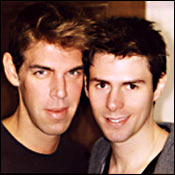
Sun Mingming
7'9" basketball player

James Murphy
Death metal guitarist man
It's been kind of a challenge to discover much about James Murphy and his pituitary macro-adenoma, but in this article he certainly emphasises the fact that it's a benign tumour rather than cancer, and that although it can cause some serious problems and, rarely, death, the prognosis is nowhere near as bad as a cancerous brain tumour. One online forum I bumped across in my researchings was castigating celebrities who fail to make this distinction, so good on him.
From the hints about his ongoing "hormone inhibiting treatment," which on one site is said to be bromocriptine, and the fact that he's not obviously acromegalicious** I'm guessing he has a nasty prolactinoma, but that is just a guess. I'm kind of hoping so, purely because I've found it so hard to get examples of famous pituitary tumourheads who have something other than acromegaly.*** His tumour seems to have been pretty badly located, as they operated basically through his face rather than the nose or mouth, something I hadn't come across before.
***
So there you have it, a brief run down of some famous folk. There are actually quite a few more cases of acromegaly which I came across - people like Andre the Giant, for instance. But that's enough for now.
UPDATE: True to my word, I have written another post about more famous people with pituitary adenomas. I've also written about famous people with Cushing's Disease and the question of whether there are any famous women with acromegaly.
___________________________________________________________
*Sadly, the article notes that he suffered a lot of abuse and discrimination in his lifetime for his unusual appearance.
**Acromegaly sufferers: you should use this word.
***Acromegalicious folk are obviously awesome, but I'm trying to be balanced here. As for finding anyone famous with a TSHoma like me - it's difficult enough just finding published case studies.
Monday, 14 November 2011
IMFW: heART
It's not precisely an interesting fact this week; more like an interesting set of pictures. But still cool. The British Heart Foundation ran a competition, inviting scientists to submit the best images they have of their work on heart disease, and the results are surprisingly artistic.
Medical imaging has certainly come a long way from the day that Röntgen first used x-rays to create an image of his wife's hand. She was purportedly unimpressed with his efforts, believing that the picture of her own skeleton was a herald of death - although as she lived for another 25 years, it was a herald rather ahead of its time.
Medical imaging has certainly come a long way from the day that Röntgen first used x-rays to create an image of his wife's hand. She was purportedly unimpressed with his efforts, believing that the picture of her own skeleton was a herald of death - although as she lived for another 25 years, it was a herald rather ahead of its time.
Subscribe to:
Posts (Atom)